
Recreation Report
Marine Zone
Recreation Report
Crabbing and Clamming
October 8, 2026
Announcements
Reminder
Ocean waters are closed for crabbing Oct 16 – Nov 30. Bays, beaches, estuaries, tide pools, piers and jetties are open for crabbing all year unless closed for toxins. Check ODA Shellfish Safety page before harvesting.
Always check for closures at the ODA Shellfish Safety page before harvesting shellfish, which includes clams, crabs and mussels.
Advisory
ODFW has issued a bay clam harvest advisory for Alsea Bay estuary. Read the news release for more information.
Report commercial derelict crab pots
If you are out on the ocean or in the Columbia River from now through the beginning of October, please report coordinates of any commercial derelict crab pots you see by emailing Jill.M.Smith@odfw.oregon.gov. These reports are distributed to derelict gear recovery permitted participants, enabling them to target gear recovery efforts now that the commercial crab season is closed in the ocean.
Prohibited line markings in effect
Recreational crabbers are not required to mark their line but are prohibited from using certain line markings that are required in other fisheries. To read more about why and what is prohibited, visit our Marine Life Entanglement page.
Bay clams
Always call the ODA shellfish safety hotline at 1-800-448-2474 or visit the ODA shellfish closures website before harvesting, for the most current information about shellfish safety closures.
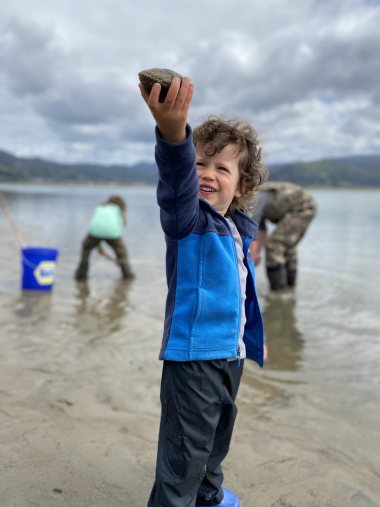
During fall and winter, negative low tides suitable for clamming occur in the evenings. Clammers should be mindful of safety while clamming in the dark. Safety measures include not clamming in unfamiliar areas, bringing a reliable light source and avoiding clamming alone.
Check out the Where to Clam articles for places to find bay clams. You can also get more clamming maps here.
Beaver State Podcast: Bay clamming with Mitch Vance Learn about different clams and some of the challenges to be ready for when you clam.
Mussels
Always call the ODA shellfish safety hotline at 1-800-448-2474 or check the ODA shellfish closures website before harvesting for the most current information about shellfish safety closures.
Mussels, like clams, are filter feeders and those who like eating clams are likely to find mussels just as delicious. Mussels attach to rocks and other permanent habitats in the intertidal zone, so it is best to go looking for them during a low tide. When harvesting, wear gloves and use a twisting motion to pull mussels off rocks. Be careful when harvesting by the ocean and watch for sneaker waves. Each harvester will need a shellfish license and their own bucket. Learn more here.
Razor clams
Currently the entire Oregon coast is closed from the Washington border to the California border. See ODA (above) for more information.
Always call the ODA shellfish safety hotline at 1-800-448-2474 or check the ODA shellfish closures website before harvesting for the most current information about shellfish safety closures.
Crabs
Reminder
Ocean waters are closed for crabbing Oct 16 – Nov 30. Bays, beaches, estuaries, tide pools, piers and jetties are open for crabbing all year unless closed for toxins. Check ODA Shellfish Safety page before harvesting.
Always call the ODA shellfish safety hotline at 1-800-448-2474 or check the ODA shellfish closures website before harvesting for the most current information about shellfish safety closures.
Port by port reports:
All ports are seeing some soft, recently molted, male crab that should be filling with meat and hardening their shells as we enter fall. With the changing weather, lots of rain will cause a surge of fresh water from the rivers, forcing crabs to retreat to the saltier water of the ocean, meaning bay crabbing may not be as successful at times.
- Tillamook: Crabbing has been slow from a boat and slow from the dock.
- Netarts: Crabbing has been slow from a boat and slow from the dock.
- Newport: Crabbing has been fair from a boat and good for red rock crab from the dock.
- Waldport: Crabbing has been fair from a boat and slow from the dock.
- Charleston: Crabbing has been fair from a boat and fair from the dock.
Shore and dock crabbing can be a great year-round activity. A good tool to try is the "castable folding crab trap." Usually attached to a fishing pole, these traps are great for kids because they are lightweight and can catch crab within minutes. No heavy pulling or long wait times! They are available for purchase at most local stores. Happy crabbing!
Some crabbers in estuaries may also encounter non-native European green crab in their catch. While they look similar to Oregon's native shore crabs, identify them by the three prominent bumps between the eyes and five spines down each side of their body (carapace). Color is not a good identifying feature as they are not always green. The daily catch limit for European green crab is 35 per person per day. European green crab can be any size or sex. Learn more about this species.
Want to know more about the invasive green crab and how you can help? Check out Invasive European green crabs threaten Northwest shellfish industries produced by the Oregon Field Guide on PBS.