

Oregon’s State Wildlife Action Plan approved
Website updated to help Oregonians explore conservation opportunities
Oregon's State Wildlife Action Plan (SWAP), officially approved by the U.S. Fish and Wildlife Service on March 20, ensures continued federal funding eligibility and provides a science‑based roadmap to maintain healthy fish and wildlife populations, prevent further declines of at‑risk species, and reverse existing declines where possible.
Along with the 2026 plan's approval, ODFW updated the user‑friendly SWAP website (formerly the Oregon Conservation Strategy and Oregon Nearshore Strategy) designed to help Oregonians easily navigate information about species, habitats and key conservation issues. Visit the 2026 SWAP website at: https://swap.oregon.gov


Each state and territory has a similar plan, which is required for participation in the U.S. Fish and Wildlife Service's State and Tribal Wildlife Grants program. ODFW uses its SWAP not only to meet grant requirements but it also serves as a roadmap to help focus investments to get the best return for at-risk species so we can keep common species common.
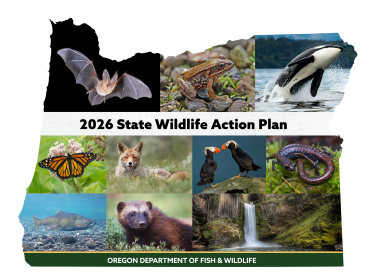
What we accomplished with your support and collaboration
To complete the required 10‑year update, ODFW began in 2023 a full review of the 2016 State Wildlife Action Plan. The agency gathered early input through presentations, outreach events, and a statewide survey, and used that feedback to start drafting updates in 2024. In early 2025, ODFW expanded its outreach and held 17 public and technical meetings from February through May to review key parts of the plan, adding comments where possible. The draft plan was then released for public review in July 2025 and presented to the Oregon Fish and Wildlife Commission in August, where it was approved for federal submission. Final revisions were made and sent to the U.S. Fish and Wildlife Service for approval in September 2025.
What's a SWAP and why does it matter for Oregon?
Oregon is home to an incredible variety of wildlife, but more than 300 species in the state are at risk due to threats like habitat loss, climate change, invasive species, and pollution. This includes iconic species such as coho salmon and golden eagles, along with unique Oregon-only species such as the Oregon slender salamander and Leona's little blue butterfly. The 2026 SWAP helps guide efforts to make sure these species, and many others, have a fighting chance.
One of the biggest strengths of the updated plan is the technical work behind it. The SWAP now includes a revised list of Species of Greatest Conservation Need (SGCN), updated habitat descriptions, and clearer identification of Key Conservation Issues (KCIs) including threats from pollution. It also puts a stronger focus on climate resilience, invasive species, and how land use is changing across the state.
The plan also opens more doors for collaboration. It expands opportunities to work closely with tribes, landowners, and local communities to build solutions that make sense on the ground. With an updated and expanded Conservation Toolbox, ODFW and partners have more practical resources than ever to turn ideas into action.