

Steelhead Fishing the Super El Niño
The 2026/2027 El Niño is shaping up to be, well, super. There have been other strong El Niño over the years, including the last one in 2015/2016. This El Niño has officially been classified as "Very Strong" by the meteorological agencies that classify such things (or as a "Godzilla" El Niño in certain parts of social media). An El Niño gets this "Very Strong" designation when ocean temperatures rise 2.0 degrees Celsius or more above the long-term average in a specific part of the equatorial Pacific Ocean.
While there is some data available for past strong El Niños, very strong El Niños are somewhat rare, the last three being 2015/16, 1997/98 and 1982/83. In a typical strong El Niño, the Pacific Northwest experiences a drier, milder fall and winter. In a Super Strong El Niño, it can tend toward above average precipitation. Two out of the last three strong El Niños had average snowfall. With this El Niño blowing away older heat records and now sitting at around 3.1 degrees Celsius above the long-term average, it's difficult to pin down exactly what might happen.
"So, right now, not only because of how strong this El Niño is, but also because of climate change, some of these rules of thumb aren't necessarily operating as they have in the past," State Climatologist Larry O'Neill said in an interview with OPB.
So, how does a Super El Niño impact winter steelhead fishing? Typically, it means more precipitation and average snowfall. Paying attention to, river gages, such as Oregon Water Resources Department's Near Real Time Hydrographics Data website, is going to be important, but so is knowing what happens in your favorite systems when the water is either running high and off color or low and clear.
The best way to prepare for a Super El Niño is to be prepared for changing conditions and have a variety of gear ready and plan to adjust to conditions, according to North Coast District Fish Biologist Robert Bradley.
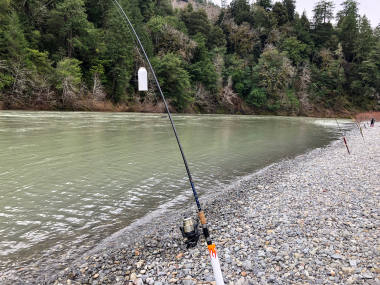
Scenario 1 – What if this El Niño is wetter than usual?
Higher flows bring more color to the water, or it may mean they're completely blown out. This is one of the more frustrating scenarios for anglers who might find these conditions aligning with their time off or planned fishing excursions. All is not lost though; there are a few tricks to fishing higher water. The first trick is to adjust your location. If where you like to fish is blown out, have a backup plan, especially a smaller stream that may have better conditions, or try fishing higher up in larger systems. There is a famous fishing adage that says: When water is higher, fish higher. Fish are actively moving upstream when rivers and streams rise. Another trick is to look for softer water along the edges of faster-moving water and use heavier gear with larger and brighter presentations. Finding slower-moving seams where fish like to hold, often closer to the bank in high-water events, can still produce fish. Plunking is a favorite method when rivers are high if you find a good location with enough slow-moving water close to shore where fish are most likely to move through.
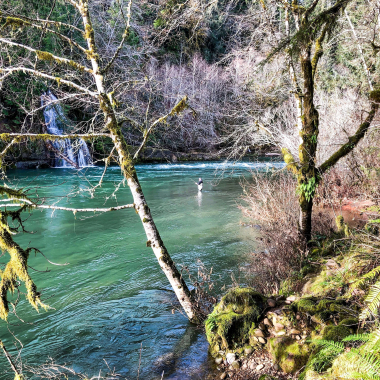
Scenario 2 – What if this El Niño is drier than usual?
When conditions are low and clear, the risk is the fish see you long before you see them. Fish are skittish in these conditions and may not bite. This can be equally frustrating when there is no rain to raise the water levels and get fish moving. There's another good adage for this situation: When the water is low, fish low. When fresh fish are still moving into a system, they will likely hold in the lower reaches of a river until water levels rise enough for them to move up. Look to larger rivers where favorable conditions may hold on longer. Or concentrate your efforts lower down in river systems rather than smaller streams or higher up with those low and clear conditions. And use smaller, lighter and more subtle presentations.
Have a backup plan and try fishing new areas
Steelhead fishing is renowned for being a difficult but rewarding experience. Another well-known adage is that steelhead are the fish of a thousand casts. But it can depend on where you're casting. If you're casting to relatively few fish or just some fish that are not biting, your chances of success are going to be lower. Try moving around to different areas and fishing different types of cover and slower seams in between fast ones. Though not a general rule, some smaller streams clear faster than medium-sized or larger streams and rivers. Very large rivers drop the most slowly and can be in good condition when smaller streams are low and clear.
Again, it's not a general rule, but typically larger streams drop the slowest, followed by medium-sized streams and then small streams. The North Coast in Oregon has some prime examples. Small streams like Big Creek, Gnat Creek, Klaskanine, Necanicum and Three Rivers clear first. Next would be medium-sized streams like North Fork Nehalem, Kilchis, Wilson. The Nestucca takes a little longer to clear, especially in the lower reaches, and lastly, the Nehalem is a good example of a larger river that can take a while to clear. By giving yourself options of where to go or checking out new areas, you can increase your chances of success no matter what types of weather this Super El Niño brings to Oregon.

Check out the Latest Recreation Report
Current conditions and opportunities to fish, hunt and see wildlife. Updated weekly by fish and wildlife biologists throughout the state.