

Twitching for Coho
With good Coho salmon returns forecasted for fall 2026, the question becomes: What's the best way to fish for them?
There is no best way, but there are some different techniques you can try out depending on where you find yourself and what the water looks like when you get there. River fishing often comes down to reading the water, and fishing for coho is no different.
Coho salmon, sometimes referred to as silver salmon, return to natal streams to spawn, and some fish show up in coastal estuaries in September and October, with the bulk of the run returning in October and November. They typically spawn from November to January. Coho are feisty and will splash and roll when in the rivers, giving you an opportunity to observe the places they're holding or running through.
There are great opportunities to catch Coho from September through October as fish move upstream in preparation for spawning, especially in coastal basins with wild coho fisheries. Fishing opportunities are day specific in some basins and anglers should check ODFW's Fall Coastal Salmon Management page for details on basins open to wild coho retention.
When you've identified a particular river, you'll want to start looking for different types of structure like rocks, ledges or large, woody debris. Coho salmon will use structure when holding in rivers.
You can certainly troll for coho as well as cast spinners through larger riffles, but a popular technique that caught on around 2012-2013 is to look for signs of jumping or rolling fish as well as structure and toss a jig at it.
Twitching for coho
Coho, like other fish, prefer slower moving water and deep pools. They also like structure like rocks, ledges, boulders or downed logs or wood piles where they might hold in preparation to make their run up the river to spawn. Twitching gets its name from the motion used after casting a jig into some structure or a deep pool. An angler twitching for coho will usually use a 7 or 8-foot, fast-action rod and a spinning reel in the 2000-3000 size range, and after casting what amounts to a fancy marabou jig, or squid jigs made with hoochies, they will let it drop to a desired depth and then give a quick, vertical jerk of the rod tip, causing the jig to act like it's hopping in the water before letting it fall. Coho will often bite on the drop, so braided line with a fluorocarbon leader will produce less stretch, easier bite detection, and allow for a stronger hook set.
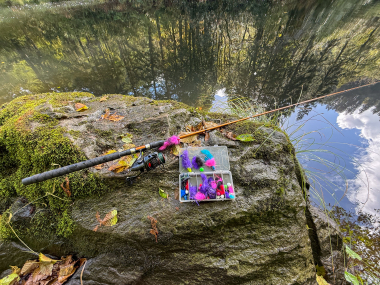
The thing about twitching is that it sounds like an easy concept, and it's not hard to be impressed by the vast array of beautiful twitching jigs out there on the market, but fishing around structure is not without its challenges, as any bass angler knows.
Coho are powerful fish and will make fast runs and can entangle line around branches. Studying a pool or structure well before fishing is highly recommended to get a better understanding of where the fish might run and what your options are if it makes multiple, long runs.
The act of twitching seems intuitive, but it takes some work to develop a technique that properly mimics an injured baitfish, especially with different sizes and weights for jigs. There are many videos available online that showcase different techniques, and it's well worth watching a few before developing your own method.
Twitching is one of those techniques where it is beneficial to have many color, size and weight options available. Weight is especially important if you are fishing a deep hole and need to get that jig down deep, fast. If there are fish holding under structure or in a deep hole, and you don't get a bite on the first few passes, it can be beneficial to try different sizes and color options to get stubborn fish to pay attention.
Fishing for fall coho on coastal streams can make for a fun, all-day adventure as you seek different potential holding areas and look for structure to fish around. As fish distribute throughout river systems, it can be good to move around and try different areas, different colors and different jig sizes. Start out with your jig in shallower water and watch how it rises and falls as you twitch the rod tip. When you like the action of the jig in the water, try to maintain that pattern as you cast in and around structure or into deeper pools.
Remember to practice safety when moving around in or near moving water and have fun and explore Oregon's amazing coastal rivers for some wild coho opportunities this fall.

Check out the Latest Recreation Report
Current conditions and opportunities to fish, hunt and see wildlife. Updated weekly by fish and wildlife biologists throughout the state.