

Watercraft Inspection Stations in Oregon
Stop for boat inspections — it's quick, free, and protects Oregon waters. All vehicles towing or carrying watercraft or paddlecraft into Oregon must stop at any watercraft inspection station that is open to inspect for aquatic invasive species.
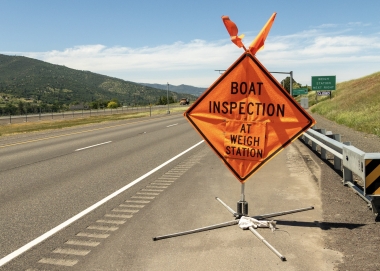
When you see large orange signs reading "Boat Inspection Ahead" and "Inspection Required for All Watercraft," pull in — the station is open.
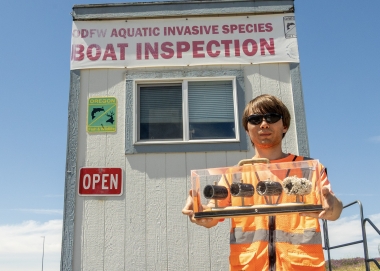
Inspections are always free. ODFW staff will check your boat, trailer, and gear for aquatic invasive species. If anything is found, they'll decontaminate your boat on the spot to keep Oregon's waterways healthy.
Most inspections take just five minutes—even faster if you've already Cleaned, Drained, and Dried your boat. Decontamination, if needed, usually takes about 15 minutes.
Station hours vary by day and season, so watch for the signs and help stop invasive species at the border.
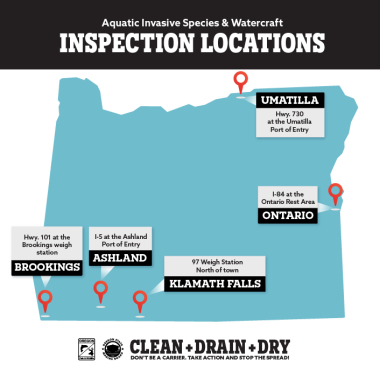
Inspection station locations (open during daylight hours)
- Ashland: I-5 at the Ashland Port of Entry
- Ontario: I-84 at the Ontario Rest Area
- Brookings: Hwy. 101 at the Brookings weigh station (open May 18, 2026)
- Klamath Falls: US-97 at the North Waystation
- Umatilla: Hwy. 730 at the Umatilla Port of Entry (open first of June 2026)
- Roving inspections – Crews will periodically open inspection stations at random boat ramps around the state.
How to prevent the spread
After a fun day on the water, make sure you inspect your gear for hitchhikers.
Motorboats, kayaks, canoes, drift boats, and other watercraft can carry destructive quagga and zebra mussels, New Zealand Mudsnails and aquatic plants.
To help stop the spread of these destructive invaders:
- CLEAN all aquatic plants, animals and mud from your vehicle, boat, motor or trailer and discard in the trash. Rinse, scrub or pressure wash, as appropriate, but away from storm drains, ditches or waterways.
- DRAIN live wells, bilge and all internal compartments.
- DRY your boat between uses, if possible. Leave compartments open and sponge out standing water.
- SCRUB or pressure-wash life jackets, waders, boots, landing nets, and other gear that came in contact with the water.
- INSPECT everything for signs of aquatic invasive species before launching and before leaving.

Invasive mussel threat
Aquatic invasive species are moving closer to Oregon. In 2023, quagga mussels were found in Idaho's Snake River, prompting costly emergency treatments and expanded boat inspections.
A year later, golden mussels were discovered in California's Sacramento–San Joaquin Delta. These fast-spreading invaders clog pipes, damage ecosystems, and are difficult to remove once established.
Both states launched rapid containment and monitoring efforts, but prevention remains the best defense. Boaters and anglers can help protect Oregon's waters—Clean, Drain, and Dry every time.
More Info
The Oregon Legislature established the AIS program under (ORS 830.565(1)) to help keep Oregon's lakes, rivers and streams free of destructive invasive species like zebra and quagga mussels.
All of the revenue from the Waterway Access Permit supports two important programs: developing new or improving existing non-motorized access sites (staging areas, dry-entry launches and docks, restrooms, and single car parking) and funding efforts to prevent and control aquatic invasive species such as zebra and quagga mussels.
A portion of each permit goes to AIS inspection and decontamination stations, monitoring and early detection programs, public outreach to encourage boaters to Clean, Drain, and Dry, and rapid response efforts if invasive species are detected. These funds are managed by the Oregon State Marine Board in partnership with ODFW and other agencies, including Portland State University's Center for Lakes and Reservoirs, which assists with research and mitigation. All AIS permit revenue is dedicated entirely to protecting Oregon's waters.
Check out the annual report 2025 Oregon Aquatic Invasive Species Prevention Program (pdf)
Click here to purchase a Waterway Access or Aquatic Invasive Species Permit.

Check out the Latest Recreation Report
Current conditions and opportunities to fish, hunt and see wildlife. Updated weekly by fish and wildlife biologists throughout the state.