
Here's what hunters and anglers need to know about what's changing for 2026:
License fees increase for most products for the first time since 2020. Like all businesses and households, ODFW has seen a rise in costs due to inflation, and the fee increase is needed to maintain current operations. For example, the cost of operating hatcheries has increased well above the level of inflation due to price increases for fish food and utilities. See the fee schedule and learn more about ODFW's budget and how we took steps to minimize the increase below.
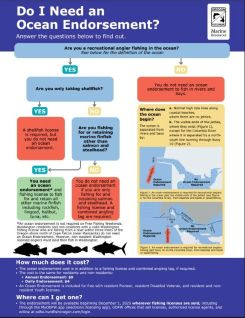
A new Ocean Endorsement will be required when fishing in the ocean from beaches, jetties, and boats or spearfishing (it's not needed when fishing for salmon, steelhead or shellfish). Anglers have long been the backbone of conservation funding, supporting the monitoring necessary to make sure fish populations and fishing opportunities are sustained for future generations. The Oregon Legislature established the Ocean Endorsement through House Bill 2342 to generate dedicated funding for marine fish research and assessments. Funds will support critical surveys for popular marine species like black rockfish. The endorsement costs $9 annual/$4 daily for both residents and nonresidents and is already included with Youth Combo, Pioneer and Disabled Veteran licenses.
Several other changes in the fishing regulations will give anglers increased opportunity:
Increased coho opportunity. Check for local regulation changes in the upper Willamette and tributaries. Coho seasons are becoming permanent in several locations previously closed or temporarily open. This continues the good news about the coho rebound in Oregon.
Spearfishing in streams and rivers for bass and walleye. The public has been requesting expanded opportunity to spearfish for bass and walleye in rivers and streams. This has become a popular alternative fishing method and potentially may help to reduce impacts of bass and walleye on native fish. Want to put on a mask and snorkel this summer to spear bass or walleye? It's legal after New Year's Day, so go for it.
Use of spring feeders for carp fishing. Carp fishing is becoming a popular opportunity. The use of spring feeders is a common method when targeting carp but was not allowed under past regulations. For those non-carp fishermen, a spring feeder is a contraption you pack with bait and put on your line to attract fish.
Crayfish open all year in lakes and streams. Past regulations could be confusing on this one. People thought certain streams were closed for crayfish due to other closures. The new regulation makes it clear that you can chase these tasty critters all the time just about everywhere.
Use of aquaria fish for bait. If your kid's goldfish dies, you can no longer use it for fishing bait. Same goes for any fish raised in an aquarium. Aquaria fish are not screened for pathogens that may affect native or other game fish.
Separate kokanee limit in Central, Willamette, Northeast, Southeast zones. Anglers were confused by the way kokanee were considered trout for the purposes of limits. The new regulation separates them out for simplicity. In these zones, the limit will be 10 kokanee per day, no size limit, open all year, unless noted under Exceptions. Trout will have their own limits listed.
Increased bag limit for lingcod, 4-fish general marine bag limit. Under regulations set in December 2025 (so not in the printed regulations), the daily catch limit for lingcod will increase from 2 to 3 fish next year, since lingcod populations are healthy and bycatch of yelloweye rockfish (a protected species) is still low.
The daily limit for general marine bag limit (rockfish, greenlings, cabezon, etc.) will stay at 4 fish all year in 2026, with a sub bag limit of 2 canary rockfish (up from 1 fish last year). The 4-fish daily limit is necessary due to continued high effort and catch rates for rockfish. In 2025, a planned 5-fish summertime bag limit had to be reduced back to 4 in August and then to 3 fish in September as the popular fishery approached the harvest guideline much earlier than expected.
ODFW continues to work with coastal anglers to understand their preferences for managing black rockfish which are the main driver of the general marine bag limit and season. Some are now leaning toward higher daily limits, even if it means a shorter season — which could influence future rules. The black rockfish harvest guideline for 2026 is slightly higher than last year but remains well below levels prior to 2024.
2026 BIG GAME HUNTING REGULATIONS
What's New: Deer hunting in Eastern Oregon is changing. Hunt names will change and hunts will be organized based on Deer Hunt Areas. The new system reflects actual deer movement patterns based on GPS collar data from over 1,400 mule deer. It allows for:
- More accurate population monitoring
- Better alignment of harvest with herd biology
- Ability to better measure mule deer response as ODFW implements the new Mule Deer Management Plan
Hunters can use the interactive map or other material on the Eastern Oregon deer hunting page to understand what's changing and which hunt includes their preferred hunting area.
ABOUT THE FEE INCREASE AND ODFW'S BUDGET
Fee Changes (see fee schedule)
Recreational and commercial fees increase for most products for the first time since 2020 this year. Like all businesses and households, ODFW has seen a rise in costs due to inflation. For example, the cost of operating hatcheries has increased well above the level of inflation due to price increases for fish food and utilities.
- Recreational fees rise an average of 12–14% in 2026, and 6–8% more in 2028 and 2030, a staggered approach to reduce the need for one large fee increase.
- Still below total inflation since 2020 (25–26%).
- ODFW has reduced staff and programs to help limit fee increases.
New: Ocean Endorsement (More info)
Required for ocean fishing except when taking only salmon, steelhead, or shellfish.
- Cost: $9 annual / $4 daily (for both residents and nonresidents)
- Free for: Youth, Pioneers, Disabled Veterans
- Purpose: Funds essential marine surveys, including for black rockfish.
Special Licenses & Discounts
- Youth Combo License: Still $10 and now includes the Ocean Endorsement.
- Pioneer License: Increases from $6 → $10 and includes all major licenses plus the Ocean Endorsement.
- Senior, Active Military & Veteran discounts remain.
- Resident Disabled Veterans: Free Combo License includes Ocean Endorsement.
- Combined Angling Tag: Higher increase relative to base licenses, to reflect the complexity and high cost of managing salmon/steelhead fisheries.
Strategic Reductions
To keep fee increases lower, ODFW is reducing some license-funded programs, including reducing the number of seasonal and full-time staff and hatchery operations.
Hatchery changes: Hatcheries make up over a third of the fish division's license budget. Many are decades old and in need of significant maintenance to continue operating. Environmental conditions (decreased summer flows, rising water temperatures, wildfire) are also making it more difficult to operate many hatcheries. Given the level of budget reductions needed to address rising costs, cuts to hatcheries could not be avoided without creating budget shortfalls or higher fee increases.
- Salmon River Hatchery: Will no longer operate its hatchery programs but remains open for fishing access and hatchery programs have moved to other facilities (more info).
- Rock Creek Hatchery: Discussions about long-term operations underway with Cow Creek Tribe.
- Oregon Hatchery Research Center: Facility closing due to water/landslide risks; research continues elsewhere.
ODFW received a $20M one-time investment to focus on the maintenance backlog for the hatcheries best suited for future environmental conditions. A third-party review of the hatchery system was completed with input from Tribes and fishing groups which will inform how the money is used. Learn more
About ODFW's budget
ODFW is funded by a mix of Lottery, General, Federal, and License revenue.
Hunters and anglers have long carried the weight of conservation funding and continue to do so under the current budget. About 40% of the budget still comes from hunting/fishing revenue and related federal funds (federal excise taxes on hunting and fishing equipment that are distributed to states).
ODFW is working to diversify funding, so the costs of conservation are shared more broadly. Conservation and management of fish and wildlife is increasing in complexity due to climate change, habitat loss, ESA requirements and increased development. The agency needs stable, diversified funding to protect both game and non-game species.

Find a Rec Report
Current conditions and opportunities to fish, hunt and see wildlife. Updated weekly by fish and wildlife biologists throughout the state.