
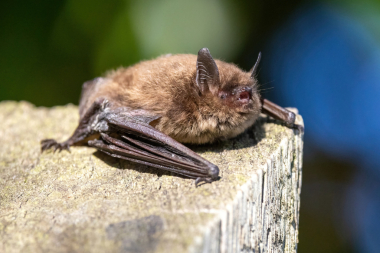
White-nose syndrome detected in bats for first time in Oregon
News
Contact
Beth Quillian, beth.s.quillian@odfw.oregon.gov, (503) 804-0841
SALEM, Ore.— White-nose syndrome (WNS) in bats has been detected for the first time in Oregon in Columbia and Benton counties. White-nose syndrome is caused by an infection with the fungus Pseudogymnoascus destructans that disrupts hibernation, causing early winter emergence, dehydration and starvation.
This finding follows the 2025 detection of Pseudogymnoascus destructans in bat guano collected at a roost in Clatsop County. Bats in Oregon have now tested positive for the fungus and have shown signs of the disease.
In March 2026, laboratory tests by the National Wildlife Health Center diagnosed white-nose syndrome disease in six Yuma myotis from Columbia County and one little brown myotis from Benton County. Both species are small insectivorous bats that are found throughout Oregon. The bats were found deceased in residential areas in late winter and reported to ODFW.
How does white-nose syndrome affect bats?
White-nose syndrome has killed millions of bats in North America since its detection in New York in 2007 and continues to spread. At least 30 states have detected the disease, and others have detected the fungus but no disease. The fungus spreads primarily through bat-to-bat contact and infects bats during hibernation. White-nose syndrome does not cause illness in humans or domestic animals, but it can be inadvertently spread through contaminated clothing, gear, and equipment after recreating in or near caves or visiting sites like summer roosts or mines.
During hibernation the fungus grows on the bat's skin causing damage and irritation. Bats wake up frequently to groom it off which uses up critical energy needed to last through hibernation. Bats with WNS sometimes leave their winter sites early and head to spring roosts where they may be found weak or dead from WNS.
What is ODFW doing?
ODFW is coordinating with state, local and federal partners to learn more about WNS impacts to Oregon's bats. Since 2011, ODFW and federal partner agencies (National Park Service, Bureau of Land Management, U.S. Forest Service, U.S. Fish and Wildlife Service) have surveyed for the fungus and white-nose syndrome across the state with the assistance of wildlife rehabilitators and the Oregon Department of Health. Surveys are completed throughout the year in places where bats spend the winter, spring sites where they raise pups, and other roost sites.
Agency biologists and the ODFW Wildlife Health and Population Lab are identifying additional sites near the detections and increasing bat population monitoring and disease surveillance across the state. ODFW is also coordinating with wildlife rehabilitators and the Oregon Veterinary Diagnostic Laboratory at Oregon State University who are screening bat patients and collecting samples.
Help Oregon's bats
You can help protect Oregon's vulnerable bat populations:
Disinfect shoes and gear after visiting a cave or other known bat roost before getting in your vehicle or leaving the site. Find detailed decontamination information and options at whitenosesyndrome.org.
Report sick or dead bats to ODFW's Health Lab using the Bat Health Survey or call the health lab and leave a message at 866-968-2600. Never touch or pick up a bat with bare hands. Report sites of known high bat activity using the Bat Colony Reporting Survey. Bat activity sites can include suspected hibernacula (places that bats hibernate) or roosts.
If bats are impacting your home or another structure, exclusion practices can remove them safely and help prevent future entry. More information is available online, and some wildlife control companies specialize in bat-friendly solutions.
Bats in Oregon
Oregon is home to 15 species of bat, including 13 that are Species of Greatest Conservation Need. Learn more about them in the State Wildlife Action Plan, which serves as a roadmap for protecting Oregon's at-risk species and their habitats.
Learn more about white-nose syndrome and how it affects bats at whitenosesyndrome.org

Check out the Latest Recreation Report
Current conditions and opportunities to fish, hunt and see wildlife. Updated weekly by fish and wildlife biologists throughout the state.