

Porcupine study begins in Central Oregon
Porcupines may be one of Oregon's most recognizable wildlife, but surprisingly little is known about them—especially in Central Oregon.


With anecdotal reports suggesting populations may be declining, ODFW's Ochoco District biologists started the two-year Porcupine Investigation, a timely effort as porcupine will be officially added to Oregon's Species of Greatest Conservation Need (SGCN) list in 2026.
The project began in June 2025 by identifying where porcupines live across eastern Oregon, using a variety of monitoring tools to build a clearer picture of their distribution. ODFW staff first turned to iNaturalist, a community science platform where people share wildlife sightings. Those reports gave biologists a head start in deciding which habitat types to search and where to place trail cameras to confirm porcupine presence.
The team is also partnering with the High Desert Museum's Wildlife Watch program, which provides trail cameras and training to volunteers. These volunteers deploy, record and upload wildlife observations (porcupine and otherwise) to iNaturalist, helping expand the project's reach. Funding, supplies, and data analysis support are being provided by the Wildlife Ecology Institute and the Oregon Wildlife Foundation.
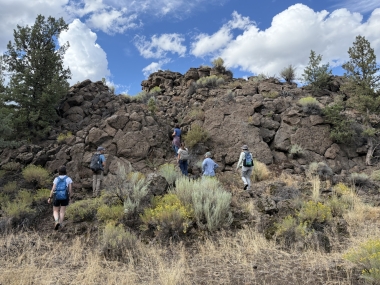
Thanks to dedicated staff and volunteers, ODFW has already confirmed about 25 porcupines on trail cameras across the Deschutes watershed. The next phase of the project will focus on investigating a variety of habitats to study porcupine distribution.
To better understand individual behavior, researchers will capture and fit radio collars on 20 porcupines, allowing them to track movements over time. These data will be used to assess seasonal home ranges, patterns of habitat use, and the dispersal of young porcupines as they establish their own territories.
In addition, the study will examine survival rates and investigate causes of mortality, providing important insight into population health. Researchers will also collect scat samples throughout the year to analyze diet and understand how food use changes with the seasons. By combining these efforts, the project will estimate porcupine distribution and abundance across the region.
Ultimately, this work will lead to the development of a standardized monitoring protocol that can guide future conservation and management of porcupines in eastern Oregon.
Help with the Porcupine Investigation
If you are in the Central Oregon area and see a porcupine, you can contribute to the Porcupine Investigation. Use ODFW's form to send us information. Questions? Please reach out to Mikayla Bivona, Acting Assistant Wildlife Biologist based in Prineville, Mikayla.M.Bivona@odfw.oregon.gov or 541-591-1629.
Central Oregonians are eager to pitch in and learn more about their prickly neighbors and more than 140 reports have already been generated since the project was launched.

-end of article-

Check out the Latest Recreation Report
Current conditions and opportunities to fish, hunt and see wildlife. Updated weekly by fish and wildlife biologists throughout the state.