
ODFW's water program protects native fish habitat
by ODFW Water Program
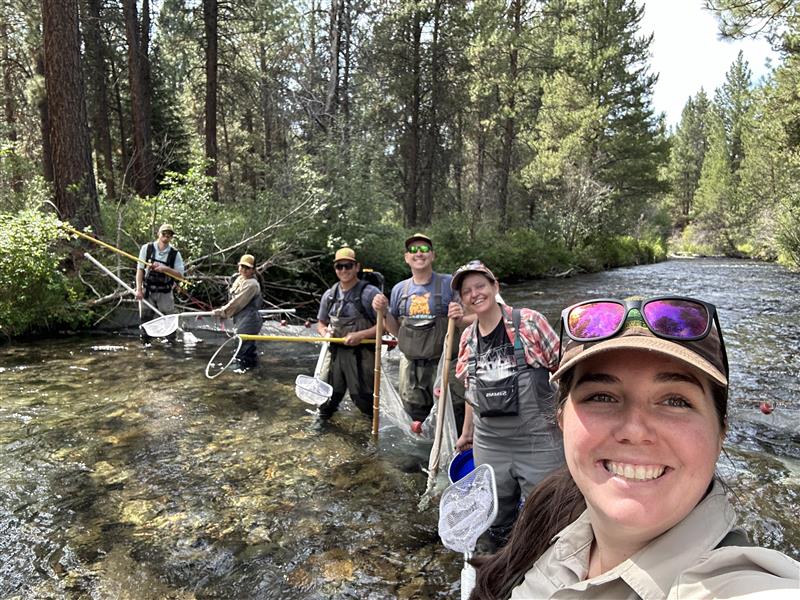
Salmon, trout, and steelhead need abundant clean, cold water to thrive, and ODFW works year-round in streams across the state to make sure we have the data needed to protect and enhance habitat for these iconic fish.
Whether measuring streamflow, sampling fish, or collecting water temperature data, ODFW's Water Program helps the state meet objectives in the Integrated Water Resources Strategy (IWRS).
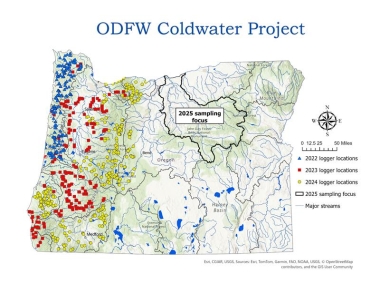
ODFW's Coldwater Project has been running since 2022. From summer to fall, we work with partners to deploy hundreds of temperature loggers to identify Oregon's coldwater resources – over 1000 loggers were placed from 2022-2024, and we're on track to deploy over 500 more in 2025. The work doesn't end when the loggers are retrieved (hopefully) before the rainy season washes them away; instead, we're busy analyzing a LOT of data. Each logger records a temperature measurement every ten minutes – that's millions of data points each season! The good news is we're gaining a clearer picture of the state's most important coldwater streams that provide refugia during the warmest summer months. Identifying and protecting these streams is critical for climate resiliency and supporting healthy, fishable runs of fish in the future.
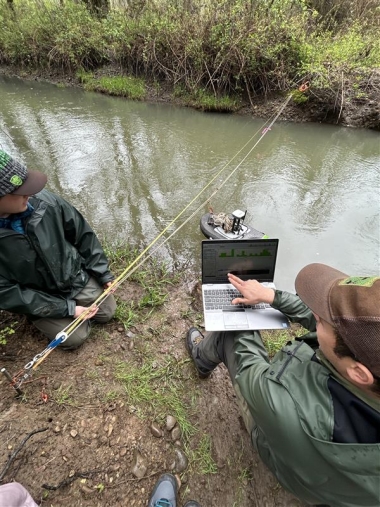
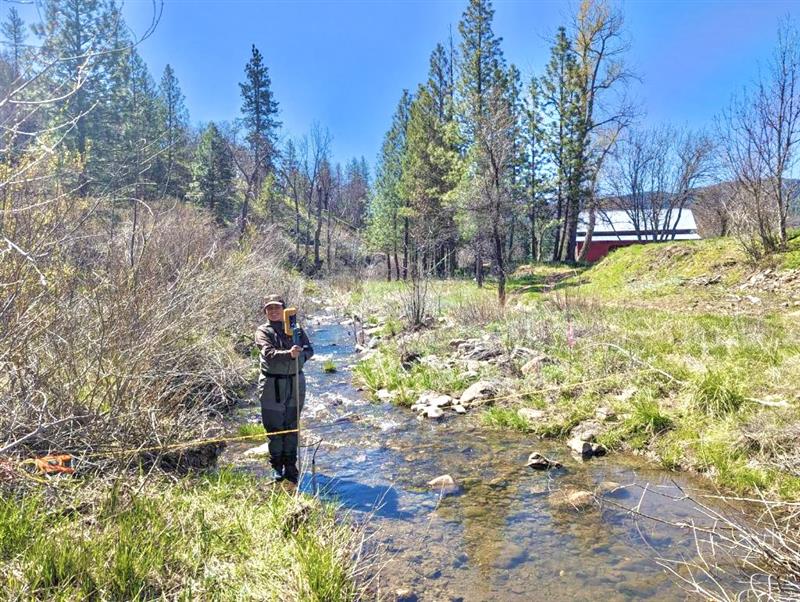
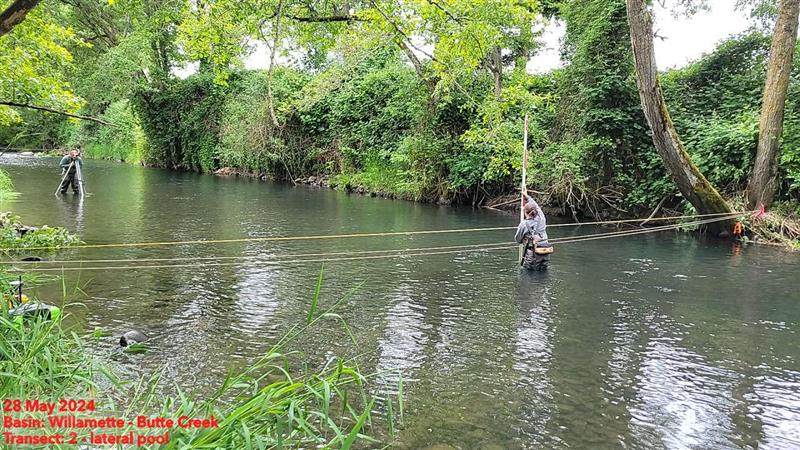
ODFW scientists also work to conduct instream flow studies to understand the flows that fish need at different life stages (spawning, rearing, etc.). That's why you'll find Water Program staff monitoring forecasts and streamflows to catch the perfect window for measuring high flows (that native species rely on as cues to migrate or spawn) or braving the heat to measure low flows (that lead to thermal stress and a reduction of habitat during dry summers).
Knowledge gained from these projects lays the foundation for conservation efforts that will provide climate change resilience and drought readiness – both are IWRS priorities. It provides supporting agencies with information to manage limited water resources wisely, and it provides collaborators with information to carry out voluntary actions that benefit species where it has the greatest impact. That's good news for Oregon's fish, wildlife, and people.
Learn more by visiting the Oregon Water Resources Department Integrated Water Resources Strategy webpage or the ODFW Water Program

Check out the Latest Recreation Report
Current conditions and opportunities to fish, hunt and see wildlife. Updated weekly by fish and wildlife biologists throughout the state.