

How are Chukars impacted by wildfires?
Chukar, a species of partridge native to mountainous regions from the Middle East to China, were introduced into Eastern Oregon in 1951. They live in some of the most inhospitable terrain you can imagine. An old saying goes: The first time you hunt chukar is for fun, every time after that is for revenge.
Chukars are resilient when it comes to wildfires. Part of that is their biology, part of that is their particular requirements for food, water and shelter on the rugged landscapes they inhabit, and part of that is the ruggedness of the habitat they prefer.
There isn't a lot of literature looking at the wildfire resilience of chukars in the western United States, as they are an introduced species. So, we asked some of our District wildlife biologists who both hunt chukars and manage wildlife across landscapes that are prone to wildfires about what they've seen over the course of their careers.
Like many other wild animals, most chukars probably flee approaching flames, but they are tightly tied to places that provide for all their needs and won't usually move far.
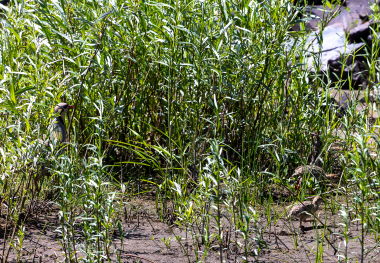
Chukars are often found on extremely steep slopes topped with rimrock, but they require water in the form of a river, a lake, a spring or a guzzler in the summer and snow or dew in winter and spring. They can survive in some very harsh conditions, but without water in some form, they do not survive.
Chukars average 13" to 15" in total length and 10" to 12" when standing, so they need adequate cover to protect them from avian predators. Brushy landscapes with 18" to 20" inches of cover provide ideal habitat for chukars. When wildfires run through canyon country, they not only destroy the grasses, both native and non-native, they destroy these shrub components, and especially slow-growing sagebrush and bitterbrush. This immediate loss of thermal refuges and protection from avian predators is detrimental for chukar survival.
That does not mean that a burned area won't hold chukars, in fact, according to several wildlife biologists who've looked at populations after a burn, chukars will often use rocky outcroppings as cover when all else has burned away.
It's probably safe to say that chukar can return to burned areas within a year or two, especially when cheatgrass, a non-native grass found in much of Eastern Oregon, tends to pop up first after a wildfire, and it's one of the earliest grasses to green up in spring. Medusahead, another non-native grass found in Eastern Oregon is another story. When Medusahead takes over and becomes a monoculture, it can devastate a landscape, making it unattractive even to chukars due to the fact that they won't eat it and that it excludes all other vegetation.
Chukars, unlike other animals in Oregon, can still thrive in monoculture habitats like cheatgrass.
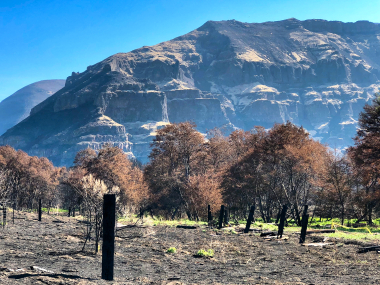
One example we can draw from is the popular Deschutes River Canyon which burned in 2018 as a result of the Substation and Long Hollow fires, which collectively burned over 70,000 acres and torched the whole canyon.
The Deschutes River Canyon saw a downturn in chukar production in the early 2000s and hunters were encountering few chukars on the landscape. The canyon doesn't have a lot of sagebrush, and managers thought the lack of cover might be a limiting factor for chukar. By 2016, chukar populations had rebounded, and after the burn, the chukars in the burned areas produced as well as chukars in unburned portions of the canyon.
Some of that may be attributed to the fact that the Deschutes River Canyon has a lot of broken rock structures, which chukar can use for cover.
What do hunters need to know after a big wildfire year?
Chukars are resilient birds and will begin using burned out areas within a year of a fire. Understanding chukar biology can help you locate them better. Chukars are tied to water, especially in the warm months through fall, and will more likely be found near water sources like rivers, lakes, springs and guzzlers. Driving canyon roads that follow rivers is a great way to learn if chukar are using the steep, rocky landscape above. Chukar calls are unmistakable and can be heard from a long distance. Stop and listen often to locate chukars. Look for suitable food sources. Chukars will eat cheatgrass, but they also love the starchy, little tubers produced by Prairie starflowers. You can find these areas by looking earlier in the year when these flowers are blooming.
Start by looking at rocky outcroppings or broken rock formations or other suitable cover. If chukars have their other needs met, such as water and food, they may use these rocky areas for cover until the brushy areas they like grow back.
One thing most of our wildlife biologists agreed on is that loss of brush in areas that burned within the last couple of years can make it more difficult to hold chukars until you get into shooting position. They will often flush early if they don't have good refuge options nearby.
Chukar mortality peaks during raptor migration, according to one study, which shows how important cover is to these birds. Another interesting fact is that chukar can survive harsh conditions as long as they can get to food sources in the ground and water. Heavy snowfall or hard, crusty snow can lead to chukar die-offs. Chukar are a remarkably resilient species that can bounce back from fire, drought, and harsh winter conditions thanks to their ability to produce large broods when conditions are right.

Check out the Recreation Report
Current conditions and opportunities to hunt, fish and see wildlife. Updated weekly by fish and wildlife biologists throughout the state.