
Search myodfw.com
Showing 661 - 680 of 1673 results
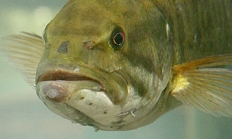
Oregon boasts dozens of species of game fish. Trout is the most popular target for anglers, but the state also has iconic salmon and steelhead runs, world-class smallmouth bass fisheries and marine opportunities for both shore and boat anglers.
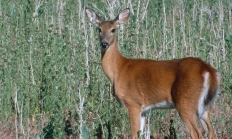
Eastern Oregon mule deer are managed by Deer Hunt Areas, while all other big game, including Western Oregon deer hunts are managed by wildlife management units. Plan ahead by checking the boundaries of where you want to hunt. Hunters in Oregon can access millions of acres of public land open to hunting ( national forests, BLM land, state forests, wildlife areas) plus many private lands open through Oregon’s Access and Habitat program. See www.oregonhuntingmap.com to find a place to hunt.

Features: The most distinguishing feature of white-tailed deer is the tail. Whitetails have long, wide tails that can easily be seen, especially when they are startled and raise their tails. White-tailed deer antlers differ from mule and black-tailed deer in that there is one main beam with points coming off. Mule and black-tailed deer have antlers that fork on the main beam. Habitat: White-tailed deer share the same habitat as eastern Oregon’s mule deer. Deer both graze and browse. Forbs and browse (stems and leaves of woody plants) are favored forage during the growing season. Grasses are consumed during some…

Features: Columbian black-tailed deer are smaller and darker than mule deer. As the name suggests, black-tailed deer have a wide, triangular tail with a dark brown or black top and a white underside. Habitat: Blacktails are a subspecies of mule deer found in western Oregon from the Coast Range east to the Cascade Mountains. They are edge-adapted species using the region’s dense forest cover to hide during the day and are then more open in early successional forest to feed at dawn and dusk. Places with a mix of forest age classes offer the best habitat for black-tailed deer. Techniques…

Features: Mule deer are larger and lighter in color than black-tails. Mule deer have a thinner “ropelike” tail that is white with a black tip. Their antlers are forked, as opposed to having a main beam. And as their name implies, they have large ears, like a mule, that stand at an angle. Habitat: Mule deer occupy a wide range of habitat types; some live in desert shrub-steppe, some in woodlands, and some in conifer forests. In general, however, mule deer occupy the more open, rugged areas. Although mule deer commonly are considered “browsers," they consume a wide variety of…

Features: Oregon’s rarest deer has a brown tail that is longer than a blacktail’s wide tail. Its antlers will branch off from a single main beam, unlike mule deer and blacktail antlers that branch twice. Habitat: The Columbian whitetail is a subspecies unique to Oregon and southwest Washington and found in just a few locations—along the lower Columbia River in Oregon and Washington, and in the Umpqua Basin near Roseburg (where it is expanding its range). Techniques: Just a few controlled hunts for this subspecies exist in the Umpqua Basin region and tags are limited; see the regulations for details.
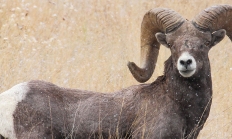
Features: California bighorn sheep are one of two subspecies of wild sheep in Oregon. They are usually smaller, with a less blocky build and smaller horns than Rocky Mountain bighorn sheep. Bighorn sheep were extirpated from the state in the 1800s. Current populations are the result of a reintroduction effort by ODFW and sportsman groups. Habitat: California bighorn sheep are the most abundant subspecies in Oregon with an estimated 3,700 found among 32 herds in central and southeast Oregon. They prefer rugged, open habitats with a good view of their surroundings. Techniques: Bighorn sheep are one of the rarest game…
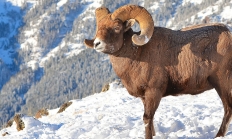
Features: Rocky Mountain bighorn sheep are the largest-bodied bighorn in North America and one of two subspecies of wild sheep in Oregon. Bighorn sheep were extirpated from the state in the 1800s so current populations are the result of a reintroduction effort by ODFW and sportsman groups. Habitat: Oregon’s estimated 800 Rocky Mountain bighorn sheep are found in the northeast corner of the state, in canyons of the Snake River and its tributaries and in alpine areas of the Wallowa Mountains. Techniques: Bighorn sheep are one of the rarest game species hunted in Oregon today, with about 100 tags available…
Features: Roosevelt elk are one of two subspecies of elk found in Oregon, with an estimated population of 59,000 in the state. “Rosies” are darker in color than other elk subspecies and the largest in terms of body size, with bulls generally weighing 700-1,100 pounds. Habitat: Roosevelt elk occupy most of western Oregon, with concentrations in the Cascade and Coast ranges. All elk west of Hwy 97 are considered to be Roosevelt elk, though there is some overlap of Oregon’s two subspecies in the Cascades. Techniques: Roosevelt elk make their home in the thick and lush forests of western Oregon…
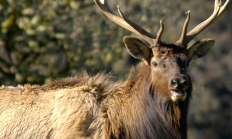
Features: Rocky Mountain elk are one of two subspecies of elk found in Oregon, with a population estimate of more than 74,000 in the state. They are lighter in color and slightly smaller in size than Roosevelt elk, but their antlers are the largest of all elk and can weigh up to 40 pounds. Habitat: Rocky Mountain elk inhabit most of eastern Oregon with concentrations in the Blue Mountains and south-central Oregon. Techniques: Rocky Mountain elk live in much more open country that Roosevelts so try glassing, still hunting, spot and stalk and calling. Rifle, archery and muzzleloader seasons are…


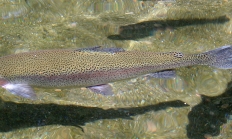
Features: Brook trout are easily identified by the worm-like pale yellow markings on their backs and red dots with blue halos and white borders on their lower fins. In small streams brook trout are often 5- to 7-inches long but can reach 25 inches or more in large rivers or lakes. Habitat: Brook trout are an introduced species, first stocked in the early 1900s. They are widely distributed from high mountain lakes to headwater tributaries, and thrive in cold, mountainous streams and lakes where other species are unable to do well. Many barren lakes have been stocked with brook trout…

Features: The coloration tends to be golden-brownish with dark brown or black spots on the body, and on the dorsal and adipose fins. Usually few or no spots appear on the tail fin. Many body spots, especially those below the lateral line, are edged with pink, red, or orange, forming rings or halos. Breeding males develop strong teeth and a hooked snout. Size can range from 11-inches long in small streams to over 30-inches in large rivers or lakes. Habitat: Although brown trout can adapt themselves to sluggish streams and warmer temperatures than other trout, cold, spring-fed tributary streams with…

Features: While their coloration can be variable, bull trout are generally gray infused with green. The body is covered with small white or pale yellow spots. Some spots along the side may be deep orange to red. The leading edges of the fins along their bellies are white. Bull trout, despite the common name, is not actually a trout but a member of the closely related char group. Habitat: Bull trout require cold, clean water to survive and are typically found in the headwaters of Oregon rivers. Spawning occurs in the fall when water temperatures drop below 50F. Techniques: Anglers…

Click here to learn about the different kinds of cutthroat trout

Features: Coastal cutthroat trout are typically are blue/green on top, red along the lateral line, and white on the belly. They are lightly or heavily spotted and adults have a red slash mark on the throat. Habitat: The most common variety of trout in Oregon is the coastal cutthroat, found in the streams and beaver ponds in coastal drainages. They also are stocked in high mountain hike-in lakes where the water stays cool throughout the summer. Techniques: Cutthroats that are year-round residents of small streams may not get any bigger than 8- or 9-inches, but can reward the angler with…
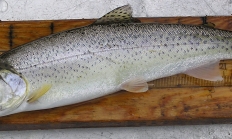
Features: The name “cutthroat” is derived from the two red slash marks or streaks on the underside of the lower jaw. Lahontans don't develop the intense crimson or gold coloration that other subspecies do, but the males can develop some red on their sides. Spots on the head can help distinguish this subspecies from other inland cutthroat subspecies. Habitat: This variety has adapted to the dry, highly alkaline waters and was once widespread throughout the Lahontan Basin of California, Nevada and southeast Oregon. Today, native populations can be found in the Whitehorse and Willow creek basins in the far southeastern…

Features: While in the sea, sea-run cutthroat feed on crustaceans and small fish and can grow up to one inch a month. By the time they return to fresh water to spawn, these fish can be up to 18-inches long and are bright silver, much like a small steelhead. Habitat: This is a sea-run strain of the coastal cutthroat that travels into the saltwater estuaries for a few months of the year. Unlike salmon and steelhead, sea-run trout don’t migrate far from their home river and return to freshwater in late summer – July and August. Technique: Sea-run cutthroat trout…
Features: Like all cutthroat trout, this species boasts bright red streaks on either side of its “throat.” You can tell it’s a westslope cutthroat by its spot pattern – the majority of the black spots are found on the back end of the fish with rather few ahead of the dorsal fin. Habitat: While westslope cutthroat trout was once the most widely distributed cutthroat in North America, its home in Oregon has always been limited to the John Day Basin. During the cooler months of summer you can find them in places like Strawberry Creek and upper Canyon Creek. As…
