
Search myodfw.com
Showing 1401 - 1420 of 1673 results

July
Mid-Valley Clays & Shooting School 6181 CONCOMLY RD NE GERVAIS, OR 97026-9714
July 2, 2025 THE DALLES, Ore.—With another poor forecast for Columbia Basin summer steelhead runs this year, protective regulations are again in effect on some tributaries (Deschutes, John Day, Eagle Creek). The daily adult salmon and steelhead bag limit may not include more than one hatchery steelhead in the following…
CORVALLIS, Ore. – The shotgun range at E.E. Wilson Wildlife Area near Corvallis will be closed for renovation from July 14 through the end of October. Renovations on the range will include expanding the shooting bays and implementing ADA complaint access to the site. ODFW expects work to be complete…
SALEM, Ore – Mussel harvesting is now closed from Tillamook Head (south of Seaside) to the north Jetty of the Siuslaw River (Florence) the Oregon Department of Agriculture and the Oregon Department of Fish and Wildlife announced today. Recent mussel samples indicate levels of Paralytic Shellfish Poisoning (PSP) – a…
SAUVIE ISLAND WILDIFE AREA, Ore.— To manage ongoing traffic and parking problems at Sauvie Island Wildlife Area's beaches, ODFW is introducing a new limited-entry parking pilot program. Starting July 4, vehicles will need a free Sauvie Island Beaches Pass in addition to the Wildlife Area Parking Permit ($10 daily) to…
SALEM, Ore. – The deadline for applications has been extended to July 11, 2025, for the Landowner Representative. Application forms are available at http://www.dfw.state.or.us/lands/AH/get_involved.asp. The Landowner Representative position is looking for individuals with experience in forestry or agriculture with an interest and experience in hunting and wildlife conservation. You do…
SALEM, Ore. – The Oregon Conservation and Recreation Fund (OCRF) is now accepting letters of interest for its summer 2025 Wildlife Crossing Infrastructure Grant Opportunity, supporting capital construction projects that reduce wildlife-vehicle collisions and restore critical movement and migration pathways across Oregon. Letters of Interest must be submitted before 11:59…
SALEM, Ore. – The Fish and Wildlife Commission meets Friday, July 11 at 10 a.m., at The Dalles Civic Auditorium (323 East 4th St., The Dalles). See the agenda here. The meeting will also be livestreamed from the Commission page. At Friday's meeting, the Commission will be asked to consider…

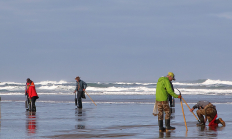
ASTORIA, Ore – The annual conservation closure of razor clamming on Clatsop beaches begins 12:01 a.m. July 15. The Oregon Department of Fish and Wildlife encourages clammers to take advantage of the low tide series that begins July 8. However, ODFW reminds clammers that although the low tide series goes…
SALEM, Ore.—ODFW will host a series of online public meetings in July with district wildlife biologists presenting proposed changes to next year's big game regulations and getting feedback. Each meeting will include a presentation on 2026 proposed regulations, a Q&A and opportunity for public comment. Proposed 2026 tag numbers and…
SALEM, Ore – Mussel harvesting is now closed from Tillamook Head (south of Seaside) to the north Jetty of the Siuslaw River (Florence) the Oregon Department of Agriculture and the Oregon Department of Fish and Wildlife announced today. Recent mussel samples indicate levels of Paralytic Shellfish Poisoning (PSP) – a…
SALEM, Ore. – Oregon's deer and elk give birth from May through July each year. It's natural for mother animals to leave their young alone for extended periods of time while they go off to feed. If you come across a fawn or calf by itself, don't assume it's orphaned…
CANYON CITY, Ore.- A poacher investigated for more than 50 crimes committed in Grant County between 2023 and 2024 was sentenced to 95 days behind bars and more than $22,000 in restitution and fines, according to wildlife officials. In what wildlife enforcement officers refer to as a serial poaching case…
CLACKAMAS, Ore.— Fishery managers from Oregon and Washington added recreational fishing days for adult hatchery Chinook and sockeye to the on-going hatchery steelhead and hatchery jack Chinook fishery in the mainstem Columbia River downstream of the Highway 395 Bridge at Pasco, WA during a joint state hearing today. Retention of…


