Search myodfw.com
Showing 1 - 20 of 1269 results
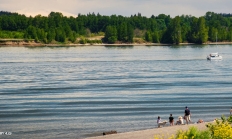

Features: Warmouth have more of a bass-shaped body and a larger mouth than the other sunfishes, other than the green sunfish. Warmouth are yellowish brown in color with three or four brownish bars radiating back from the eye over the gill cover. They can be distinguished from the green sunfish by the absence of turquoise mottling on the gill cover and the lack of a dark spot at the rear base of the dorsal fin. Habitat: In Oregon, warmouth are present in a few coastal lakes and widely distributed in the Columbia basin, but are not commonly caught by anglers…
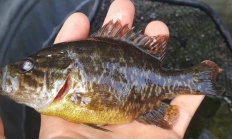
Features: Pumpkinseeds may be identified by the orange or red spot on the ear flap and the orange cheeks with wavy blue or turquoise stripes. Color is exceedingly brilliant and somewhat variable; olive to brassy-green above, the back finely dusted with gold or emerald. Habitat: Pumpkinseeds are found in the same habitats and often in association with bluegills. Adults often congregate beneath old deadheads and trees that have fallen into the water. Food habits are also similar to bluegill. They consume large numbers of snails by browsing on the stalks of aquatic vegetation. Techniques: Pumpkinseed are found in many of…
Features: Redear sunfish are often confused with bluegill, but differ by having a red or orange border around the black ear flap and by lacking the spot on the dorsal fin and the vertical bars on the side. Habitat: In Oregon, redear sunfish are found only in a few ponds in the Willamette Valley and the central part of the state. In their native range, redear sunfish prefer warm, large lakes and reservoirs and bayous with vegetated shallow areas and clear water. They feed primarily on the bottom and seldom take surface insects. The diet consists mostly of zooplankton, insect…

Features: Green sunfish have more of a bass-shaped body and a larger mouth than the other sunfishes, other than the warmouth. Also, unlike other sunfish except the warmouth, the pectoral fin is rounded, rather than pointed. Green sunfish are olive green on the back and sides with a yellowish-copper or brassy hue on the lower sides of the belly. Dusky, vertical bars are often present. Turquoise mottling, often in the form of bars, radiates backward from the snout and eye. They have a dark spot at the base of the rear lobe of the dorsal fin. Habitat: Green sunfish are…

Features: Bluegills are distinguished from other panfish by the black ear flap and black spot at the rear base of the dorsal fin. Five to eight greenish, vertical bars are faintly visible on their sides. The body is olive-green in color, bluish above and silvery below. Breeding males develop a bright orange to red flush on the throat area. Adults in most waters measure 5- to 8-inches, but the state record bluegill exceeded 12-inches. Habitat: Bluegills prosper in clear, clean ponds, lakes and backwaters of slow streams with abundant vegetation. They feed on both plant and animal life, but primarily…

ASTORIA, Ore. – Clatsop beaches reopen for razor clam harvesting Oct. 1 following the annual conservation closure that began July 15. Before harvesting razor clams or any shellfish, always call the Shellfish Safety Hotline at 1-800-448-2474 or visit the ODA Recreational Shellfish Biotoxin Webpage. During the closure, Oregon Department of…

This dark colored salamander has a reddish-brown ragged edged stripe that runs along the top of the head to the tip of the tail with black or dark brown sides. It has a long body and tail and the belly is black with large white flecks. The Oregon slender salamander is a lungless salamander species, relying on its skin to breathe. Mature adults can grow to just under four inches in total length, with females about 12 percent larger than males. Oregon slender salamanders are most common in stable, moist old-growth (late successional and second-growth) forests where there are abundant…

Adult Oregon spotted frogs have moist bumpy skin that is reddish-brown on their topsides. On their heads, backs, sides and legs, they have black spots with light centers that darken with age. They also have red bellies and orange-red underlegs. Adult females grow to four inches in length and males to three inches. Oregon spotted frogs live in wet areas that provide abundant aquatic vegetation such as marshes, permanent ponds, lake edges and slow streams. When frightened, they hide in dense vegetation or under debris at the bottom of shallow wetlands. Adult frogs hibernate during the winter in freeze-free seeps…

ASTORIA, Ore – The annual conservation closure of razor clamming on Clatsop beaches begins 12:01 a.m. July 15. The Oregon Department of Fish and Wildlife encourages clammers to take advantage of the low tide series that begins July 8. However, ODFW reminds clammers that although the low tide series goes…

CENTRAL POINT, Ore. – The Oregon Department of Fish and Wildlife is giving away free wildlife forage seed to landowners in Central Point, Grants Pass, and Gold Beach on Wed., Oct. 1. Landowners are eligible for two 15-pound bags of seed to cover at least one acre of habitat for…

SAUVIE ISLAND WILDIFE AREA, Ore.— To manage ongoing traffic and parking problems at Sauvie Island Wildlife Area's beaches, ODFW is introducing a new limited-entry parking pilot program. Starting July 4, vehicles will need a free Sauvie Island Beaches Pass in addition to the Wildlife Area Parking Permit ($10 daily) to…