Search myodfw.com
Showing 421 - 440 of 1128 results
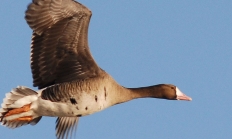
Features: The distinctive white band across the base of their bill gives this goose its name. It is medium in size with a gray and brown body. Adults have d ark brown and black spots on their chests and breasts give this goose the "specklebelly" nickname, while the young of the year birds are a nondescript gray with yellow legs and bills. Habitats: The white-fronted goose grazes on a mixture of grasses and grains. It can often be found in agricultural lands. Techniques: Hunting white-fronted geese is not for the faint-hearted. Scouting is necessary. And since they're mostly found in…
HINES, Ore. – ODFW biologists confirmed that a natural mixing event, or "turnover," likely caused the death of stocked rainbow trout recently observed at Burns Gravel Pond on Hwy 78. The pond is located two miles east of Burns, Ore., on Hwy 78 on property owned by ODFW. The pond's…
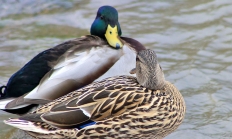
Features: During the fall, winter and spring months, males can be quickly identified by their distinctive iridescent green heads. Females are mottled-brown, with a dark brown stripe through each eye, an orange bill with black splotching and have orange legs. Immature ducks resemble adult females until the males develop more colorful plumage in early fall. After breeding season, males develop duller eclipse plumage beginning in June and resemble hens until mid-September. Wings of both sexes have a violet-blue speculum bordered in front and behind by a pronounced white stripe. Habitat: Mallards are the most common breeding and wintering duck in…
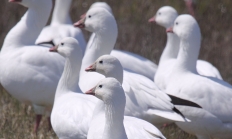
Features: A medium-size goose, adult snow geese are white with black-tipped wings that are visible in flight. Their pronounced pink bill has a dark "grinning" patch across it, and they have pinkish feet. Young of the year snow geese are grayish white with grey legs and bills. These birds are very vocal and can be heard over a mile away. Habitat: Snow geese are well-adapted to agricultural land. They can also be found in wetlands, roosting in open water. Sauvie Island, Summer Lake and Klamath wildlife areas have abundant snow goose populations during various times of year. Technique: Snow geese…


The lush northwest corner of Oregon offers world class bird hunting -- from waterfowl hunting on the lower Columbia River to ruffed grouse flushing in the foothills of the Cascades. Opportunities abound close to Oregon's major metropolitan areas.

Features: The mountain goat is stockily built with black scimitar-shaped horns, large black hooves and prominent dewclaws, and an entirely white, woolly coat. Habitat: Rocky Mountain goats are found in steep and rugged habitat in eastern Oregon, including the Wallowa, Elkhorn and Strawberry mountains, and the central Cascades near Mt Jefferson. Techniques: Rocky Mountain goat tags are “once-in-a-lifetime” and less than 25 are available each year. Be prepared to hunt their steep, rugged habitat if you are lucky enough to draw a tag.

Features: A medium-size shorebird, it is stocky with brown and buff coloration. The long, thin bill is a distinguishing feature. Habitats: As a shorebird, the Wilson's snipe is found along bog, marsh and wet meadow edges. It uses its long bill to forage for worms and other invertebrates. Techniques: Hunt along wetland edges. Because their coloration is excellent camoflage, they're difficult to see before flushing. Be quick on the draw and use a light load. They are small birds after all. Header photo by Dave Budeau

Features: Oregon is home to more than 6,000 cougars, or mountain lions. Cougars are the largest members of the cat family found in the state and tend to be solitary, except for females raising young. Males in particular are very territorial. Habitat: Cougars are throughout Oregon, with concentrations in the Cascade Range and Blue Mountains. Lately, more cougars are being seen in northwest Oregon including the suburbs of Portland. Techniques: Hunting is open statewide under a general season all year, or until zone quotas are met. Most cougars in Oregon are taken while hunters are out pursuing other species like…

Gnat Creek Hatchery was constructed in 1960 as part of the Columbia River Fisheries Development Program (Mitchell Act)—a program to enhance declining fish runs in the Columbia River Basin. The facility is used for egg incubation and rearing of spring Chinook and winter steelhead. Most of the production is released off-station. The hatchery is an easy drive toward Oregon’s coast on Highway 30 and a visitor-friendly place for the entire family. With lots to do, located on beautiful Gnat Creek and tucked away amid the rainforest, this is a worthwhile stop on the way to the coast.
Features: The small Ross's goose looks very similar to a snow goose, but with some slight distinguishing features. Like the snow goose, this goose has black primary feathers. But it does not have the black grin of a snow goose on its pink bill. Also, their wing beat is faster and call higher pitched than a snow goose's. Habitats: The Ross's goose can be found in shallow lakes and wetlands while in migration. It feeds on grasses, sedges and small grains. Techniques: Often taken while snow goose hunting, the techniques are similar. Create a white decoy spread with silhouettes, white…
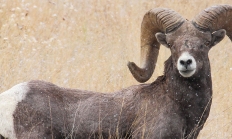
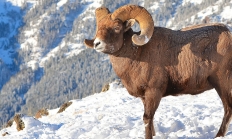
Features: Rocky Mountain bighorn sheep are the largest-bodied bighorn in North America and one of two subspecies of wild sheep in Oregon. Bighorn sheep were extirpated from the state in the 1800s so current populations are the result of a reintroduction effort by ODFW and sportsman groups. Habitat: Oregon’s estimated 800 Rocky Mountain bighorn sheep are found in the northeast corner of the state, in canyons of the Snake River and its tributaries and in alpine areas of the Wallowa Mountains. Techniques: Bighorn sheep are one of the rarest game species hunted in Oregon today, with about 100 tags available…
Features: Drakes have a black head with a white spot below and in front of the eye -- rather than the crescent-shaped patch of the barrow's goldeneye -- white neck, breast and flanks and a black back and tail. Hens have a brown head, light neck, breast and belly, brown backs and flanks. Drakes and hens of both common and Barrow's goldeneye have a distinctive golden ring around the pupil. Habitat: It is a common migrant in northeastern Oregon and winter resident of the Snake, Columbia, Klamath, Rogue and Umpqua rivers. Techniques: These ducks travel in small groups of two…

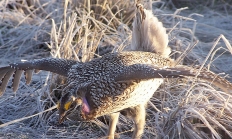
Features: Columbian sharp-tailed grouse are brown-gray with small black and white markings, a white underside, and a short tail that is white at the base. They are a medium-sized grouse. Both the males and females have a yellow-orange comb over each eye. Habitat: Columbian sharp-tailed grouse were historically found in most counties of eastern Oregon. These birds preferred the bunchgrass prairies interspersed with stream bottoms containing deciduous shrubs and trees. This habitat was particularly common in north-central Oregon and the Columbia Basin. Technique: In 1929, Oregon closed its hunting season for sharp-tailed grouse and it has never re-opened. By the…

Features: California bighorn sheep are one of two subspecies of wild sheep in Oregon. They are usually smaller, with a less blocky build and smaller horns than Rocky Mountain bighorn sheep. Bighorn sheep were extirpated from the state in the 1800s. Current populations are the result of a reintroduction effort by ODFW and sportsman groups. Habitat: California bighorn sheep are the most abundant subspecies in Oregon with an estimated 3,700 found among 32 herds in central and southeast Oregon. They prefer rugged, open habitats with a good view of their surroundings. Techniques: Bighorn sheep are one of the rarest game…