
Search myodfw.com
Showing 161 - 180 of 672 results
SALEM, Ore. – Oregon's Fish Screening and Fish Passage Task Forces will meet Wednesday, May 6 at 8:00 a.m. The meeting is open to the public and will be held in person at The Dalles Screen Shop at 3561 Klindt Dr, The Dalles and virtually through Teams. The meeting agenda…
Click here to learn about the different kinds of rainbow trout

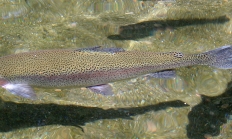
Click here to learn about the different kinds of cutthroat trout

LA GRANDE, Ore. – Lookingglass Creek, a tributary to the Grande Ronde River at Palmer Junction, will open to fishing for hatchery spring Chinook on Friday, May 15. The open area is from the mouth upstream to the confluence of Jarboe Creek. Depending on which happens first, the fishing season will remain open through June 14 or until…
Features: These fish have a dark blue or black body, mottled with yellow and with a broad yellow stripe running along their side. Habitat: The China rockfish dwells in relatively shallow water, 10- to 400-feet deep, on rocky reefs. Technique: They readily take both bait and lures. China rockfish will be caught in areas with lots of rocks and crevasses, and by keeping the bait or lure very close to the bottom.

Features: Soles have flattened, oval bodies with both eyes on one side of their head. They are dark on top and light underneath. Habitat: They are commonly found on mud or sand bottoms from 5- to 750-fathoms deep. Techniques: Soles and other flatfish are best targeted by fishing with smaller hooks (less than 2/0) tipped with bait such as clam necks, sand shrimp, or chunks of herring or anchovy on a sandy or gravel bottom.

Features: They are dark olive on the tops of their bodies, silver on the sides, and white underneath, with 6-9 black stripes running horizontally from behind their heads to their tails. Habitat: Striped bass spend most of their time in fresh water, with occasional and unpredictable trips to the sea. Technique: In the spring and fall stripers are likely to be closer to the surface. During this time bait, such as dead minnows or night crawlers, will entice the fish to bite. During summer, the bass go deeper to escape the heat. This is the time to use flashy bait.

Features: Pinkish red to copper pink, white ventrally, pink fins. Lateral line in red zone. Second anal spine short, edge of anal fin slants posteriorly. Chin projects outward. No spine on edge of gillraker. Habitat: Large schools of chilipepper rockfish are often found between 330 and 990 feet. They will stay over sandy, muddy, or rocky bottoms but also spend time in the midwater. Technique: Play to this species’ midwater foraging nature by presenting lures that mimic their natural diet – forage fish and small squids.
Features: The widow rockfish is brassy brown with a light colored belly. Their fin membranes are also brown. They can grow to be 21-inches long. Habitat: Widow rockfish school down to 1200 ft., usually found suspended over offshore reefs and rocky areas. Technique: Best success will be by first locating suspended schools of widow rockfish in offshore areas during periods open for fishing offshore, and then working rubber tail jigs or shrimp flies through the schools.

Features: The redstripe rockfish appears red and pink. The dorsal fin is shallowly notched and the lateral line is a distinct red stripe. It has dark lips, a protruding lower jaw, and greenish stripes radiating from the eyes. Habitat: Commonly found over high-relief, rugged bottoms from 500 feet to 900 feet below the surface. Technique: Best success will be by first locating suspended schools of redstripe rockfish in offshore areas during periods open for fishing offshore. Work rubber tail jigs or shrimp flies through the schools.
Features: Cabezon are a dark green to dark brown with mottling along their sides and with smooth, scaleless skin. The largest cabezon caught was over 20 pounds, but on average they weigh approximately 4 pounds. Habitat: Cabezon live around kelp beds and rocky headlands over hard bottoms. Technique: Cabezon are best caught using rubber tailed jigs tipped with bait. Make sure you are fishing within just a foot or two of the bottom as Cabezon like to hold tight to cover. CAUTION: While Cabezon meat can be safely consumed, its roe is poisonous to humans. Photo credit: Brandon Ford
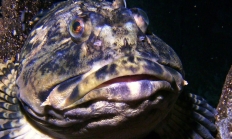
Features: Copper rockfish have variable coloration, ranging from dark or olive-brown to copper with pink or yellow blotches. They can grow to be 23-inches long. They have very tall and strong dorsal fin spines, and a clear patch along the rear half of the lateral line. Habitat: They prefer rocky, shallow areas. Though these shy fish do not school, they sometimes form small groups around man-made structures such as jetties. Technique: Copper rockfish will most readily be caught by working rubber tail jigs or bait near the bottom in shallow rocky areas.
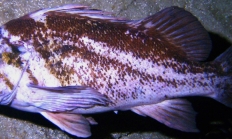
Features: Blue sharks are named for their brilliant blue color. They are slender with a long, pointed nose. They can grow to be 12-feet long, though they rarely get over 10-feet. Habitat: Blue sharks are found in all the world’s temperate and tropical oceans. They have been spotted as far north as Norway and as far south as Chile. They roam both open and coastal waters in search of octopuses, squid, cuttlefish, and fish. Technique: Typically chumming the water will attract blue sharks. You will need a wire leader to protect your line from the blue shark's saber-shaped teeth. Fins…

Features: Kokanee are silvery in color until they are ready to spawn, at which time they become reddish. They do not grow as large as sockeye- their ocean traversing siblings. They can vary significantly in size depending on how densely populated the waterbody is. Since they are filter feeders, their populations can quickly expand and contract with the availability of food. Habitat: Kokanee can be found at all depths of cold, clear lakes and reservoirs in several parts of the state. They will change which depth they are at depending on water temperature. Technique: They are a challenging fish to…

Features: Redtail surfperch all fins are reddish in color, and have 8-11 reddish to brownish vertical bars along the sides over a silver to brassy body. Habitat: Surfperch are found mostly in the surf. Redtail will usually be found between the 2nd and 4th row of breakers and near deeper holes and areas of high sand erosion. Technique: Some anglers use a #4 to #6 hook secured 24-30 inches below a 1- to 2-ounce sinker on 8- to 10-pound line. Baits include sand and kelp worms, sand shrimp, clam necks, and mussels. Some anglers have found success fly fishing for…

Features: Black rockfish are dark gray to black on top, with a lighter belly, and black spots on their dorsal fins. They can grow to be 25-inches long. Take the "Black Rockfish or Not?" quiz Habitat: They are found over rocky reefs most typically shoreward of 180 ft. of depth, and are common along jetties and other structure in estuaries. Occasionally schools of black rockfish will come all the way to the surface. Technique: Rockfish feed on squid, octopus, krill, and other fish . They readily take both bait and lures. Common lures include rubber-tailed lead head jigs and shrimp…

CLACKAMAS, Ore.—Fishery managers from Oregon and Washington added more recreational spring Chinook fishing days on the mainstem Columbia during a joint state hearing today. Eleven additional fishing days for the area from the Tongue Point/Rocky Point line in the estuary upstream to the Oregon/Washington border (upstream of McNary Dam) were…
Features: Coastal cutthroat trout are typically are blue/green on top, red along the lateral line, and white on the belly. They are lightly or heavily spotted and adults have a red slash mark on the throat. Habitat: The most common variety of trout in Oregon is the coastal cutthroat, found in the streams and beaver ponds in coastal drainages. They also are stocked in high mountain hike-in lakes where the water stays cool throughout the summer. Techniques: Cutthroats that are year-round residents of small streams may not get any bigger than 8- or 9-inches, but can reward the angler with…
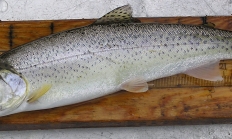
Features: Their eyed-side is greenish-brown to dark brown or black with lighter blotches. Their blind side is white to milky-white. They have a large, stout but flat body, shaped like an elongated diamond . Pacific halibut have been known to reach 500 pounds, but on average are 40 pounds. Habitat: Halibut are a large flatfish and so they spend much time near the bottom of the ocean looking above for food. They prefer chilly water and are primarily found in the Gulf of Alaska. Technique: Boat anglers use heavy rods to fish on or near gravel bottoms in water 150-500…
