

Search myodfw.com
Showing 181 - 200 of 903 results
Species and Subspecies

Species and Subspecies
Features: Black scoters‘ plumage is pure black uninterrupted by any white. The swollen bright orange-yellow knob on the otherwise black bill is smaller than that of other scoters. Females' uniform soot upperparts and dark head cap are clearly delineated from paler cheeks. Habitat: This scoter can be uncommon to locally common along the coast fall through spring, usually on the ocean. Techniques: Like other scoters, black scoters are ducks of the open ocean, and inaccessible to most hunters.

Species and Subspecies
Features: Adult males' plumage is black except for white patches on the forehead and nape. The most distinguishing feature is the bill, a swollen white, red-orange, yellow, and black wedge. This highly visible standard advertises male's presence for up to a mile. Dark-billed adult females and subadults are dark brown above and paler brown below, with two indistinct light patches on the cheeks and sometimes on the nape Habitat: The surf scoter does not breed in Oregon but is abundant on salt water along the coast from fall through spring. Look for surf scoters in the Columbia River estuary and…

Species and Subspecies
Features: Males' plumage is entirely black except for a small white teardrop around each eye, and white secondaries that form a conspicuous square wing patch during flight. A black knob graces the males' swollen, white-ridged, orange bills. Females and immatures are dark brown above and pale below with diffuse white patches in front of and behind the eyes. Their bills are dark. Habitat: Abundant along the coast from fall through spring. Techniques: Rarely taken as part of a mixed duck bag, their habit of resting and feeding on open ocean waters makes them inaccessible to most hunters.

Species and Subspecies

Species and Subspecies
Features: Except for adult drakes in breeding plumage, blue-wings are difficult to distinguish from cinnamon teal. Adult blue-wing drakes have a gray head with white crescent between the eye and bill. Hens and young of both species are nondescript small brown ducks, but show the prominent blue wing-covert patch in flight. Blue-winged teal is an early migrant and extremely rare winter resident in Oregon. Many hunters who believe they have shot a blue-winged teal actually have probably taken a hen or young drake cinnamon teal, both of which have identical wings with a large blue shoulder patch.

Species and Subspecies
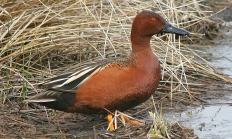
Features: Male cinnamon teal have a cinnamon-red head, neck, breast and belly. Like blue-winged teal, t hey have a bright patch of iridescent green on the rear of the wing and a bright blue patch on the front of the wing . They also have a distinctive red eye, a black bill and yellow legs and feet. Female and young male cinnamon teal are often confused with female blue-winged teal. Habitat: Prefer shallow, alkaline lakes where they dabble on aquatic plans. Techniques: Most cinnamon teal in Oregon are taken in eastern Oregon in the early season. They are not common…

Species and Subspecies

Species and Subspecies


Article
Hunter's Technique Hunter's Bounty Hunter's Plan Hunter's Guide "Gobble" up some new skills every spring! Register to attend a turkey hunting workshop or clinic --> ODFW education offers wild turkey hunting workshops designed for adults and youth turkey clinics before the season starts.
March 24, 2026
Species and Subspecies
Eastern Oregon mule deer are managed by Deer Hunt Areas, while all other big game, including Western Oregon deer hunts are managed by wildlife management units. Plan ahead by checking the boundaries of where you want to hunt. Hunters in Oregon can access millions of acres of public land open to hunting ( national forests, BLM land, state forests, wildlife areas) plus many private lands open through Oregon’s Access and Habitat program. See www.oregonhuntingmap.com to find a place to hunt.

Press Release
SALEM, Ore. – People across Oregon are being urged to avoid contact with sick or dead birds as highly pathogenic avian influenza (HPAI) continues to impact wild and domestic bird populations across the state. There is currently no effective treatment for wild and domestic birds, and the virus can spread…
December 3, 2025




Zones or Areas
From the rugged Coast Range to the Cascade Mountains, this vast area offers good general season hunting opportunities.
Zones or Areas
Densely forested hillsides from the coast through the Siskiyou Mountains to the Cascade Range offer excellent habitat for a myriad of big game species.
