

Waterway Access and Aquatic Invasive Species permits
To maintain boating access and to protect Oregon's waters from invasive species, all boaters must have the required permit.
Non-motorized boats regardless of length (kayaks, canoes, drift boats, stand-up paddleboards and rafts) need a Waterway Access Permit. Funds are used for waterway access improvements such as boat ramps and restrooms and for aquatic invasive species prevention efforts.
The Aquatic Invasive Species (AIS) Permit fee is included for Oregon-registered motorized boats and sailboats. Funds are dedicated to preventing the spread of aquatic invasive species, such as zebra and quagga mussels. Out-of-state boaters must buy an AIS Permit separately and carry it when operating in Oregon.
| Type of boat | Permit required | Cost |
| All nonmotorized paddle craft regardless of length | Waterway Access Permit | 7 days (consecutive), $8 *includes $2.00 service fee |
| Oregon motorized and sailboats | AIS Permit included in boat registration | Fee included in Marine Board registration |
| Out-of-State motorized | Out-of-state AIS Permit | Purchase through Marine Board |
Additional permit information:
The Waterway Access Permit is transferable to another non-motorized watercraft.
Youth 13 and younger do not need a permit.
Be sure to purchase your annual permits early in the year to get your maximum use. Download and print the PDF or have it ready to display on your mobile device for marine law enforcement.
If you are traveling through Oregon with a watercraft and do not launch it, a permit is not required. However, by state law you must still stop at any boat inspection stations along your travel route.
Where to buy permits
- Online through the ODFW Electronic Licensing System. Log in or select "Check Out as a Guest," select the Waterway Access Permit (7 day or Annual) in the General tab.
- Through an ODFW license agent or office that sells licenses
- Online via Oregon Marine Board's Boat Oregon Store
- At the Marine Board office in Salem
Funding
Revenue from the Waterway Access Permit supports two main goals:
1) Permit funds help improve public waterway access by building and maintaining boat ramps, docks, restrooms, parking areas, and launch facilities for paddlers and small boats. Learn more about Marine Board funded grants here.
2) A portion of each permit fee goes to AIS inspection stations, education programs, and rapid response efforts to stop invasive species like zebra and quagga mussels from entering Oregon's waters.
These funds are managed by the Oregon State Marine Board (OSMB) in partnership with ODFW and other agencies. Currently, a small portion of AIS Prevention Fund ($200K annual contract) goes to the Center for Lakes and Reservoirs that is administered by Portland State University. They are tasked with assisting state and federal agencies in researching and mitigating aquatic invasive species.
Harmful aquatic invaders
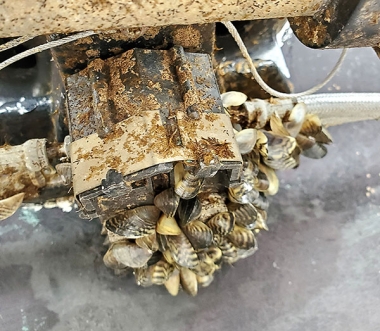
Aquatic invasive species can clog intake pipes of power plants, water and irrigation systems. They ruin boat motors, due to overheating caused by clogging water intake. Once established in a waterbody, routine maintenance is necessary, expensive and ongoing. They are virtually impossible to eradicate and control.
Management costs are enormous, particularly for industrial water users like power stations, water supply agencies and irrigation districts. They have the potential of collapsing entire food webs, reducing fish populations and devastating fisheries.
Find more information at: WesternAIS.org and at the Oregon Invasive Species Council
Invasive mussels threat
Aquatic invasive species are closer to Oregon than ever before. In 2023, quagga mussels were found in the Snake River at Twin Falls, Idaho. Following the discovery, Idaho immediately launched a rapid response effort, which included closing a section of the Snake River, applying targeted chemical treatments costing millions of dollars, and expanding statewide boat inspection and decontamination programs.
In October 2024, California discovered invasive golden mussels in the Port of Stockton in the Sacramento–San Joaquin Delta. These mussels can spread quickly, clog waterways, and harm native ecosystems.
State agencies responded immediately with containment and monitoring efforts, including closing affected waterways, inspecting boats, and removing mussels from localized areas. Scientists also began environmental DNA (eDNA) testing and regular surveys to track their spread.
Public awareness and action are critical. Boaters and anglers are encouraged to "Clean, Drain, and Dry" all boats and equipment and report any suspected sightings to help protect California's waterways.
Inspection stations
Click here for more information about AIS Check Stations and locations in Oregon.

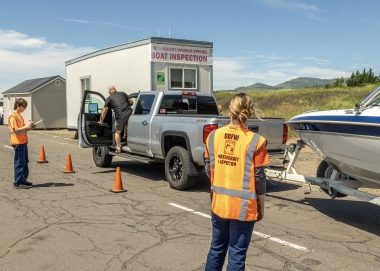
All vehicles towing or carrying watercraft or paddle craft into Oregon must stop at any watercraft inspection station that is open to inspect for aquatic invasive species. Located around Oregon, stations are open if large orange "Boat Inspection Ahead" signs are posted, followed by "Inspection Required for All Watercraft."
Attention Commercial Boat Haulers: Call Before You Haul
The Call Before You Haul program helps prevent the spread of aquatic invasive species by collecting information from individuals transporting trailered watercraft. Providing details about your boat's origin, destination, and travel plans can help expedite your movement through watercraft inspection and decontamination stations across the western states.
You can learn more about the program by visiting the Call Before You Haul website: https://www.westernais.org/callbeforeyouhaul
To submit your transport information online, please complete the form here: https://form.jotform.com/253113866011044
This form serves as an online alternative to calling the program's toll-free hotline (1‑844‑311‑4873). Information submitted is entered into the Call Before You Haul system to help arrange convenient inspections or decontaminations when needed, supporting the effort to prevent the spread of aquatic invasive species.
Explore Related Articles

Each year over 9 million Oregonians and visitors head to the mountains – and the desert, and the beach –...

How to fish
In some Oregon state waters catch-and-release fishing is required in order to protect valuable fish resources. One way anglers can...

Impacts on fishing, hunting and wildlife viewing
As much of Oregon continues to experience years of on-going drought, hunters, anglers and wildlife viewers can expect the continued...

Check out the Latest Recreation Report
Current conditions and opportunities to fish, hunt and see wildlife. Updated weekly by fish and wildlife biologists throughout the state.