

Living with black bears
Oregon is home to about 25,000 to 30,000 black bears, North America's most common bear species. Generally black in color, they can also be brown, cinnamon or blond. Fast and agile, they are good swimmers and climbers who prefer forests, trails and streams. At home throughout Oregon, black bears are omnivorous and have a diverse diet including berries, fruit, grasses and plants. Although they will consume small mammals, insects and amphibians, these bears are not usually active predators.
Bears should never be allowed access to human food or garbage; it habituates them to people and increases the chance of conflict. Once habituated to finding food near homes or campgrounds, bears can become a threat to human safety and must often be destroyed.
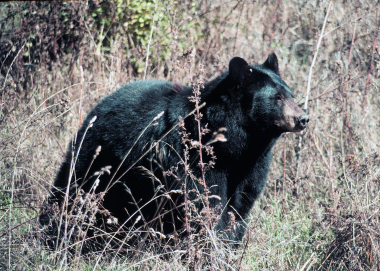
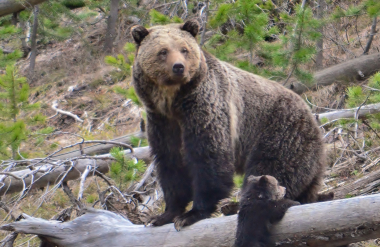
Bear facts: Is it a black bear or a grizzly bear?
| 
|
Oregon is black bear country. Although native to the area, there are no longer grizzly bears in the state. The last grizzly bear recorded was killed in the late 1930s at Billy Meadows, north of Enterprise in Wallowa County. However, because black bears are often brown, people sometimes wonder what species of bear they have seen. Here is some information on bear identification.
Q. Grizzly bears are brown and black bears are black. Correct?
A. Not really. Grizzly bears can be brown, blond, grey, reddish or silver tipped. Black bears can be blond, cinnamon, brown or black.
Q. True or False: Grizzly bears are bigger than black bears.
A. Don't count on it. On average grizzly bears are larger than black bears, however, there is much variation in size among bears of both species. It is also very difficult to accurately estimate the size of a bear in the wild.
Q. How can I tell the difference between a black bear and a grizzly bear?
A. There are no grizzly bears in Oregon, so if you see a "brown" bear in Oregon, it is a black bear. Grizzly bears are being recovered in Washington State in the North Cascades.
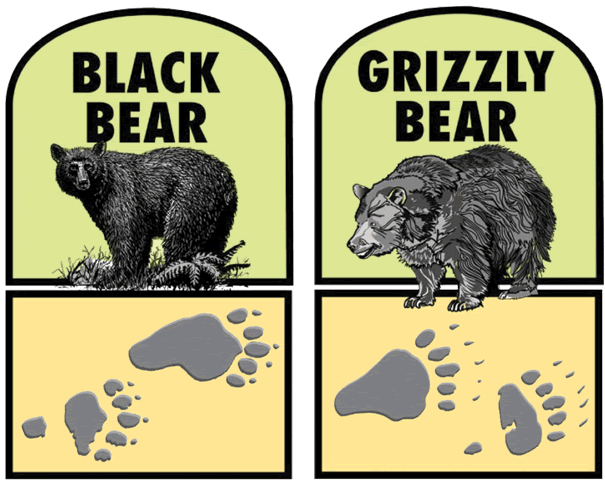
- Grizzly bears have a distinctive shoulder hump. Black bears don't.
- Comparatively, grizzly bears have short and round ears while black bears have large, pointed ears.
- In profile, the face of a grizzly bear is more concave (dish shaped) and broader than the black bear's which is straighter and narrower.
- The footprints of grizzly bears and black bears differ. View bear tracks (gif)
Bear resistant containers and garbage cans
While ODFW has not tested these bear-proof products, a number of groups have.
For a current list of Sierra Interagency Black Bear Group Approved Bear-Resistant Food Storage Containers see the Sierra Nevada Wild website. Among the suppliers are:
Products that have passed inspection under the Interagency Grizzly Bear Committee Testing Program can be viewed at the Interagency Grizzly Bear committee website. Among the suppliers are:
Hunting Black Bears
Bears are hunted in Oregon within a calendar year, and during authorized seasons, a hunter may harvest: one bear with a general season fall tag, one bear with an additional general season fall tag, and one bear with a controlled spring bear tag. Cubs and sows with cubs are protected. See current year's Oregon Big Game Regulations (pdf) for more information.
Important notice to bear hunters: ODFW researchers are asking successful bear hunters to submit the bear's premolar tooth and female reproductive organs to help with an important census study designed to more accurately estimate Oregon's bear population. For more information, call your local ODFW office.
Additional guidelines for hunters
- Be aware of surroundings at all times; be cautious.
- Be aware that by calling in an animal, you may attract a bear.
- Carry bear pepper spray and know how to use it.
- Watch for fresh bear signs.
- Be careful when field-dressing a deer or elk. Make noise; talk and laugh so bears know you are there.
- If you have to leave a deer or elk carcass overnight, hang it at least 10-12 feet off the ground and 6-10 feet from nearby trees in an open area.
Additional Resources:
Explore Related Articles

wildlife viewing
Tips for avoiding human-bear encounters
Black bears are part of the natural ecosystem but conflict can occur when they enter our space, or we enter...

Cougars currently occupy most of the available cougar habitat in the state and are expanding into lower quality habitats that...

Each year over 9 million Oregonians and visitors head to the mountains – and the desert, and the beach –...

Support Oregon's Wildlife
When you buy a Habitat Conservation Stamp, you are helping to conserve Oregon's native species and their habitat.