Search myodfw.com
Showing 221 - 240 of 699 results
SW WILDLIFE VIEWING September 17, 2026 Recreating in drought and wildfire season - actions you can take to protect wildlife . For the most current fire closures and restrictions-- KNOW BEFORE YOU GO . Coos and Curry counties Coquille Valley Wildlife Area (CVWA) Coquille Valley Wildlife Area (CVWA) in Coos County is open to public access. Permits for access are required and are available, free of charge, at the kiosk located in the parking lot along North Bank Road. You must access CVWA through this point. Please fill out the upper half ("A" half) of the permit and deposit it in the slot located on the post…



The Columbia Basin Wildlife Areas are a composition of four Oregon Dept. of Fish & Wildlife managed wildlife areas located along the Columbia River in the Columbia Basin. The four wildlife areas (Power City, Irrigon, Coyote Springs, and Willow Creek) are within the Columbia Plateau ecoregion. Management agreements for these areas were initially established between 1971 and 1977 between the department and Federal agencies which own the lands. The Columbia Basin Wildlife Areas, which total approximately 1,885 acres, provides an important landbase for the conservation and recreation of fish and wildlife within a highly privatized and altered landscape and play…
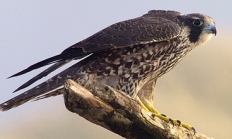
Peregrine falcons are among the most charismatic and noted of the world's birds. They are described as the fastest animal on the planet, and have been recorded reaching speeds in excess of 240 miles an hour in dives after prey. They are one of Oregon's boldest raptors, and have been observed usurping active Golden eagle nest sites, stealing fish from Ospreys and ground squirrels from adult Bald eagles who stray into their territory. It has, for perhaps 4,000 years, been used by falconers because of its skill in capturing game birds in tandem hunts with humans. Peregrines are medium-sized raptors…
Following droughts in the 1930s that affected most of North America, major conservation efforts, by both private and governmental entities, were enacted to reverse trends of degrading and disappearing wetlands. During this time period there was a major creation and expansion of federal wildlife refuges and state wildlife areas. As the concept of waterfowl flyway management was endorsed and developed, wildlife areas were acquired and managed as part of a larger plan focused on migratory waterfowl needs. LMWA was one of several wetland-focused wildlife areas established in Oregon. Ladd Marsh Wildlife Area was established in 1949, with primary objectives of…

Lower Deschutes Wildlife Area was established in 1983, with the initial donation of land by the Oregon Wildlife Foundation (OWF) of 2,758 acres. In 1986 OWHF donated an additional 5,158 acres of land to the department. The Lower Deschutes Wildlife Area was initially established to provide permanent public angler access. However, especially with the 1986 acquisition, the wildlife area has grown to provide enhanced wildlife and fish habitat (i.e. through removal of livestock, riparian vegetation improvements, etc.) and more wildlife-oriented recreational activities such as hunting, boating, hiking and biking. In 2015, ODFW partnered with the Trust for Public Land to…
CENTRAL WILDLIFE VIEWING September 17, 2026 Recreating in drought and wildfire season - actions you can take to protect wildlife . For the most current fire restrictions-- KNOW BEFORE YOU GO . Crook County All public land fire closures within Crook County have been lifted which broadens wildlife viewing access. Remember to use caution when traveling through and recreating in burned areas. Waterfowl should be visible along the crooked river and on most lakes/reservoirs. Herons, osprey, and kingfishers are frequently seen along the crooked river while searching for prey. Raptors, including bald eagles, redtail hawks, and kestrels can be seen…
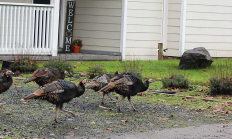
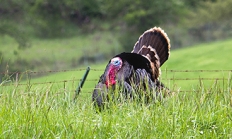
The wild turkey is the largest game bird in North American with mature males weighing upwards of 20 pounds and standing 40 inches tall. These large terrestrial birds are generally dark brown to black in appearance but iridescent color in feathers ranging from gold and copper to green and black gives a metallic appearance, particularly in full sunlight. Males and about 10 percent of females sport a unique beard of keratinous filament that protrudes from the junction of the breast and neck. Beards grow continuously but rarely exceed 10 inches in length. Females are smaller and duller in appearance. Densities…

Prioritize what you want out of your hunt Controlled Hunt Application Worksheet Steps on how to apply for a controlled hunt
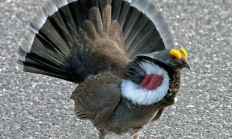
This popular upland game bird is the largest of Oregon's three forest grouse. It is well known for the distinctive hooting call emitted by courting males in the spring. This call is accompanied by an extravagant courtship display involving exposure of blood-engorged, featherless shoulder spots and eye combs, which are reddish to orange. It is a common resident in coniferous forests. Hear the call of the dusky grouse Photo by Jim Dollar, Flickr