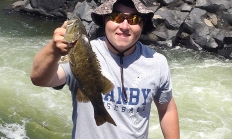
Search myodfw.com
Showing 221 - 240 of 399 results
Updated April 29, 2026 Subscribe for updates Starting Jan. 1, 2026, an Ocean Endorsement is needed for most recreational anglers fishing in the ocean. Check the Ocean Endorsement page for more information. Ocean Endorsement

Find maps, unit descriptions and the percent public lands in the Starkey Unit.
Features: Chukars are brown-gray with a black stripe running across the head, through the eye, and down onto the chest. Their bills and feet are red, and their sides have white and black barring. Habitat: Extensive areas in eastern Oregon provide ideal habitat for chukars. Cheatgrass, an introduced plant species, was already well established through much of eastern Oregon prior to the 1950s, and provides one of the most important year-around food resources for the chukar. Their habitat is generally steep, rocky, dry, and largely unsuitable for development, agriculture or other commercial uses except grazing. Important chukar areas in Oregon…

Features: Both male and female mountain quail have a tall, straight, head plume that is black. They also have a chestnut brown throat patch that is bordered by a white stripe. Their head and shoulders are a gray color that fades into olive-brown on their backs. Their sides are brown with several black and white stripes making them a beautiful bird. Habitat: Mountain quail are native birds found on both sides of the Cascades. They thrive in the natural brushlands of southwestern Oregon and are also found in northwestern Oregon when suitable habitat is created by logging, fire or other…

Features: Identified by its prominent radiating ridges. Habitat: Cockles are "hard shelled" clams. Their protective, stout shells and short siphons mean that they do not have to bury as deeply as other common bay clams. Good cockle beds will often have cockles right on top of the sand on a good tide. They prefer sandy areas with high salinity, but can be found at many types of tideflats. Technique: The best clamming is during low/minus tides. Because these clams are so near the surface, you rake, rather than dig, for them. A four prong gardening rake is perfect for raking…
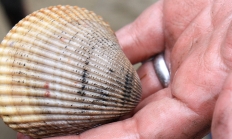
Features: When in the ocean coho salmon can look very similar to Chinook salmon . However, coho will have a white gum line on the lower jaw with darker color both inside and outside of the gum line, and will only have spots on the upper lobe of their tails. When coho return to freshwater they become red on their sides and dark greenish on their backs, heads, and fins. Coho adults may reach 25 pounds or more, but rarely exceed 15 pounds. Habitat: Small, relatively low-gradient tributary streams with pea to orange-sized gravel for spawning and juvenile rearing. Coho…

Features: Smallmouth bass are golden green to bronze with dark vertical bars and blotches on the side. The upper jaw does not extend beyond the eye. In some locations, it has a red eye. Somewhat smaller than the largemouth, smallmouth bass in Oregon may reach 23-inches and exceed 7 pounds. Habitat: Smallmouth bass are adapted to flowing waters and do well in warm streams with deep holes and rocky ledges. They also prefer lakes and reservoirs with rocky shorelines and limited vegetation. Adult smallmouth feed mostly on fish and crayfish. Technique: Much of what was written about largemouth bass also…

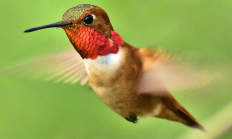
Features: Redear sunfish are often confused with bluegill, but differ by having a red or orange border around the black ear flap and by lacking the spot on the dorsal fin and the vertical bars on the side. Habitat: In Oregon, redear sunfish are found only in a few ponds in the Willamette Valley and the central part of the state. In their native range, redear sunfish prefer warm, large lakes and reservoirs and bayous with vegetated shallow areas and clear water. They feed primarily on the bottom and seldom take surface insects. The diet consists mostly of zooplankton, insect…

Features: Color varies, but walleye are generally dark olive-brown on top grading to almost white below. Walleye have two well-separated dorsal fins; the first fin has a large black spot at its rear base. The opaque eyes, giving the fish its common name, and canine teeth are other prominent features. Habitat: Walleye are found in the Columbia, Willamette and Snake rivers. In the Willamette River, the walleye fishery is generally limited to the section downstream from Willamette Falls at Oregon City, although a few have been documented as far upstream as Dexter Dam. Walleye prefer large, clean and cold or…
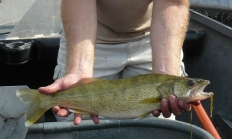
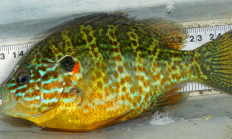
Features: Pumpkinseeds may be identified by the orange or red spot on the ear flap and the orange cheeks with wavy blue or turquoise stripes. Color is exceedingly brilliant and somewhat variable; olive to brassy-green above, the back finely dusted with gold or emerald. Habitat: Pumpkinseeds are found in the same habitats and often in association with bluegills. Adults often congregate beneath old deadheads and trees that have fallen into the water. Food habits are also similar to bluegill. They consume large numbers of snails by browsing on the stalks of aquatic vegetation. Techniques: Pumpkinseed are found in many of…
Summer Lake Wildlife Area was established in 1944, with primary objectives of protecting and improving waterfowl habitat and providing a public hunting area. It is now a popular destination for hunting, wildlife viewing and environmental education due to its geographic setting, the abundance of wildlife present and species diversity.
SALEM, Ore.—With the May 15 deadline approaching, ODFW is reminding hunters to apply early for 2026 controlled deer hunts and to carefully review changes to Eastern Oregon deer hunts. With the transition from Wildlife Management Units (WMUs) to Deer Hunt Areas in eastern Oregon, hunters who wait until the last…
Features: Bluegills are distinguished from other panfish by the black ear flap and black spot at the rear base of the dorsal fin. Five to eight greenish, vertical bars are faintly visible on their sides. The body is olive-green in color, bluish above and silvery below. Breeding males develop a bright orange to red flush on the throat area. Adults in most waters measure 5- to 8-inches, but the state record bluegill exceeded 12-inches. Habitat: Bluegills prosper in clear, clean ponds, lakes and backwaters of slow streams with abundant vegetation. They feed on both plant and animal life, but primarily…