
Search myodfw.com
Showing 261 - 280 of 509 results

Find maps, boundary descriptions and hunts available in the new Poverty Basin Hunt Area. Download printable PDF map
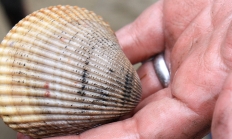
Features: Identified by its prominent radiating ridges. Habitat: Cockles are "hard shelled" clams. Their protective, stout shells and short siphons mean that they do not have to bury as deeply as other common bay clams. Good cockle beds will often have cockles right on top of the sand on a good tide. They prefer sandy areas with high salinity, but can be found at many types of tideflats. Technique: The best clamming is during low/minus tides. Because these clams are so near the surface, you rake, rather than dig, for them. A four prong gardening rake is perfect for raking…
Features: When in the ocean coho salmon can look very similar to Chinook salmon . However, coho will have a white gum line on the lower jaw with darker color both inside and outside of the gum line, and will only have spots on the upper lobe of their tails. When coho return to freshwater they become red on their sides and dark greenish on their backs, heads, and fins. Coho adults may reach 25 pounds or more, but rarely exceed 15 pounds. Habitat: Small, relatively low-gradient tributary streams with pea to orange-sized gravel for spawning and juvenile rearing. Coho…

Features: Smallmouth bass are golden green to bronze with dark vertical bars and blotches on the side. The upper jaw does not extend beyond the eye. In some locations, it has a red eye. Somewhat smaller than the largemouth, smallmouth bass in Oregon may reach 23-inches and exceed 7 pounds. Habitat: Smallmouth bass are adapted to flowing waters and do well in warm streams with deep holes and rocky ledges. They also prefer lakes and reservoirs with rocky shorelines and limited vegetation. Adult smallmouth feed mostly on fish and crayfish. Technique: Much of what was written about largemouth bass also…

Columbia Fishing May 7, 2026 Current and upcoming fishing opportunities: Columbia River regulation changes for the 2026 spring Chinook fishery are posted. Please see the fishing regulation update page for details. Columbia Fishing Announcements For the latest regulations, including in-season changes See the fishing regulations update page. Forecasts for 2026 Columbia River Spring Chinook, Summer Chinook and Sockeye are available here. Fish consumption advisories The Oregon Health Authority has issued consumption guidelines for parts of the Columbia River due to high levels of mercury and/or PCBs. Fish with these chemicals look, act, smell and taste like any other fish, so…

Features: Redear sunfish are often confused with bluegill, but differ by having a red or orange border around the black ear flap and by lacking the spot on the dorsal fin and the vertical bars on the side. Habitat: In Oregon, redear sunfish are found only in a few ponds in the Willamette Valley and the central part of the state. In their native range, redear sunfish prefer warm, large lakes and reservoirs and bayous with vegetated shallow areas and clear water. They feed primarily on the bottom and seldom take surface insects. The diet consists mostly of zooplankton, insect…

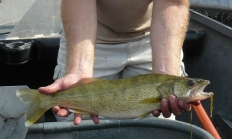
Features: Color varies, but walleye are generally dark olive-brown on top grading to almost white below. Walleye have two well-separated dorsal fins; the first fin has a large black spot at its rear base. The opaque eyes, giving the fish its common name, and canine teeth are other prominent features. Habitat: Walleye are found in the Columbia, Willamette and Snake rivers. In the Willamette River, the walleye fishery is generally limited to the section downstream from Willamette Falls at Oregon City, although a few have been documented as far upstream as Dexter Dam. Walleye prefer large, clean and cold or…
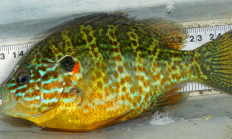
Features: Pumpkinseeds may be identified by the orange or red spot on the ear flap and the orange cheeks with wavy blue or turquoise stripes. Color is exceedingly brilliant and somewhat variable; olive to brassy-green above, the back finely dusted with gold or emerald. Habitat: Pumpkinseeds are found in the same habitats and often in association with bluegills. Adults often congregate beneath old deadheads and trees that have fallen into the water. Food habits are also similar to bluegill. They consume large numbers of snails by browsing on the stalks of aquatic vegetation. Techniques: Pumpkinseed are found in many of…

Searching for frogs and salamanders is a great way to introduce kids to the wonders of Oregon's wildlife and the great outdoors. Learn more about their various habitat needs and you'll increase your chances of seeing one of these unique species. Remember to leave no trace to preserve their habitat. Check out our fun facts on Oregon's frogs.
Features: Bluegills are distinguished from other panfish by the black ear flap and black spot at the rear base of the dorsal fin. Five to eight greenish, vertical bars are faintly visible on their sides. The body is olive-green in color, bluish above and silvery below. Breeding males develop a bright orange to red flush on the throat area. Adults in most waters measure 5- to 8-inches, but the state record bluegill exceeded 12-inches. Habitat: Bluegills prosper in clear, clean ponds, lakes and backwaters of slow streams with abundant vegetation. They feed on both plant and animal life, but primarily…

With long, pointed wings, nighthawks can sometimes be seen during the day catching insects while in flight although most are active at night. Nighthawks roost by scraping the ground or roost on low branches. Nestlings can fly at 10 days old. Swifts nest on vertical walls, such as chimneys or old smoke stacks, hollow trees or rock crevices. It's fun to watch them at dusk in summer, circling their nesting site. These birds are never seen perched, but only in flight.

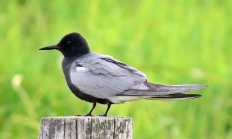
This is Oregon's smallest breeding tern, with black head and body and gray wings during the breeding season. Black terns are delicate, graceful fliers, reminiscent of a nighthawk or swallow. The Black tern breeds in marsh wetland complexes of southeast, south central and central Oregon. In western Oregon, a very small breeding population is found at a few sites in the Willamette Valley. Hear the call of the Black tern Photo by Bob, Flickr
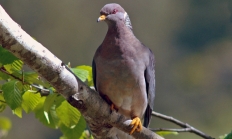
About the size of the domestic pigeon, this swift-flying species is popular among sport hunters. An arboreal bird, it is often observed perched alone on top of a tall tree or in flocks when flying about feeding areas and mineral sites. This is a common summer resident in forested areas west of the Cascade crest. It typically nests in forested mountain areas in the west Cascades. Hear the call of the Band-tailed pigeon Photo by Dave Budeau, ODFW
This group of animals is common throughout Oregon in various locations depending on species. Oregon just has one marmot, the yellow-bellied marmot and two of its squirrels are on the Oregon Conservation Strategy Species list: the Washington ground squirrel and the Western gray squirrel. View more information about Living with Wildlife, Tree Squirrels for tips on preventing conflicts, trapping, species status and recommended conservation actions.

