
Search myodfw.com
Showing 301 - 320 of 542 results
Features: Columbian black-tailed deer are smaller and darker than mule deer. As the name suggests, black-tailed deer have a wide, triangular tail with a dark brown or black top and a white underside. Habitat: Blacktails are a subspecies of mule deer found in western Oregon from the Coast Range east to the Cascade Mountains. They are edge-adapted species using the region’s dense forest cover to hide during the day and are then more open in early successional forest to feed at dawn and dusk. Places with a mix of forest age classes offer the best habitat for black-tailed deer. Techniques…

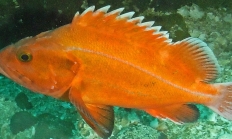
Features: They are orange red to orange yellow with a bright yellow eyes. Their fin tips may be black. On the top of their head they have a pair of rough ridges. Yelloweye, canary and vermilion rockfish can look similar. See this rockfish identification article for distinguishing features of each species Take the "Yelloweye Rockfish or Not?" quiz Habitat: Juveniles and subadults prefer shallower water than adults, and are associated with rocky reefs,and kelp canopies. Adults move into deeper water as they grow, and prefer rocky bottoms. Technique: Yelloweye rockfish are currently prohibited in the catch. Anglers are required to…
Oregon's owls are mostly nocturnal, hunting for insects, fish, frogs, birds, mice and other small mammals in the night. Their hoots, screeches and calls can be heard after dark or early in the morning. Owls don't build nests, but instead use tree cavities, nests created by other species, naturally occurring structures or human-made nest platforms. The Western burrowing owl nests underground in abandoned dens dug by squirrels, prairie dogs and badgers. Learn more about Oregon's owls.

CORVALLIS, Ore. – The shotgun range at E.E. Wilson Wildlife Area near Corvallis will be closed for renovation from July 14 through the end of October. Renovations on the range will include expanding the shooting bays and implementing ADA complaint access to the site. ODFW expects work to be complete…
Cassin's auklet uses a few offshore lands for breeding in Oregon. It forages in the marine environment and nests in a chamber under rocks or digs its own burrow, two to six feet long, in the soil. This species spends its day at sea and only comes to the burrow at night, perhaps to reduce discovery by predacious Western gulls. Although few Cassin's auklets nest in Oregon, nesting sites are found along the entire coast where offshore rocks provide appropriate habitat. During the non-breeding season this is the most abundant alcid seen at sea in Oregon. They are present offshore…

This active and often unwary woodpecker, the smallest in North America, is generally the most often seen black and white woodpecker in human-settled areas. A preference is shown for decayed wood for nesting, though sound wood is also utilized. Nest sites are usually 10 to 12 feet off of the ground. It is found mostly at low to moderate elevations in deciduous and mixed deciduous-coniferous forests throughout much of the state, and less often in coniferous forests. Hear the call of the Downy woodpecker Photo by ©Keith Kohl, ODFW

For many, the rich, melodious song of the Black-headed grosbeak is the music of springtime in Oregon. The handsome males, with their bold pattern of cinnamon, black, and white, are among our most striking songbirds, and area familiar site in parks and gardens as well as in almost every forest type in the state. The buffy, streaked females are less conspicuous, but are also accomplished singers. The Black-headed grosbeak is a common to fairly common breeder and common migrant in forested regions throughout the state. Hear the song of the Black-headed grosbeak Photo by David Bronson


Features: Chukars are brown-gray with a black stripe running across the head, through the eye, and down onto the chest. Their bills and feet are red, and their sides have white and black barring. Habitat: Extensive areas in eastern Oregon provide ideal habitat for chukars. Cheatgrass, an introduced plant species, was already well established through much of eastern Oregon prior to the 1950s, and provides one of the most important year-around food resources for the chukar. Their habitat is generally steep, rocky, dry, and largely unsuitable for development, agriculture or other commercial uses except grazing. Important chukar areas in Oregon…

This northern grouse reaches Oregon only in the forests of the Wallowa Mountains in the northeastern part of the state. It is dusky and slightly smaller than the ruffed grouse. Sexes are different in coloration; males have a black breast with white spotting on the sides, white spots at the base of a black tail, and a red comb above the eye. Females are heavily barred with dark brown and white and have a dark tail. Hear the call of the spruce grouse Spruce grouse observation form Photo by Dave Budeau, ODFW

Following droughts in the 1930s that affected most of North America, major conservation efforts, both private and governmental, were enacted to reverse trends of degrading and disappearing wetlands. During this time period there was a major creation and expansion of Federal refuges and State wildlife areas. As the concept of waterfowl flyway management was endorsed and developed, wildlife areas were acquired and managed as part of a larger plan focused on migratory waterfowl needs. Klamath Wildlife Area was one of several wetland-focused wildlife areas established in Oregon. KWA was established in 1958, with primary objectives of protecting and improving waterfowl…

This seabird, the most abundant in Oregon, has recently suffered severe declines or significant population shift in the eastern North Pacific. Similar in shape to thin, long-winged gulls, sooty shearwaters are dark sooty gray with limited amounts of white on the underwing coverts. They glide on wind currents along wave troughs on stiff wings. Gregarious, they form huge loose flocks in migration, often passing for hours within site of land-based observers. In Oregon, it is an abundant summer visitor and transient offshore on the inner shelf and is most numerous three to six miles offshore. Hear the call of the…

SALEM, Ore. – Anglers will have additional chances to fish for wild coho this November as ODFW announces extended fishing opportunities in the Siletz, Yaquina, and Alsea river basins. At the request of the Oregon Fish and Wildlife Commission, ODFW staff evaluated the potential for additional fishing days beyond the…

CANYON CITY, Ore.- A poacher investigated for more than 50 crimes committed in Grant County between 2023 and 2024 was sentenced to 95 days behind bars and more than $22,000 in restitution and fines, according to wildlife officials. In what wildlife enforcement officers refer to as a serial poaching case…
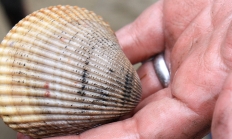
Features: Identified by its prominent radiating ridges. Habitat: Cockles are "hard shelled" clams. Their protective, stout shells and short siphons mean that they do not have to bury as deeply as other common bay clams. Good cockle beds will often have cockles right on top of the sand on a good tide. They prefer sandy areas with high salinity, but can be found at many types of tideflats. Technique: The best clamming is during low/minus tides. Because these clams are so near the surface, you rake, rather than dig, for them. A four prong gardening rake is perfect for raking…
Features: When in the ocean coho salmon can look very similar to Chinook salmon . However, coho will have a white gum line on the lower jaw with darker color both inside and outside of the gum line, and will only have spots on the upper lobe of their tails. When coho return to freshwater they become red on their sides and dark greenish on their backs, heads, and fins. Coho adults may reach 25 pounds or more, but rarely exceed 15 pounds. Habitat: Small, relatively low-gradient tributary streams with pea to orange-sized gravel for spawning and juvenile rearing. Coho…

Features: Smallmouth bass are golden green to bronze with dark vertical bars and blotches on the side. The upper jaw does not extend beyond the eye. In some locations, it has a red eye. Somewhat smaller than the largemouth, smallmouth bass in Oregon may reach 23-inches and exceed 7 pounds. Habitat: Smallmouth bass are adapted to flowing waters and do well in warm streams with deep holes and rocky ledges. They also prefer lakes and reservoirs with rocky shorelines and limited vegetation. Adult smallmouth feed mostly on fish and crayfish. Technique: Much of what was written about largemouth bass also…
