
Search myodfw.com
Showing 321 - 340 of 1128 results
Features: These fish are olive green to dusky-brown with some light mottling towards their top sides. Their fin membranes are yellow. Habitat: Yellowtail rockfish will usually be found in offshore waters and often suspended over deep reefs and rocky habitat to as deep as 900 feet. Technique: Best success will be by first locating suspended schools of yellowtail rockfish in offshore areas during periods open for fishing offshore, and then working rubber tail jigs or shrimp flies through the schools.

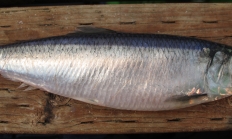
Features: Herring are silver with large scales. They are an important food source for larger fishes, sea birds and marine mammals. Habitat: Herring are frequently offshore in large schools but can be caught inshore in harbors and large estuaries during spawning. Technique: Herring are a schooling fish, and anglers can target them from docks, piers or boats in the bays. The most popular rig is a multiple-hook herring jig. Header photo by Steve, Flickr
Features: These fish are dark green, gray or brown on top with an off-white belly and silver or tan sides. The underside of the head and fins can be pinkish. Long second anal fin spine. Silvergrays can be confused with bocaccio rockfish which have a short second anal fin spine. Habitat: Most commonly found between 330 and 990 feet though subadults have been found in kelp beds only 56 feet deep. Adults live over various rocky-bottom habitats. Technique: Work rubber tail jigs or shrimp flies through the schools containing these fish.
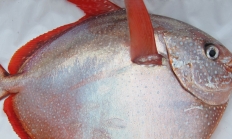
Features: Opah are also known as moonfish due to their round, laterally compressed bodies. These fish are very beautiful with pale red colored and lighter spots throughout resembling the craters on the moon, and orange-red fins. Opah grow to an average of 3-feet long and 100 pounds. Habitat: Opah can be found in temperate and tropical waters. They tend to be at depths of 300- to 1,000-feet during the day and come above 300-feet at night. Technique: These fish are rare in Oregon's waters and are difficult to catch by rod and reel, though they are occasionally brought in.
Features: These fish are dark blue or black with a light belly, a blotchy pattern on the sides, and no spots in the dorsal fin. The easiest way to distinguish a blue rockfish from a deacon rockfish is that the blues have jaws that meet together when closed. Habitat: Like all rockfish, these fish use rocky reefs as habitat. They are common down to 500 feet or more, but also come in to shallow areas. Blue rockfish will often suspend in large schools well off the bottom over rocky areas. Technique: They readily take both bait and lures. Blue rockfish…

Features: These fish are dark blue or black with a light belly. In fact, they are closely related to blue rockfish, which are similar in appearance. The easiest way to identify a deacon rockfish is by the lower jaw that extends forward creating a significant underbite. Habitat: Like all rockfish, these fish use rocky reefs as habitat, but commonly suspend well up off the bottom. They are common down to 300 feet or more. Technique: They readily take both bait and lures. Deacon rockfish have smaller mouths than the black rockfish and are more likely to take smaller jigs and…

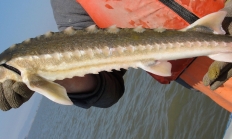
Features: Green sturgeon have olive to dark green backs and a yellowish, green-white belly. They also have a green strip down the middle of their stomachs. This fish will grow to 7-feet long and, as with white sturgeon, have bony body armor along their backs and are covered in sandpaper-like skin. Habitat: Green sturgeon are bottom dwellers, travelling all along the Pacific coast of North America. They spawn in deep pools in turbulent freshwater from March to July. Technique: Green Sturgeon may not be targeted for retention or catch-and-release angling. Any Green Sturgeon caught incidentally, for instance during White Sturgeon…
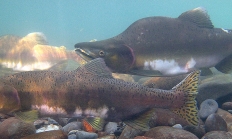
Features: Before spawning, sockeye salmon are silvery on their sides, white on their bellies, and dark blue on their backs. When spawning, their heads turn green with black on the snout and upper jaw, and their bodies turn red. They can be 24- to 33- inches long and weight between 5 and 15 pounds. Habitat: Many sockeye populations require a lake for part of their life cycle. Spawning may occur along lake shorelines or in stream gravels, but fry usually migrate to lake environments soon after emergence and occupy this habitat during their stay in fresh water. Technique: Sockeye salmon…

Features: Pacific cod are brown to gray on the back with brown spots or pale areas on the back and sides. They are lighter on their bellies. They have an elongated body with a square caudal fin, three dorsal fins, a chin barbel, and two anal fins. The anal fins are usually white-edged. Habitat: They are widely distributed in cooler regions of Pacific and adjacent seas- Japan to the Bering Sea and south to Santa Monica, California. They range in water 7- to 300-fathoms deep, but tend to hang out near the bottom of the water column, regardless of water…

Features: These fish are silver when young, but darken and develop black spots on their tails and backs as they age. In fresh water, the males are red on their sides and develop a hump on their backs earning this species the common name humpback salmon. Females in fresh water are green on the sides with dark bars. Pink salmon are an average of 20- to 25-inches long and rarely weigh over 5 pounds. Habitat: Pink salmon spawn on odd numbered years and do so very close to saltwater, never going very far upriver. In fact, some pink salmon will…
SALEM, Ore. – Oregon's Fish Screening and Fish Passage Task Forces will meet Wednesday, May 6 at 8:00 a.m. The meeting is open to the public and will be held in person at The Dalles Screen Shop at 3561 Klindt Dr, The Dalles and virtually through Teams. The meeting agenda…
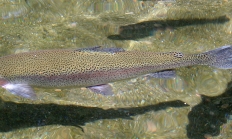
Click here to learn about the different kinds of rainbow trout

Click here to learn about the different kinds of cutthroat trout

LA GRANDE, Ore. – Lookingglass Creek, a tributary to the Grande Ronde River at Palmer Junction, will open to fishing for hatchery spring Chinook on Friday, May 15. The open area is from the mouth upstream to the confluence of Jarboe Creek. Depending on which happens first, the fishing season will remain open through June 14 or until…
Features: These fish have a dark blue or black body, mottled with yellow and with a broad yellow stripe running along their side. Habitat: The China rockfish dwells in relatively shallow water, 10- to 400-feet deep, on rocky reefs. Technique: They readily take both bait and lures. China rockfish will be caught in areas with lots of rocks and crevasses, and by keeping the bait or lure very close to the bottom.

Features: Soles have flattened, oval bodies with both eyes on one side of their head. They are dark on top and light underneath. Habitat: They are commonly found on mud or sand bottoms from 5- to 750-fathoms deep. Techniques: Soles and other flatfish are best targeted by fishing with smaller hooks (less than 2/0) tipped with bait such as clam necks, sand shrimp, or chunks of herring or anchovy on a sandy or gravel bottom.

Features: They are dark olive on the tops of their bodies, silver on the sides, and white underneath, with 6-9 black stripes running horizontally from behind their heads to their tails. Habitat: Striped bass spend most of their time in fresh water, with occasional and unpredictable trips to the sea. Technique: In the spring and fall stripers are likely to be closer to the surface. During this time bait, such as dead minnows or night crawlers, will entice the fish to bite. During summer, the bass go deeper to escape the heat. This is the time to use flashy bait.

Features: Pinkish red to copper pink, white ventrally, pink fins. Lateral line in red zone. Second anal spine short, edge of anal fin slants posteriorly. Chin projects outward. No spine on edge of gillraker. Habitat: Large schools of chilipepper rockfish are often found between 330 and 990 feet. They will stay over sandy, muddy, or rocky bottoms but also spend time in the midwater. Technique: Play to this species’ midwater foraging nature by presenting lures that mimic their natural diet – forage fish and small squids.
Features: The widow rockfish is brassy brown with a light colored belly. Their fin membranes are also brown. They can grow to be 21-inches long. Habitat: Widow rockfish school down to 1200 ft., usually found suspended over offshore reefs and rocky areas. Technique: Best success will be by first locating suspended schools of widow rockfish in offshore areas during periods open for fishing offshore, and then working rubber tail jigs or shrimp flies through the schools.
