Search myodfw.com
Showing 381 - 400 of 741 results
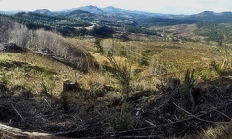
Find maps, boundary information and the percent public land in the Chetco Unit.
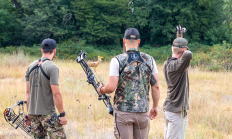
Our Mission The Oregon Department of Fish and Wildlife (ODFW) Hunter Recruitment Program is dedicated to strengthening and growing Oregon's hunting and shooting sports community. We provide hands-on skills training, promote a culture of safety, ethics, and conservation, and foster a positive public perception of hunting and shooting sports. Our goal is to build confidence, knowledge, and skills for both new and seasoned hunters, supporting a lasting connection to Oregon's rich outdoor traditions. Workshops are offered statewide throughout the year. View and register for an upcoming event: Classes and W or kshops.
CENTRAL WILDLIFE VIEWING September 17, 2026 Recreating in drought and wildfire season - actions you can take to protect wildlife . For the most current fire restrictions-- KNOW BEFORE YOU GO . Crook County All public land fire closures within Crook County have been lifted which broadens wildlife viewing access. Remember to use caution when traveling through and recreating in burned areas. Waterfowl should be visible along the crooked river and on most lakes/reservoirs. Herons, osprey, and kingfishers are frequently seen along the crooked river while searching for prey. Raptors, including bald eagles, redtail hawks, and kestrels can be seen…
Find maps, boundary descriptions and the percent public land for the Santiam Unit.
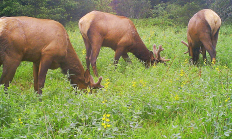
Find maps, boundary descriptions and the percent public land for the Sled Springs Unit.
Find maps, boundary descriptions and the percent public land for the Scappoose Unit.
SALEM, Ore. – The Oregon Department of Fish and Wildlife is accepting applications for the Chair position on the state Access & Habitat (A&H) Program Board. The deadline to apply is April 3, 2026. Application forms and additional information are available at: http://www.dfw.state.or.us/lands/AH/get_involved.asp The current Chair has completed the maximum…
Find maps, boundary descriptions and the percent public land for the Indigo Unit.
Find maps, boundary descriptions and the percent public land for the Fort Rock Unit.
Lower Deschutes Wildlife Area was established in 1983, with the initial donation of land by the Oregon Wildlife Foundation (OWF) of 2,758 acres. In 1986 OWHF donated an additional 5,158 acres of land to the department. The Lower Deschutes Wildlife Area was initially established to provide permanent public angler access. However, especially with the 1986 acquisition, the wildlife area has grown to provide enhanced wildlife and fish habitat (i.e. through removal of livestock, riparian vegetation improvements, etc.) and more wildlife-oriented recreational activities such as hunting, boating, hiking and biking. In 2015, ODFW partnered with the Trust for Public Land to…
This 141-acre property along both sides of the Yachats River was first purchased in the early 1980s to provide forage for elk and help alleviate elk damage to surrounding agricultural land. It also provides public access to the Siuslaw National Forest along the Yachats River Highway, where there are few public access points.
Fire Closure: As of July 29, 2026, the northern portion of the wildlife area is closed. More information here: https://myodfw.com/news/odfw-closes-northern-portion-white-river-wildli… White River Wildlife Area was established in 1953. Located along the east slope of the Cascade Mountains in the north central part of Oregon, the wildlife area encompasses 29,480 acres. An additional 1,280 acres of land owned by the Bureau of Land Management (BLM) is managed by the ODFW bringing the total acres managed by the department to 30,760. The primary purpose of White River Wildlife Area is to provide winter range habitat for black-tailed deer and Rocky Mountain elk…
NW WILDLIFE VIEWING September 17, 2026 Recreating in drought and wildfire season - actions you can take to protect wildlife . For the most current fire closures and restrictions-- KNOW BEFORE YOU GO . Tillamook County Birds At this time of year, herons and egrets can be seen hunting amphibians and small mammals in local farm fields. Bald eagle pairs can be viewed near estuaries and rivers. Clatsop County Birds Coastal storm-watchers may find interesting pelagic species pushed closer to shore by the rough weather. Some species which may be viewed during and just after storms include skuas, jaegers, petrels, storm…
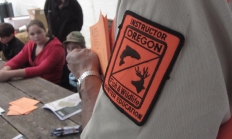
Oregon requires all hunters under the age of 18 to complete a hunter safety education course before hunting in the state. Upon completing the course (and a Field Day for youth), participants will receive a Hunter Safety certification number and card. Adults are also encouraged to take the online course, as it may be required for out of state hunts. Note: Youth under the age of 9 may struggle with the course material and may not have the physical strength needed to safely handle a firearm during a Field Day, particularly during muzzle control, loading, and unloading drills.
Offered Year Round
Statewide
Located near the Elkhorn Mountain Range, Elkhorn Wildlife Area is best known for Rocky Mountain elk and mule deer herds that use the area during the winter. To keep deer and elk from feeding on agriculture lands when they come down from snow-covered higher elevations, ODFW operates 10 feeding sites on the area to feed 1,400 elk and 800 deer during the winter months.
SW WILDLIFE VIEWING September 17, 2026 Recreating in drought and wildfire season - actions you can take to protect wildlife . For the most current fire closures and restrictions-- KNOW BEFORE YOU GO . Coos and Curry counties Coquille Valley Wildlife Area (CVWA) Coquille Valley Wildlife Area (CVWA) in Coos County is open to public access. Permits for access are required and are available, free of charge, at the kiosk located in the parking lot along North Bank Road. You must access CVWA through this point. Please fill out the upper half ("A" half) of the permit and deposit it in the slot located on the post…
Oregon's diverse habitats and terrain offers something for every hunter. From the densely forested Coast Range to the expansive sage steppe of the Great Basin, hunting opportunities are practically unlimited. Visit e-regulations