Search myodfw.com
Showing 401 - 420 of 1128 results
Species and Subspecies
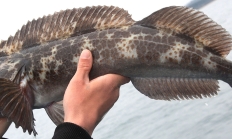
Features: Lingcod have an elongated body with a large mouth and sharp, canine-like teeth. They are generally mottled gray or brown but sometimes green or blue. A green-colored “ling” should not be confused with a greenling. Lingcod can get 5-feet long, but those caught in Oregon average between 2- and 3-feet. Habitat: Adults like to be near rocks, inshore and to 230-fathoms deep. Young lingcod prefer the sand or mud bottoms of bays and inshore areas. Technique: Bounce some bait along the bottom with 5/0 or 6/0 hooks, a 4- to 6-ounce sinker, and 20-pound line on a stout rod…
Species and Subspecies
Features: Trout-like in appearance, the body is silvery in color with a bronze or dark back. They can be distinguished from trout by the forked tail and the small, down-turned mouth. Lengths run to 20-inches. Whitefish are often erroneously called graylings by many anglers. Habitat: Mountain whitefish inhabit many Oregon streams and lakes, thriving best in clear, cold water. Techniques: Whitefish tend to go for flashy flies, but are known for quickly spitting them out. Many sportsmen look with disfavor on the whitefish and often throw it away as undesirable. However, the flesh of the whitefish is firm and tasty…

Species and Subspecies
Features: Greenish or bluish above with dark wavy worm-like marks along the back; shading to silvery below, usually with dusky spots on the lower side. Mackerel grow to be 25-inches long. Habitat: Pacific mackerel are usually found close to shore, but are not typically associated with any bottom structure. Technique: Mackerel are not usually targeted by Oregon’s anglers, but are often caught incidentally by salmon anglers. Small shiny spoon or baited hooks are good methods to use to catch mackerel.

Species and Subspecies
Species and Subspecies
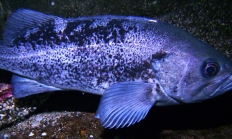
Features: Quillback rockfish are slate-brown and mottled with yellow and orange towards the head, while the rear half of their body is gray to dark brown or black. They have dark brown or black "freckles" on their head and gill cover. They have deeply incised membranes on their very long, spinous dorsal fins. Quillback rockfish can grow to be 24-inches long. Habitat: They prefer rocky bottoms from the intertidal zone out to 800 feet. Technique: Quillback rockfish are currently prohibited. Anglers are required to immediately descend back to depth any quillback rockfish encountered outside of the 30-fathom regulatory line and…

Species and Subspecies
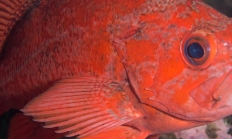
Features: Its deep red sides are mottled with gray. They grow to be 30-inches long. Yelloweye, canary and vermillion rockfish can look similar. See this rockfish identification article for distinguishing features for each species. Habitat: The vermilion rockfish is found near the bottom of the ocean over rocky substrate. Technique: They readily take both bait and lures. Rubber tailed lead head jigs, metal jigs, shrimp flies, and baited hooks will all take vermilion rockfish. Header photo by Ratha Grimes, Flickr
Species and Subspecies

Species and Subspecies
Features: Great whites are blue to gray on top and white underneath. They can grow as large as 20-feet long and weigh in excess of 4000 pounds! They have several rows of teeth in their large mouths. Habitat: Great whites stay in temperate ranges with water temperatures between 54- and 75-degrees Fahrenheit, including waters off the west coast. Technique: Great white sharks are protected under federal and state laws making them illegal to target or keep.

Species and Subspecies
Features: Eulachon smelt ( Thaleichthys pacificus) grow to be 6-9 inches long and live 3-5 years. They have elongated bodies with relatively large mouths. They are blueish on top and silvery on their sides and bellies. Habitat: The Pacific smelt spends most of its life in the ocean, migrating up rivers, including the Columbia and its tributaries, to spawn. The eggs attach to gravelly, woody, or sandy substrate of the river bottoms, but upon hatching the juvenile smelt get swept downstream back to the ocean. Technique: Dip netting for smelt when they run in the Sandy River is a great…

Species and Subspecies

Species and Subspecies
Zones or Areas
From the eastern flanks of Crater Lake National Park through the national forests of Douglas fir and ponderosa pine forests to the California border, there's plenty of public land to find your hunt.
Zones or Areas
From the rugged Coast Range to the Cascade Mountains, this vast area offers good general season hunting opportunities.

Species and Subspecies
Features: Oregon is home to an estimated 25,000-30,000 black bears, which is North America’s most common bear species. They are the only type of bear found in Oregon. Despite their name, black bears are often brown in color. Habitat: Black bears are found statewide, with concentrations in the Coast and Cascade ranges and the Blue Mountains. Techniques: Oregon offers a controlled spring season (apply by Feb. 10) and a general fall season. Glassing open areas where bears are feeding on grass and shrubs works early spring season. Later in the season, some hunters turn to predator calls. Most fall bears…

Species and Subspecies
Features: Both males and females have a bluish bill with a black tip. Drakes are white on the top of the head, green eye stripes, purplish breast and flanks, white belly and wing covert patch, and have an iridescent black/green speculum. The grayish hen shows white on the wing covert patch. Habitat: An abundant overwintering duck, especially in the Willamette Valley and coastal areas. Prefer shallow habitats like wet meadows or marshes where, like geese, they feed on green grass and sedges. Techniques: These ducks are early migrants (September) but can be common in mixed duck bags throughout the season…

Zones or Areas
Densely forested hillsides from the coast through the Siskiyou Mountains to the Cascade Range offer excellent habitat for a myriad of big game species.

Species and Subspecies
Features: Adult males' plumage is black except for white patches on the forehead and nape. The most distinguishing feature is the bill, a swollen white, red-orange, yellow, and black wedge. This highly visible standard advertises male's presence for up to a mile. Dark-billed adult females and subadults are dark brown above and paler brown below, with two indistinct light patches on the cheeks and sometimes on the nape Habitat: The surf scoter does not breed in Oregon but is abundant on salt water along the coast from fall through spring. Look for surf scoters in the Columbia River estuary and…

Species and Subspecies
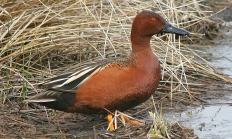
Features: Male cinnamon teal have a cinnamon-red head, neck, breast and belly. Like blue-winged teal, t hey have a bright patch of iridescent green on the rear of the wing and a bright blue patch on the front of the wing . They also have a distinctive red eye, a black bill and yellow legs and feet. Female and young male cinnamon teal are often confused with female blue-winged teal. Habitat: Prefer shallow, alkaline lakes where they dabble on aquatic plans. Techniques: Most cinnamon teal in Oregon are taken in eastern Oregon in the early season. They are not common…
Species and Subspecies
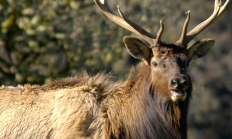
Features: Rocky Mountain elk are one of two subspecies of elk found in Oregon, with a population estimate of more than 74,000 in the state. They are lighter in color and slightly smaller in size than Roosevelt elk, but their antlers are the largest of all elk and can weigh up to 40 pounds. Habitat: Rocky Mountain elk inhabit most of eastern Oregon with concentrations in the Blue Mountains and south-central Oregon. Techniques: Rocky Mountain elk live in much more open country that Roosevelts so try glassing, still hunting, spot and stalk and calling. Rifle, archery and muzzleloader seasons are…

Species and Subspecies
Features: Roosevelt elk are one of two subspecies of elk found in Oregon, with an estimated population of 59,000 in the state. “Rosies” are darker in color than other elk subspecies and the largest in terms of body size, with bulls generally weighing 700-1,100 pounds. Habitat: Roosevelt elk occupy most of western Oregon, with concentrations in the Cascade and Coast ranges. All elk west of Hwy 97 are considered to be Roosevelt elk, though there is some overlap of Oregon’s two subspecies in the Cascades. Techniques: Roosevelt elk make their home in the thick and lush forests of western Oregon…