
Search myodfw.com
Showing 481 - 500 of 925 results
KLAMATH FALLS, Ore. – ODFW is urging waterfowl hunters and other visitors to use extreme caution after laboratory results revealed exceptionally high levels of microcystin in a water sample collected from the Barnes Unit of the Upper Klamath National Wildlife Refuge. The sample was taken from an area currently open…
Oak Springs Hatchery was constructed in several phases beginning in 1922 with the last major construction in 1996. The facility is currently used for egg production, incubation and rearing of rainbow trout, incubation and rearing of summer and winter steelhead, and maintains one resident rainbow trout and one resident cutthroat broodstock.
Oregon's owls are mostly nocturnal, hunting for insects, fish, frogs, birds, mice and other small mammals in the night. Their hoots, screeches and calls can be heard after dark or early in the morning. Owls don't build nests, but instead use tree cavities, nests created by other species, naturally occurring structures or human-made nest platforms. The Western burrowing owl nests underground in abandoned dens dug by squirrels, prairie dogs and badgers. Learn more about Oregon's owls.

A quiet, modest, unobtrusive little bird that must be sought to be seen in its shady retreats, this little-studied species can easily be overlooked. It is typically associated with oaks and mixed woodlands, where it hops along the foliage hunting for insects. In winter it forages with flocks of chickadees, kinglets, and nuthatches. This is Oregon's only resident vireo. Although it is sometimes referred to as non-migratory, some seasonal movement has been observed. Similar in appearance and behavior to the more common and widespread Ruby-crowned kinglet. Hear the song of the Hutton's vireo Photo by Greg Gilson

This majestically crested bird is often heard before being seen due to its conspicuous harsh rattling call. Kingfishers are most frequently associated with lake and pond shorelines and islands, as well as coastal dunes with ponds and widely scattered shrubs and trees. They hunt from a vantage point above water such as an overhead branch, telephone wires along shore lines or pilings of piers. This is a common permanent resident throughout most of the state except in the north Lake and east Deschutes counties where open water is generally absent Hear the call of the belted kingfisher Photo from ODFW

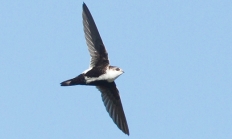
High overhead at the top of the rimrock in Oregon's desert country, the White-throated swift swoops, soars, and darts about erratically, hunting and catching insects. At great speed, it disappears into a crevice on a cliff without appearing to slow down. Its long, strong claws enable it to crawl deep inside these crevices to roosting and nesting areas, which often cannot be seen from the entrance. This bird is a locally common to abundant breeder, primarily on eastern Oregon cliffs. It is an occasional spring and sporadic fall migrant in western Oregon along the coast, in the Willamette Valley, and…

Round Butte Hatchery was constructed in 1972 to mitigate for the fishery losses caused by Pelton/Round Butte (PRB) Hydroelectric Complex. Round Butte and its satellite, Pelton Ladder, are used for adult collection, egg incubation and rearing of spring Chinook, summer steelhead, and sockeye salmon.
This tiny owl has a reputation as an aggressive predator on everything from mice and voles to birds and mammals over twice its size. Coloration is highly variable with brown and gray morphs. In Oregon, color varies from dark brown in coastal mountains to gray in eastern Oregon, with an intermediate pale grayish-brown form in the Cascade mountains. About the length of a White-crowned sparrow, it has striking yellow eyes, dark vertical streaks on the breast and abdomen, and dark "eyespots" on the back of the head. It is primarily diurnal and can often be approached quite closely when it…

Wizard Falls Hatchery was constructed in 1947. Many improvements have been made to the facility since original construction. The hatchery has a rainbow trout broodstock which supply rainbow trout to the Deschutes sub-basin and southeast Oregon. The hatchery is used for incubation and rearing of kokanee salmon and rainbow trout to provide for recreational fishing program objectives, and the incubation and rearing of spring Chinook and summer steelhead as part of a reintroduction program in the upper Deschutes Basin. Brook trout and cutthroat trout fingerlings are reared for the air stocking program on odd years. Kokanee salmon are spawned remotely.
With short pointed wings and long narrow tails, these small falcons are well built for fast pursuit and mid-air attacks. Sexes differ in color and size, with adult males about 25 percent smaller by weight than females. Males range from blackish gray to pale blue-gray on the back with a reddish wash along sides of the breast and a banded tail; females have brownish backs. In winter, it can be found throughout the state in open or semi-open habitats, but it is most regular near major estuaries, lakes, reservoirs, and occasionally in cities where food supplies are reliable. For nesting…

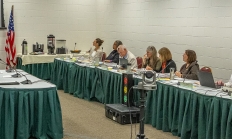
Sport fishing offers youth and adults alike a healthy and fun recreational activity that can be shared for a lifetime with friends and family. Workshops are offered statewide throughout the year. View and register for an upcoming event: Classes and W or kshops.

ASTORIA, Ore – The annual conservation closure of razor clamming on Clatsop beaches begins 12:01 a.m. July 15. The Oregon Department of Fish and Wildlife encourages clammers to take advantage of the low tide series that begins July 8. However, ODFW reminds clammers that although the low tide series goes…
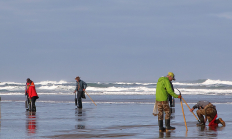
ASTORIA, Ore. – Razor clamming on Clatsop beaches is closed beginning 12:01 a.m., July 15. The last day to harvest is July 14. The annual closure conserves young razor clams, giving them time to get established on these beaches so they can grow and be harvested in future years. This…