Search myodfw.com
Showing 481 - 500 of 705 results
Features: When in the ocean coho salmon can look very similar to Chinook salmon . However, coho will have a white gum line on the lower jaw with darker color both inside and outside of the gum line, and will only have spots on the upper lobe of their tails. When coho return to freshwater they become red on their sides and dark greenish on their backs, heads, and fins. Coho adults may reach 25 pounds or more, but rarely exceed 15 pounds. Habitat: Small, relatively low-gradient tributary streams with pea to orange-sized gravel for spawning and juvenile rearing. Coho…

Fun facts about our bats Oregon's bats eat only insects. An adult bat eats about 1,000 insects every hour! Bats hang upside down because it gives them an ideal position for take-off. Bats can fly 20 to 30 miles an hour and travel more than 100 miles a night. A baby bat is called a pup. Young bats can fly between two and five weeks of age. Bats are the only flying mammal. ODFW's Living with bats page has tips on protecting at-risk populations, and more. Bat Conservation International Batty for Bats: Facts for kids (pdf) Build a bat house…

Establishment of the Bridge Creek Wildlife Area initially started in 1961 when a parcel of land was purchased from the Frank Hilbert estate. After the initial purchase, several private holdings were acquired to consolidate the land under department ownership. The last parcel was purchased from the Colvin Cattle Company in 1975. The primary purpose of the wildlife area is to maintain and protect a key historic winter range for Rocky Mountain elk ( Cervus elaphus nelsoni).
CLACKAMAS, Ore. – Fishery managers from Oregon and Washington added more recreational salmon fishing days in the mainstem Columbia River during a joint-state hearing today. The decision came after fishery managers assessed Chinook harvest in the fall season fisheries and considered the current in-season abundance expectations for upriver salmon stocks…
Bats are important pollinators and the only flying mammals; they use sound to locate their prey, and they live a long time. Oregon has 15 species of bats, and eight of those are Oregon Conservation Strategy Species. Strategy Species are those having small or declining populations, are at-risk, and/or of management concern. Some of Oregon's species migrate south in winter while some remain here and hibernate. Bats have echolocation which allows them to make high-pitched sounds then listen to the echo of those sounds to locate where objects are. Echolocation helps them find even the smallest insect.

Pheasants, grouse, quail and turkey are all upland game birds that are chicken-like and ground-dwelling. Wild turkeys are the largest upland game bird in Oregon.
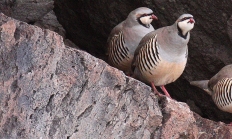

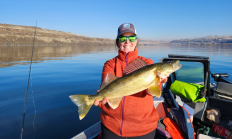

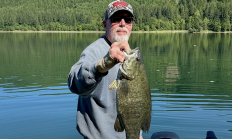
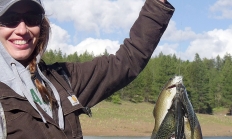
SW Fishing September 10, 2026 Best bets for weekend fishing: Some of the more popular spots to fish for red-tailed surfperch are along beaches like Horsefall Beach and Whiskey Run. Anglers have the best success fishing with sand shrimp weighted gear on the bottom although power grubs can also work. Try warmwater fishing for bass at Ben Irving, Howard Prairie and Hyatt Reservoirs. Cooper Creek Reservoir looks nice and clear. Go earlier in the morning or fish deeper for success. This is a good time of year to look for cutthroat in the Chetco River estuary. The estuary has very…

When you sign up to be an ODFW volunteer, you're helping to protect Oregon's fish and wildlife, manage ODFW properties, and share your hunting and fishing experiences with others while creating a stronger appreciation for the outdoors. Already volunteering with ODFW
Year round opportunities
Various programs statewide
Update 8/27/26: Northeast Oregon A&H access areas to reopen Aug. 29. LA GRANDE, Ore. – All northeast Oregon Access and Habitat (A&H) access areas will reopen effective Aug. 29. Improved conditions in northeast Oregon including cooler temperatures, higher humidity levels, reduced fire activity, and a favorable extended forecast support reopening…
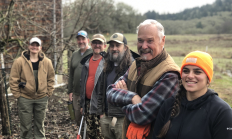
SALEM, Ore.—Members of the Oregon Hunters Association's Klamath Chapter, the West Cascade Chapter of Back Country Horsemen and Wallowa County landowner Lionel Sauvage were recognized for their contributions to Oregon's fish and wildlife during today's meeting in Salem. Landowner Lionel Sauvage and the Sauvage Family of Wallowa County received the…
SALEM, Ore.—Oregon's Fish and Wildlife Commission will meet Friday, Aug. 15 in Salem at ODFW Headquarters, 4034 Fairview Industrial Drive SE. The meeting will be livestreamed from the Commission page. See the agenda here. (Note that Commission materials have moved to myodfw.com while ODFW's older website odfw.com is transitioned to…