
Search myodfw.com
Showing 561 - 580 of 897 results

NEWPORT, Ore. – The Oregon Department of Fish and Wildlife is holding two public meetings to discuss the commercial black and blue rockfish and nearshore fisheries. The meetings will be held in person with virtual or phone-in options Sept. 9 in Port Orford and Sept. 11 in Tillamook. ODFW commercial…
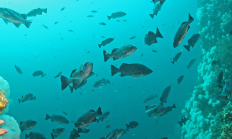

Establishment of the Bridge Creek Wildlife Area initially started in 1961 when a parcel of land was purchased from the Frank Hilbert estate. After the initial purchase, several private holdings were acquired to consolidate the land under department ownership. The last parcel was purchased from the Colvin Cattle Company in 1975. The primary purpose of the wildlife area is to maintain and protect a key historic winter range for Rocky Mountain elk ( Cervus elaphus nelsoni).
The Columbia Basin Wildlife Areas are a composition of four Oregon Dept of Fish & Wildlife managed wildlife areas located along the Columbia River, in the Columbia Basin. The four wildlife areas (Power City, Irrigon, Coyote Springs and Willow Creek) are within the Columbia Plateau ecoregion. Management agreements for these areas were initially established between 1971 and 1977 between the department and Federal agencies which owns the lands. The Columbia Basin Wildlife Areas, which total approximately 1,885 acres, provide an important landbase for the conservation and recreation of fish and wildlife within a highly privatized and altered landscape and play…
COLUMBIA BIG GAME HUNTING June 25, 2026 Currently open Cougar ( check current harvest numbers), Coyote Announcements and resources Check the Leftover Tag List for an opportunity to hunt this year. View the Big Game raffle and auction hunt results along with the 2026 seed number drawing results. Big game harvest statistics - You'll find links to population, harvest and point summary reports that can help you decide what hunts to apply for this season. Please report elk with hoof disease - If you see elk showing signs of elk hoof disease, including lame or limping elk or elk with…

Look here to find out how waterfowl counts this week compare to years past.
FOR IMMEDIATE RELEASE Oregon Department of Fish and Wildlife (ODFW) Confederated Tribes of the Umatilla Indian Reservation (CTUIR) Statement on Qapqápa Wildlife Area Acquisition Oregon Department of Fish and Wildlife (ODFW) and the Confederated Tribes of the Umatilla Indian Reservation (CTUIR) regret to announce that the Qapqápa (pronounced cop-COP-a) Wildlife…
This is your one-stop platform for learning how to hunt and fish in Oregon. Look at the learning opportunities to participate in one or more of the many statewide workshops offered to adults. Enjoy the great outdoors even more by building your confidence and expanding your knowledge! Youth required hunter certification: hunter safety conventional courses and field days Choose between a full conventional course or complete one of the ODFW approved online education courses plus an in-person field day. Sign up for a location, date and time that works best with your schedule. Hunter safety education events are offered year-round…
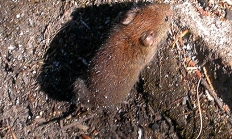
The Southern red-backed vole is among the smaller voles in Oregon. The pelage is silvery on the venter and grayish with ocherous on the sides, and with a rusty or reddish stripe on the dorsum; the tail is dark brown or black above and whitish or grayish below. In Oregon it occurs in the Ochoco, Blue, and Wallowa Mountains southwestward to central Crook County and northern Harney County. Photo by D. Gordon Robertson, Wikipedia
SALEM, Ore. – ODFW staff received a report of an incident involving a coyote biting an adult along Orchard Heights Rd., just outside the city limits of West Salem that occurred on Feb. 11. The Polk County Sherriff's Office (PCSO) initially responded to the area to conduct a site investigation…
Note: Recreational ocean crabbing is closed through Nov 30. SALEM, Ore.- Get outdoors with friends and family and enjoy free fishing, crabbing and clamming on Friday and Saturday, Nov. 28 and 29. Statewide free fishing days are a great chance to take someone new fishing and celebrate Oregon's natural resources…
Horned puffins have an unmistakable black and white plumage and a large, distinct, yellow and orange bill during the breeding season. They are rare in Oregon, and most commonly encountered dead on the beach in winter or spring, or sighted more than 50 miles offshore in spring. Individual birds, or possibly pairs, occasionally stay in Oregon for the breeding season and are seen attending colonies with Tufted puffins, but there are no records of breeding in Oregon. Hear the call of the Horned puffin

The bushy-tailed woodrat is a large rat-like mammal; its squirrel-like tail unique among members of the genus, is gray above and whitish below. The dorsum is buffy gray to dark brownish-black and the venter is white to buff depending on the geographic race. It occurs, statewide in a wide variety of habitats. It is active nocturnally. Sometimes, upon leaving the protection of its den, the woodrat may lie motionless on a rock or limb, watching for a long period before moving forth. Photo from ODFW

Features: These fish have a dark blue or black body, mottled with yellow and with a broad yellow stripe running along their side. Habitat: The China rockfish dwells in relatively shallow water, 10- to 400-feet deep, on rocky reefs. Technique: They readily take both bait and lures. China rockfish will be caught in areas with lots of rocks and crevasses, and by keeping the bait or lure very close to the bottom.


