
Search myodfw.com
Showing 61 - 80 of 443 results
The FRWA was created by a licensing agreement signed in 1957 and modified in 1982 and 2008, between the US Army Corps of Engineers and the Oregon Game Commission. This agreement authorized the state to develop, conserve, and manage all wildlife resources on 5,261 acres of land and water within the Fern Ridge Project. ODFW also acquired the 309 acre Coyote Creek South and 224 acre Coyote Creek Northeast units in 2013 and 2015, respectively. The wildlife area now totals 5,794 acres.
Western Oregon August 6, 2026 Upcoming Season 2026-27 Game Bird Regulations online and available at ODFW licensed agents and vendors. Announcements, resources Buy your 2026-27 bird stamp(s) and validations - Available for purchase now: upland and waterfowl validations, federal duck stamp and don't skip the HIP survey. New season started July 1, 2026, redeem your sports-pac vouchers. Youth upland game bird hunts schedule is posted, register now. Hunting at Baskett Slough NWR is by advance reservation. For application and more information, see fws.gov/refuge/baskett-slough. Applications are accepted Aug. 1-31. Phone: (541) 757-7236. Plan this season's hunts with prior year game bird harvest summaries. ODFW's Hunt…
EASTERN OREGON August 6, 2026 Upcoming Season 2026-27 Game Bird Regulations online and available at ODFW licensed agents and vendors. Announcements, resources Buy your 2026-27 bird stamp(s) and validations - Available for purchase now: upland and waterfowl validations, federal duck stamp and don't skip the HIP survey. New season started July 1, 2026, redeem your sports-pac vouchers. Youth upland game bird hunts schedule is posted, register now. Plan this season's hunts with prior year game bird harvest summaries. ODFW's Hunt by Reservation Program connects bird hunters with private landowners. By making a reservation online, hunters receive a permit to hunt select private lands on…
The Columbia Basin Wildlife Areas are a composition of four Oregon Dept of Fish & Wildlife managed wildlife areas located along the Columbia River, in the Columbia Basin. The four wildlife areas (Power City, Irrigon, Coyote Springs and Willow Creek) are within the Columbia Plateau ecoregion. Management agreements for these areas were initially established between 1971 and 1977 between the department and Federal agencies which owns the lands. The Columbia Basin Wildlife Areas, which total approximately 1,885 acres, provide an important landbase for the conservation and recreation of fish and wildlife within a highly privatized and altered landscape and play…
Phillip W. Schneider Wildlife Area provides winter range for mule deer populations and year-round habitat for a variety of wildlife including mammals, birds, reptiles and amphibians. Elk, deer, and bighorn sheep viewing is often good during winter and early spring. Bird watching is excellent all year. Native habitats include sagebrush shrubland, riparian, ponderosa pine forest, western juniper woodland and mixed conifer which support a diversity of fish and wildlife. The riparian areas along the mainstem John Day River, South Fork John Day River and Murderers Creek provide excellent habitat for many birds. Upland areas provide important habitat for passerines and…
Jewell Meadows Wildlife Area is located in the Oregon Coast Range Mountains, in the northwestern part of the state. The wildlife area was established in 1969, with an initial purchase of 183 acres. It now encompasses 1,114 acres. The wildlife area’s purpose is to protect and enhance habitat to benefit native wildlife species, to reduce wildlife damage to adjacent properties, and to provide the public with an opportunity to observe wildlife in a natural setting.
Following droughts in the 1930s that affected most of North America, major conservation efforts, both private and governmental, were enacted to reverse trends of degrading and disappearing wetlands. During this time period there was a major creation and expansion of Federal refuges and State wildlife areas. As the concept of waterfowl flyway management was endorsed and developed, wildlife areas were acquired and managed as part of a larger plan focused on migratory waterfowl needs. Klamath Wildlife Area was one of several wetland-focused wildlife areas established in Oregon. KWA was established in 1958, with primary objectives of protecting and improving waterfowl…
Fire Closure: As of July 29, 2026, the northern portion of the wildlife area is closed. More information here: https://myodfw.com/news/odfw-closes-northern-portion-white-river-wildli… White River Wildlife Area was established in 1953. Located along the east slope of the Cascade Mountains in the north central part of Oregon, the wildlife area encompasses 29,480 acres. An additional 1,280 acres of land owned by the Bureau of Land Management (BLM) is managed by the ODFW bringing the total acres managed by the department to 30,760. The primary purpose of White River Wildlife Area is to provide winter range habitat for black-tailed deer and Rocky Mountain elk…
The Columbia Basin Wildlife Areas are a composition of four Oregon Department of Fish and Wildlife (department) managed wildlife areas located along the Columbia River, in the Columbia Basin. The four wildlife areas (Power City, Irrigon, Coyote Springs and Willow Creek) are within the Columbia Plateau ecoregion. Management agreements for these areas were initially established between 1971 and 1977 between the department and Federal agencies which own the lands. The Columbia Basin Wildlife Areas, which total approximately 1,885 acres, provide an important landbase for the conservation and recreation of fish and wildlife within a highly privatized and altered landscape and…

Summer Lake Wildlife Area was established in 1944, with primary objectives of protecting and improving waterfowl habitat and providing a public hunting area. It is now a popular destination for hunting, wildlife viewing and environmental education due to its geographic setting, the abundance of wildlife present and species diversity.
Located near the Elkhorn Mountain Range, Elkhorn Wildlife Area is best known for Rocky Mountain elk and mule deer herds that use the area during the winter. To keep deer and elk from feeding on agriculture lands when they come down from snow-covered higher elevations, ODFW operates 10 feeding sites on the area to feed 1,400 elk and 800 deer during the winter months.

Following droughts in the 1930s that affected most of North America, major conservation efforts, by both private and governmental entities, were enacted to reverse trends of degrading and disappearing wetlands. During this time period there was a major creation and expansion of federal wildlife refuges and state wildlife areas. As the concept of waterfowl flyway management was endorsed and developed, wildlife areas were acquired and managed as part of a larger plan focused on migratory waterfowl needs. LMWA was one of several wetland-focused wildlife areas established in Oregon. Ladd Marsh Wildlife Area was established in 1949, with primary objectives of…
ASTORIA, Ore – The annual conservation closure of razor clamming on Clatsop beaches begins 12:01 a.m. July 15. The Oregon Department of Fish and Wildlife encourages clammers to take advantage of the low tide series that begins July 8. However, ODFW reminds clammers that although the low tide series goes…
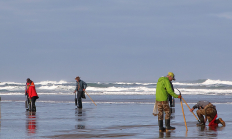
ASTORIA, Ore. – Razor clamming on Clatsop beaches is closed beginning 12:01 a.m., July 15. The last day to harvest is July 14. The annual closure conserves young razor clams, giving them time to get established on these beaches so they can grow and be harvested in future years. This…
CENTRAL WILDLIFE VIEWING August 6, 2026 Recreating in drought and wildfire season - actions you can take to protect wildlife. For the most current fire closures and restrictions-- KNOW BEFORE YOU GO. Crook County Spring ungulate migration will soon be upon us. You can find mule deer transitioning from low elevation winter feeding areas to the higher elevation sagebrush and agricultural areas. There are red-tailed, rough-legged and ferruginous hawks, northern harriers, American kestrels, prairie falcons and golden eagles throughout Crook County and they're usually associated more closely with open/agricultural areas. Bald eagles and ospreys, on the other hand, are more closely associated with water bodies…
SW WILDLIFE VIEWING August 6, 2026 Recreating in drought and wildfire season - actions you can take to protect wildlife. For the most current fire closures and restrictions-- KNOW BEFORE YOU GO. Coos and Curry counties Coquille Valley Wildlife Area (CVWA) Coquille Valley Wildlife Area (CVWA) in Coos County is open to public access. Permits for access are required and are available, free of charge, at the kiosk located in the parking lot along North Bank Road. You must access CVWA through this point. Please fill out the upper half ("A" half) of the permit and deposit it in the slot located on the post of the…
NW WILDLIFE VIEWING August 6, 2026 Recreating in drought and wildfire season - actions you can take to protect wildlife. For the most current fire closures and restrictions-- KNOW BEFORE YOU GO. Tillamook County Birds At this time of year, herons and egrets can be seen hunting amphibians and small mammals in local farm fields. Bald eagle pairs can be viewed near estuaries and rivers. Clatsop County Birds Coastal storm-watchers may find interesting pelagic species pushed closer to shore by the rough weather. Some species which may be viewed during and just after storms include skuas, jaegers, petrels, storm petrels, shearwaters…