
Search myodfw.com
Showing 601 - 620 of 795 results
CLACKAMAS, Ore.— Anglers with the two-rod validation will be able to use two rods in areas of the upper Willamette River open to coho retention through the end of the year, under a temporary rule adopted by ODFW. Effective Aug. 1 through Dec. 31 for anglers with the validation, two…
Located near the Elkhorn Mountain Range, Elkhorn Wildlife Area is best known for Rocky Mountain elk and mule deer herds that use the area during the winter. To keep deer and elk from feeding on agriculture lands when they come down from snow-covered higher elevations, ODFW operates 10 feeding sites on the area to feed 1,400 elk and 800 deer during the winter months.

The tail is brown dorsally with a white fringe, and white ventrally. In males, antlers with tines typically arise from a single main beam. In winter, the pelage is a dark buffy-gray and consists of relatively long, thick, and somewhat brittle hairs; in summer, the pelage is lighter with more tawny tones and is shorter and thinner. The midline of the dorsum is darker and the fade lighter; in males, the patch between the antlers is darker. Pelage markings include white on the venter, throat, muzzle and lower lip, and around the openings of the metatarsal and interdigital glands; a…

Marion Forks Hatchery began operation in 1951. The U.S. Army Corps of Engineers (COE) funds the majority of operational costs as mitigation for the development of Detroit and Big Cliff dams. The hatchery is used for egg incubation and rearing of spring Chinook.
SE Fishing September 10, 2026 Best bets for weekend fishing Catch and Release for Redband Rainbow Trout with no bait is required through October 31 on all of Upper Klamath Lake including but not limited to Pelican Bay, Crystal Creek, Recreation Creek, Harriman Creek, Odessa Creek, Short Creek, Fourmile Creek, Thomason Creek, Fourmile Canal, Barkley Springs Channel below highway 97 and mouth of Williamson River. Yellow perch angling should be excellent in the Williamson River, Crystal Creek, Pelican Bay and Fourmile Canal. Willow Valley Reservoir is good for largemouth bass, yellow perch and some large crappies. The Wood River below…

Newport, Ore. – Oregon's commercial Dungeness crab season opens Dec. 16 from Cape Falcon to the California border, the Oregon Department of Fish and Wildlife announced today. Crab will be available in time for the holiday season. Oregon will open the north coast to align with Washington once Long Beach…
SALEM, Ore. – ODFW and the Oregon Hunters Association (OHA) will give away free wildlife forage seed to landowners at E.E. Wilson Wildlife Area near Corvallis on Saturday, May 9. The giveaway coincides with OHA's Youth Field Day (limited spots available). Seed giveaway More than 500 bags of free seed…
CLACKAMAS, Ore. – Sturgeon retention will not open in Bonneville and The Dalles pools on the traditional date of Jan 1. following a joint state hearing held by Oregon and Washington fishery managers today. However, the retention fishery in the John Day pool, where harvest rates have been stable and…
SALEM, Ore. – ODFW completed a final draft of the 2025 State Wildlife Action Plan (SWAP), now available online for public review. A virtual public meeting will be held on Wednesday, July 16 at 6 p.m., where ODFW staff will present highlights from the plan and answer questions. The public…
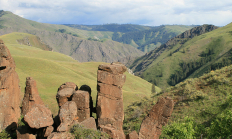
Prineville Reservoir Wildlife Area came under the shared management of the Oregon Department of Fish and Wildlife & United States Bureau of Reclamation in 1962. It is managed for the protection and enhancement of wildlife habitat, big game winter range, improving riparian wetlands, and to promote wildlife stewardship. Goals of the PRWA include creating recreational opportunities for viewing and enjoying wildlife, including mule deer, bald eagles, and a variety of waterfowl. Boating, hiking, and camping are a few popular activities permitted in the wildlife management area. Hunting and fishing opportunities are also available within Prineville Reservoir Wildlife Area, as regulated…
Vireos and shrikes are predatory song birds. Their bills are strong and hooked to kill and dismember prey including insects and small birds, mammals and reptiles. These birds hunt from fences, wires and treetops and sometimes hang captured prey on thorns to eat them later.

Oregon has a variety of raptors, from the diminutive Sharp-shinned hawk to our nation's symbol, the Bald eagle. Some of these birds of prey are migratory, while many live here year-round and can be seen hunting along rivers, roadside posts and fields.

SALEM, Ore. – Oregon may soon have a new wildlife area in Union County called the Qapqápa Wildlife Area (pronounced cop-COP-a). The property would be owned by the Oregon Department of Fish and Wildlife (ODFW) and co-managed with the Confederated Tribes of the Umatilla Indian Reservation (CTUIR), continuing a decades-long…
Need to figure out controlled hunts, find a place to clam, learn how to fish or get directions to a wildlife area? We've got information on all that and more, straight from ODFW biologists and other accomplished hunters, anglers and wildlife watchers. Header image by Dave Budeau

The Columbia Basin Wildlife Areas are a composition of four Oregon Department of Fish and Wildlife (department) managed wildlife areas located along the Columbia River, in the Columbia Basin. The four wildlife areas (Power City, Irrigon, Coyote Springs and Willow Creek) are within the Columbia Plateau ecoregion. Management agreements for these areas were initially established between 1971 and 1977 between the department and Federal agencies which own the lands. The Columbia Basin Wildlife Areas, which total approximately 1,885 acres, provide an important landbase for the conservation and recreation of fish and wildlife within a highly privatized and altered landscape and…
SALEM, Ore.— ODFW will host a series of online public meetings in July where district wildlife biologists will present proposed changes to the 2027 big game regulations and gather public feedback. Modifications to the Elk General Western Oregon Coast seasons are being considered; otherwise, no major regulatory changes are proposed…