
Search myodfw.com
Showing 841 - 860 of 1416 results
SALEM, Ore.—ODFW is seeking qualified applicants to fill one sport fishing position and one commercial salmon industry position on the Restoration and Enhancement (R&E) Program Board. Interested individuals must apply by Oct. 6, 2025, use this form on the R&E Board page. The ideal sport fishing candidate will be a…
SALEM, Ore. – ODFW staff at the Ashland Boat Inspection Station found quagga mussels on a motorboat that was being transported from Lake Havasu, Arizona into Oregon on March 21. This was the first instance in 2026 where crews found invasive freshwater mussels on a boat entering Oregon. The watercraft…
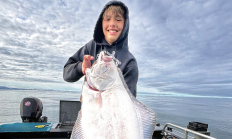
NEWPORT, Ore. – The Oregon Department of Fish and Wildlife is hosting a Feb. 2 public meeting beginning at 6 p.m. to get input on the number and timing of fixed and back-up dates for the central Oregon coast spring all-depth Pacific halibut season. The meeting is in the conference…
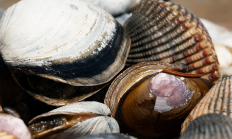
NEWPORT, Ore. – The Oregon Department of Fish and Wildlife recommends people avoid harvesting and consuming softshell and bay clams from Alsea Bay estuary after the Oregon Health Authority issued a recreational use advisory for Eckman Lake in Lincoln County. The OHA issued a July 31 advisory due to the…
Newport, Ore. – Oregon's commercial Dungeness crab season is delayed coastwide until at least Dec. 16, the Oregon Department of Fish and Wildlife announced today. Oregon Dungeness crab met both meat and safe biotoxin level requirements; however, the season is delayed as Long Beach, WA crabs have not yet met…
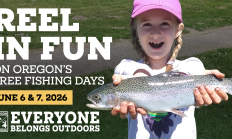
SALEM, Ore..— Everyone can fish, clam and crab for free in Oregon on Saturday and Sunday, June 6-7, 2026. No fishing/shellfish licenses or tags/validations are required on these days (meaning you do not need a Combined Angling Tag, Columbia River Basin Endorsement, Ocean Endorsement or two-rod validation where two rods…
Newport, Ore. – Oregon's commercial Dungeness crab season opens Dec. 16 from Cape Falcon to the California border, the Oregon Department of Fish and Wildlife announced today. Crab will be available in time for the holiday season. Oregon will open the north coast to align with Washington once Long Beach…
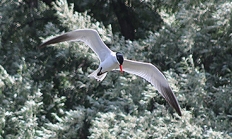
The Caspian tern nests on flat sandy or gravelly areas on islands, or on the margins of lakes, rivers, and marshes. It is always near water, and forages both in nearby water bodies and on prey exposed in nearby open areas. Breeding colonies in recent years have been on islands in the Columbia River east of the Cascades in north central Oregon; Malheur and Harney lakes in southeast Oregon; Summer Lake and lakes in the Warner Valley in south central Oregon. Most colonies have a history of intermittent use. It is a locally common summer resident during breeding season within…
Note: Recreational ocean crabbing is closed through Nov 30. SALEM, Ore.- Get outdoors with friends and family and enjoy free fishing, crabbing and clamming on Friday and Saturday, Nov. 28 and 29. Statewide free fishing days are a great chance to take someone new fishing and celebrate Oregon's natural resources…
ROSEBURG, Ore. – The Oregon Department of Fish and Wildlife is looking for a volunteer site host at its Canyonville winter steelhead acclimation site on lower Canyon Creek. This opportunity to work with hatchery steelhead and help improve Oregon's fisheries is from Jan. 1 – Apr. 30, 2026. The acclimation…
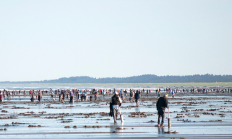
ASTORIA, Ore. – Clatsop beaches reopen for razor clam harvesting Oct. 1 following the annual conservation closure that began July 15. Before harvesting razor clams or any shellfish, always call the Shellfish Safety Hotline at 1-800-448-2474 or visit the ODA Recreational Shellfish Biotoxin Webpage. During the closure, Oregon Department of…
Salem, Or. — The Oregon Department of Fish and Wildlife's Salmon and Trout Enhancement Program (STEP) Advisory Committee will meet in person Tuesday, Oct. 14 in the Evergreen conference room in Cartwright's Taprock Grill & Restaurant at 971 SE 6 th St. in Grants Pass. The meeting runs from 8…
Of Oregon's breeding seabirds, Leach's storm-petrel is the smallest, most pelagic, and flies the farthest offshore of any of Oregon's breeding seabirds to feed. It spends the non-breeding season in the subtropical and equatorial Pacific. It is the second most abundant breeding seabird in Oregon, and is rarely seen from land or close to shore. It comes to its breeding islands, where it nests in burrows, only under the cover of darkness. Its plumage is black and Oregon populations have a distinct white rump. Leach's storm-petrels are long lived birds characterized by long-term pair bonds and may breed yearly for…

SALEM, Ore. — The Oregon Department of Fish and Wildlife is seeking a new member to represent the South Willamette District on the Salmon and Trout Advisory Committee (STAC). Interested individuals are encouraged to apply by 5:00 p. m. on Aug. 4. ODFW is seeking interest from Oregonians who can…
NEWPORT, Ore. – Ocean sport salmon fishing closes at 12:01 a.m., Tuesday, Aug. 19 in the Columbia River Subarea (Leadbetter Pt., WA to Cape Falcon, OR) and possession of salmon on board a vessel is prohibited. Fishing is allowed on Monday and is closed Tuesday. Projected harvest of marked (fin-clipped)…
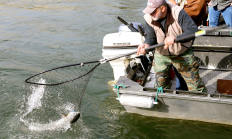
ROSEBURG, Ore. – The salmon bag limit in the Coos Basin increases today, Aug. 19 from two to three fish in aggregate, one of which must be a hatchery salmon. Anglers can harvest wild Chinook, hatchery Chinook, and hatchery coho. Wild coho cannot be retained until Sept. 13, when only…
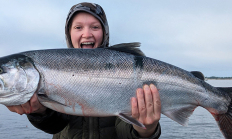
CLACKAMAS, Ore. – Angling will be closed on the lowest reach of Eagle Creek in the Clackamas basin from Sept. 27 through Oct. 31 to give coho salmon a safe resting area amid ongoing low water flows. The closure is from SE Dowty Road downstream to the Clackamas River confluence…
NEWPORT, Ore – The Pacific Fisheries Management Council (PFMC) has finalized the 2026 ocean salmon seasons including ocean waters off Oregon. Recommended salmon seasons are not official until final approval by the U.S. Secretary of Commerce (expected by Saturday, May 16), and after adoption by the Oregon Fish and Wildlife…
Salamanders are a group of tailed amphibians with long bodies and short limbs. They often prefer habitats with damp conditions, which allows them to “breathe” better through their skin. Wet and rainy days (typically late fall through spring in Oregon) are the best time to look for salamanders, as the additional moisture from fog and rain allow for increased surface activity. To find salamanders, look in cracks or search under bark, rocks or logs. If you move any debris during your search, remember to put it back where you found it when you’re done—salamanders are sensitive to disturbance and many…
