Search myodfw.com
Showing 841 - 860 of 1410 results
SALEM, Ore. – Anglers will have additional chances to fish for wild coho this November as ODFW announces extended fishing opportunities in the Siletz, Yaquina, and Alsea river basins. At the request of the Oregon Fish and Wildlife Commission, ODFW staff evaluated the potential for additional fishing days beyond the…
Features: Oregon is home to more than 6,000 cougars, or mountain lions. Cougars are the largest members of the cat family found in the state and tend to be solitary, except for females raising young. Males in particular are very territorial. Habitat: Cougars are throughout Oregon, with concentrations in the Cascade Range and Blue Mountains. Lately, more cougars are being seen in northwest Oregon including the suburbs of Portland. Techniques: Hunting is open statewide under a general season all year, or until zone quotas are met. Most cougars in Oregon are taken while hunters are out pursuing other species like…



Features: Kokanee are silvery in color until they are ready to spawn, at which time they become reddish. They do not grow as large as sockeye- their ocean traversing siblings. They can vary significantly in size depending on how densely populated the waterbody is. Since they are filter feeders, their populations can quickly expand and contract with the availability of food. Habitat: Kokanee can be found at all depths of cold, clear lakes and reservoirs in several parts of the state. They will change which depth they are at depending on water temperature. Technique: They are a challenging fish to…

June 24, 2026
Bradford Island Visitor Center, Bonneville Dam
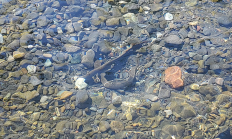
Features: Slightly larger than its cousin, the rock pigeon, band-tailed pigeons have a grey body. As its name suggests, a wide pale band stretches along the tip of tail feathers. Up close a distinctive white, crescent-shaped mark across its neck is noticable. Habitats: Found on the west side of the state, the band-tailed pigeon frequents semi-open coniferous forests. It forages on wild seeds and fruits in tree tops. In search of food, it travels in flocks from tree top to tree top. Techniques: Find a food source, such as elderberry or cascara, and location with open shooting lanes. Then wait…

Find maps, boundary descriptions and hunts available in the new South Wallowa Hunt Area. Download printable PDF map

SALEM, Ore. – ODFW staff at the Ashland Boat Inspection Station found golden mussels on a watercraft that was being transported to a new owner from the Sacramento River Delta to Oregon on April 4. The watercraft was decontaminated at the inspection station and all golden mussels attached to the…
Features: Roosevelt elk are one of two subspecies of elk found in Oregon, with an estimated population of 59,000 in the state. “Rosies” are darker in color than other elk subspecies and the largest in terms of body size, with bulls generally weighing 700-1,100 pounds. Habitat: Roosevelt elk occupy most of western Oregon, with concentrations in the Cascade and Coast ranges. All elk west of Hwy 97 are considered to be Roosevelt elk, though there is some overlap of Oregon’s two subspecies in the Cascades. Techniques: Roosevelt elk make their home in the thick and lush forests of western Oregon…
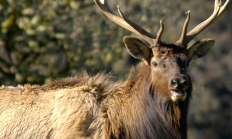
Features: The other "greenhead", the drake is handsome with a dark iridescent green head, white breast, reddish belly, blue wing patch of coverts, and an iridescent green speculum. Brown hens also have blue wing patches similar to that of the cinnamon and blue-wing teal. Habitat: This dabbling duck prefers lakes and ponds where it uses its unique bill to sift through water in shallow areas. Food choices include the seeds of sedges, bulrushes and other aquatic plants, duck weed, and algae; also aquatic insects, mollusks and crustaceans. Common winter species in the Willamette Valley and Columbia Basin, but widespread throughout…

Features: Columbian sharp-tailed grouse are brown-gray with small black and white markings, a white underside, and a short tail that is white at the base. They are a medium-sized grouse. Both the males and females have a yellow-orange comb over each eye. Habitat: Columbian sharp-tailed grouse were historically found in most counties of eastern Oregon. These birds preferred the bunchgrass prairies interspersed with stream bottoms containing deciduous shrubs and trees. This habitat was particularly common in north-central Oregon and the Columbia Basin. Technique: In 1929, Oregon closed its hunting season for sharp-tailed grouse and it has never re-opened. By the…
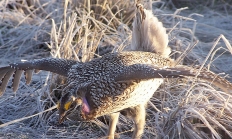
Features: California bighorn sheep are one of two subspecies of wild sheep in Oregon. They are usually smaller, with a less blocky build and smaller horns than Rocky Mountain bighorn sheep. Bighorn sheep were extirpated from the state in the 1800s. Current populations are the result of a reintroduction effort by ODFW and sportsman groups. Habitat: California bighorn sheep are the most abundant subspecies in Oregon with an estimated 3,700 found among 32 herds in central and southeast Oregon. They prefer rugged, open habitats with a good view of their surroundings. Techniques: Bighorn sheep are one of the rarest game…
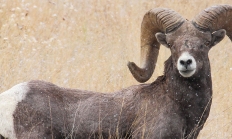
Features: The name “cutthroat” is derived from the two red slash marks or streaks on the underside of the lower jaw. Lahontans don't develop the intense crimson or gold coloration that other subspecies do, but the males can develop some red on their sides. Spots on the head can help distinguish this subspecies from other inland cutthroat subspecies. Habitat: This variety has adapted to the dry, highly alkaline waters and was once widespread throughout the Lahontan Basin of California, Nevada and southeast Oregon. Today, native populations can be found in the Whitehorse and Willow creek basins in the far southeastern…

Check out the latest Chinook and steelhead counts at Leaburg Dam.
Study ahead: Oregon Furbearer Trapping and Hunting Regulations
2026-27 Licenses begin July 1
Online Learning