
Search myodfw.com
Showing 141 - 160 of 672 results
Features: When in the ocean coho salmon can look very similar to Chinook salmon . However, coho will have a white gum line on the lower jaw with darker color both inside and outside of the gum line, and will only have spots on the upper lobe of their tails. When coho return to freshwater they become red on their sides and dark greenish on their backs, heads, and fins. Coho adults may reach 25 pounds or more, but rarely exceed 15 pounds. Habitat: Small, relatively low-gradient tributary streams with pea to orange-sized gravel for spawning and juvenile rearing. Coho…

Features: Olive brown to red on back, silvery-red to pink on sides. Lower jaw is long and extends at least to the eye socket. Short second anal fin spine. These fish can grow up to 3 feet long. Habitat: Most common between 160 and 820 feet deep. Adults show a preference to stay close to their home swatch of rocky bottoms or outcrops. Technique: Their diet consists of invertebrates and small fishes – try a lure that mimics these sea creatures.
Features: These fish are olive green to dusky-brown with some light mottling towards their top sides. Their fin membranes are yellow. Habitat: Yellowtail rockfish will usually be found in offshore waters and often suspended over deep reefs and rocky habitat to as deep as 900 feet. Technique: Best success will be by first locating suspended schools of yellowtail rockfish in offshore areas during periods open for fishing offshore, and then working rubber tail jigs or shrimp flies through the schools.

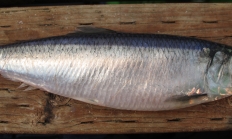
Features: Herring are silver with large scales. They are an important food source for larger fishes, sea birds and marine mammals. Habitat: Herring are frequently offshore in large schools but can be caught inshore in harbors and large estuaries during spawning. Technique: Herring are a schooling fish, and anglers can target them from docks, piers or boats in the bays. The most popular rig is a multiple-hook herring jig. Header photo by Steve, Flickr
Features: These fish are dark green, gray or brown on top with an off-white belly and silver or tan sides. The underside of the head and fins can be pinkish. Long second anal fin spine. Silvergrays can be confused with bocaccio rockfish which have a short second anal fin spine. Habitat: Most commonly found between 330 and 990 feet though subadults have been found in kelp beds only 56 feet deep. Adults live over various rocky-bottom habitats. Technique: Work rubber tail jigs or shrimp flies through the schools containing these fish.
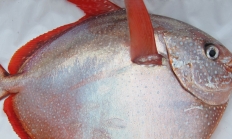
Features: Opah are also known as moonfish due to their round, laterally compressed bodies. These fish are very beautiful with pale red colored and lighter spots throughout resembling the craters on the moon, and orange-red fins. Opah grow to an average of 3-feet long and 100 pounds. Habitat: Opah can be found in temperate and tropical waters. They tend to be at depths of 300- to 1,000-feet during the day and come above 300-feet at night. Technique: These fish are rare in Oregon's waters and are difficult to catch by rod and reel, though they are occasionally brought in.
Features: These fish are dark blue or black with a light belly, a blotchy pattern on the sides, and no spots in the dorsal fin. The easiest way to distinguish a blue rockfish from a deacon rockfish is that the blues have jaws that meet together when closed. Habitat: Like all rockfish, these fish use rocky reefs as habitat. They are common down to 500 feet or more, but also come in to shallow areas. Blue rockfish will often suspend in large schools well off the bottom over rocky areas. Technique: They readily take both bait and lures. Blue rockfish…

Features: These fish are dark blue or black with a light belly. In fact, they are closely related to blue rockfish, which are similar in appearance. The easiest way to identify a deacon rockfish is by the lower jaw that extends forward creating a significant underbite. Habitat: Like all rockfish, these fish use rocky reefs as habitat, but commonly suspend well up off the bottom. They are common down to 300 feet or more. Technique: They readily take both bait and lures. Deacon rockfish have smaller mouths than the black rockfish and are more likely to take smaller jigs and…

Features: Spiny dogfish are gray or brown with white spots on their back and a white belly. They can grow to be 5-feet long. They are called "spiny" as they have a spine behind each of the fins on their backs. Habitat: Spiny dogfish are widely dispersed, traveling from Alaska to Chile, and from intertidal waters down to 3,000 feet. They mostly eat small fish, squid, and octopus. Techniques: Being relatively small, spiny dogfish can be taken with light tackle. They tend to school around prey over soft bottoms. A good amount of weight will probably be necessary to keep…

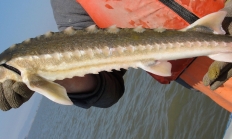
Features: Green sturgeon have olive to dark green backs and a yellowish, green-white belly. They also have a green strip down the middle of their stomachs. This fish will grow to 7-feet long and, as with white sturgeon, have bony body armor along their backs and are covered in sandpaper-like skin. Habitat: Green sturgeon are bottom dwellers, travelling all along the Pacific coast of North America. They spawn in deep pools in turbulent freshwater from March to July. Technique: Green Sturgeon may not be targeted for retention or catch-and-release angling. Any Green Sturgeon caught incidentally, for instance during White Sturgeon…
Features: Before spawning, sockeye salmon are silvery on their sides, white on their bellies, and dark blue on their backs. When spawning, their heads turn green with black on the snout and upper jaw, and their bodies turn red. They can be 24- to 33- inches long and weight between 5 and 15 pounds. Habitat: Many sockeye populations require a lake for part of their life cycle. Spawning may occur along lake shorelines or in stream gravels, but fry usually migrate to lake environments soon after emergence and occupy this habitat during their stay in fresh water. Technique: Sockeye salmon…

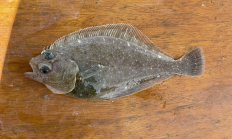
Features: The Pacific sanddab is left-eyed, meaning both eyes are on the left side of the body. The eyed-side is dull light brown, mottled with brown or black, and sometimes yellow or orange. The blind-side is off-white to tan. They have an oval shaped body with large scales. They can grow to be 16-inches long and up to 2 pounds, though most weigh less than 1/3 pound. Habitat: As you probably guessed, sanddabs like to hang out on sandy bottoms. They are most abundant at depths of 20-50 fathoms, and are common in shallow coastal waters from British Columbia to…
Features: Pacific cod are brown to gray on the back with brown spots or pale areas on the back and sides. They are lighter on their bellies. They have an elongated body with a square caudal fin, three dorsal fins, a chin barbel, and two anal fins. The anal fins are usually white-edged. Habitat: They are widely distributed in cooler regions of Pacific and adjacent seas- Japan to the Bering Sea and south to Santa Monica, California. They range in water 7- to 300-fathoms deep, but tend to hang out near the bottom of the water column, regardless of water…

Features: Brook trout are easily identified by the worm-like pale yellow markings on their backs and red dots with blue halos and white borders on their lower fins. In small streams brook trout are often 5- to 7-inches long but can reach 25 inches or more in large rivers or lakes. Habitat: Brook trout are an introduced species, first stocked in the early 1900s. They are widely distributed from high mountain lakes to headwater tributaries, and thrive in cold, mountainous streams and lakes where other species are unable to do well. Many barren lakes have been stocked with brook trout…

Features: These fish are silver when young, but darken and develop black spots on their tails and backs as they age. In fresh water, the males are red on their sides and develop a hump on their backs earning this species the common name humpback salmon. Females in fresh water are green on the sides with dark bars. Pink salmon are an average of 20- to 25-inches long and rarely weigh over 5 pounds. Habitat: Pink salmon spawn on odd numbered years and do so very close to saltwater, never going very far upriver. In fact, some pink salmon will…
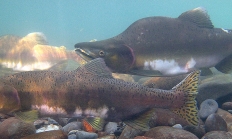
Features: Bullheads found in Oregon are distinguished from channel catfish by their square or rounded tails and lack of spotting. They seldom exceed two pounds and 18-inches long. Brown bullheads are a mottled yellowish-brown with a yellow belly and dark chin “whiskers” or barbels that are white near the base. They have a square tail. Habitat: Bullheads are found on the bottom in the shallows of mud-bottomed ponds, lakes, reservoirs and backwaters of rivers. The brown species is common throughout the state. Technique: Bullheads can be caught any month of the year, but fishing is best from the first warm…

Features: While in the ocean, Chinook salmon often have a purple hue to their backs with silvery sides and bellies, large oblong black spots on the back, and round black spots on both lobes of the tail (note that tail spotting may be obscured in ocean fish by “silver” in the tail). Upon returning to freshwater to spawn, Chinook darken in color and develop red on their bellies and fins. A key identifier is the black gum line on the lower jaw with dark colors both inside and outside of the gum line. Spawning generally occurs from August to early…
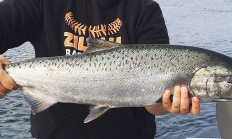
Features: Redear sunfish are often confused with bluegill, but differ by having a red or orange border around the black ear flap and by lacking the spot on the dorsal fin and the vertical bars on the side. Habitat: In Oregon, redear sunfish are found only in a few ponds in the Willamette Valley and the central part of the state. In their native range, redear sunfish prefer warm, large lakes and reservoirs and bayous with vegetated shallow areas and clear water. They feed primarily on the bottom and seldom take surface insects. The diet consists mostly of zooplankton, insect…

Features: Yellow perch are golden, with six to nine dark vertical bars. They have two well-separated dorsal fins; the second fin has two or three spines. Lower fins are yellowish-orange and, unlike walleye, yellow perch do not have canine teeth. Maximum size in Oregon exceeds 3 pounds and 18-inches long. They are prolific spawners, often resulting in an overpopulation of stunted fish. Habitat: Yellow perch prefer lakes, reservoirs and slower moving streams that have cool, clean water and ample vegetation. Perch bite readily and are therefore popular with young and novice anglers. Technique: In the spring and fall, find yellow…
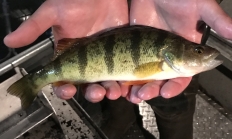
NEWPORT, Ore. – The commercial Dungeness crab fishery opens Dec. 31 from Cape Falcon to the Washington border. Fishermen can begin the presoak period – setting baited crab pots in the water – on Dec. 28 in this area. ODFW delayed opening the north coast until crab in Long Beach…