
Search myodfw.com
Showing 1421 - 1440 of 1656 results
Features: Trout-like in appearance, the body is silvery in color with a bronze or dark back. They can be distinguished from trout by the forked tail and the small, down-turned mouth. Lengths run to 20-inches. Whitefish are often erroneously called graylings by many anglers. Habitat: Mountain whitefish inhabit many Oregon streams and lakes, thriving best in clear, cold water. Techniques: Whitefish tend to go for flashy flies, but are known for quickly spitting them out. Many sportsmen look with disfavor on the whitefish and often throw it away as undesirable. However, the flesh of the whitefish is firm and tasty…

Features: Opah are also known as moonfish due to their round, laterally compressed bodies. These fish are very beautiful with pale red colored and lighter spots throughout resembling the craters on the moon, and orange-red fins. Opah grow to an average of 3-feet long and 100 pounds. Habitat: Opah can be found in temperate and tropical waters. They tend to be at depths of 300- to 1,000-feet during the day and come above 300-feet at night. Technique: These fish are rare in Oregon's waters and are difficult to catch by rod and reel, though they are occasionally brought in.
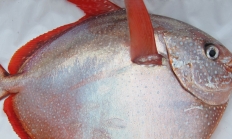
Features: Pacific cod are brown to gray on the back with brown spots or pale areas on the back and sides. They are lighter on their bellies. They have an elongated body with a square caudal fin, three dorsal fins, a chin barbel, and two anal fins. The anal fins are usually white-edged. Habitat: They are widely distributed in cooler regions of Pacific and adjacent seas- Japan to the Bering Sea and south to Santa Monica, California. They range in water 7- to 300-fathoms deep, but tend to hang out near the bottom of the water column, regardless of water…

Features: Greenish or bluish above with dark wavy worm-like marks along the back; shading to silvery below, usually with dusky spots on the lower side. Mackerel grow to be 25-inches long. Habitat: Pacific mackerel are usually found close to shore, but are not typically associated with any bottom structure. Technique: Mackerel are not usually targeted by Oregon’s anglers, but are often caught incidentally by salmon anglers. Small shiny spoon or baited hooks are good methods to use to catch mackerel.

Features: Redtail surfperch all fins are reddish in color, and have 8-11 reddish to brownish vertical bars along the sides over a silver to brassy body. Habitat: Surfperch are found mostly in the surf. Redtail will usually be found between the 2nd and 4th row of breakers and near deeper holes and areas of high sand erosion. Technique: Some anglers use a #4 to #6 hook secured 24-30 inches below a 1- to 2-ounce sinker on 8- to 10-pound line. Baits include sand and kelp worms, sand shrimp, clam necks, and mussels. Some anglers have found success fly fishing for…

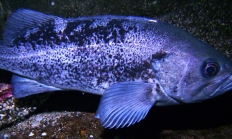
Features: Black rockfish are dark gray to black on top, with a lighter belly, and black spots on their dorsal fins. They can grow to be 25-inches long. Take the "Black Rockfish or Not?" quiz Habitat: They are found over rocky reefs most typically shoreward of 180 ft. of depth, and are common along jetties and other structure in estuaries. Occasionally schools of black rockfish will come all the way to the surface. Technique: Rockfish feed on squid, octopus, krill, and other fish . They readily take both bait and lures. Common lures include rubber-tailed lead head jigs and shrimp…

Features: These fish are dark blue or black with a light belly, a blotchy pattern on the sides, and no spots in the dorsal fin. The easiest way to distinguish a blue rockfish from a deacon rockfish is that the blues have jaws that meet together when closed. Habitat: Like all rockfish, these fish use rocky reefs as habitat. They are common down to 500 feet or more, but also come in to shallow areas. Blue rockfish will often suspend in large schools well off the bottom over rocky areas. Technique: They readily take both bait and lures. Blue rockfish…

Features: Canary rockfish are named for their bright yellow to orange mottled bodies. They also have undertones of gray and three orange stripes across their heads. They grow to be 30-inches long, and have very firm and desirable meat. Habitat: Canary rockfish are a schooling fish, common along the Pacific Northwest coast over rocky reefs and pinnacles. Larger adults are usually further offshore, with younger fish sometimes common down to 100 feet. Yelloweye, canary and vermillion rockfish can look similar. See this rockfish identification article for distinguishing features for each species. Technique: They readily take both bait and lures. Locate…
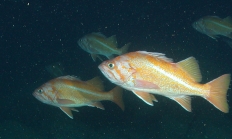
Features: These fish have a dark blue or black body, mottled with yellow and with a broad yellow stripe running along their side. Habitat: The China rockfish dwells in relatively shallow water, 10- to 400-feet deep, on rocky reefs. Technique: They readily take both bait and lures. China rockfish will be caught in areas with lots of rocks and crevasses, and by keeping the bait or lure very close to the bottom.

Features: Copper rockfish have variable coloration, ranging from dark or olive-brown to copper with pink or yellow blotches. They can grow to be 23-inches long. They have very tall and strong dorsal fin spines, and a clear patch along the rear half of the lateral line. Habitat: They prefer rocky, shallow areas. Though these shy fish do not school, they sometimes form small groups around man-made structures such as jetties. Technique: Copper rockfish will most readily be caught by working rubber tail jigs or bait near the bottom in shallow rocky areas.
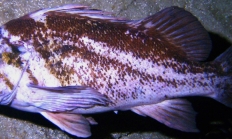
Features: These fish are dark blue or black with a light belly. In fact, they are closely related to blue rockfish, which are similar in appearance. The easiest way to identify a deacon rockfish is by the lower jaw that extends forward creating a significant underbite. Habitat: Like all rockfish, these fish use rocky reefs as habitat, but commonly suspend well up off the bottom. They are common down to 300 feet or more. Technique: They readily take both bait and lures. Deacon rockfish have smaller mouths than the black rockfish and are more likely to take smaller jigs and…

Features: Quillback rockfish are slate-brown and mottled with yellow and orange towards the head, while the rear half of their body is gray to dark brown or black. They have dark brown or black "freckles" on their head and gill cover. They have deeply incised membranes on their very long, spinous dorsal fins. Quillback rockfish can grow to be 24-inches long. Habitat: They prefer rocky bottoms from the intertidal zone out to 800 feet. Technique: Quillback rockfish are currently prohibited. Anglers are required to immediately descend back to depth any quillback rockfish encountered outside of the 30-fathom regulatory line and…

Features: Its deep red sides are mottled with gray. They grow to be 30-inches long. Yelloweye, canary and vermillion rockfish can look similar. See this rockfish identification article for distinguishing features for each species. Habitat: The vermilion rockfish is found near the bottom of the ocean over rocky substrate. Technique: They readily take both bait and lures. Rubber tailed lead head jigs, metal jigs, shrimp flies, and baited hooks will all take vermilion rockfish. Header photo by Ratha Grimes, Flickr
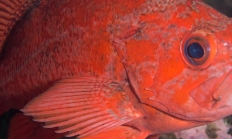
Features: The widow rockfish is brassy brown with a light colored belly. Their fin membranes are also brown. They can grow to be 21-inches long. Habitat: Widow rockfish school down to 1200 ft., usually found suspended over offshore reefs and rocky areas. Technique: Best success will be by first locating suspended schools of widow rockfish in offshore areas during periods open for fishing offshore, and then working rubber tail jigs or shrimp flies through the schools.

Features: They are orange red to orange yellow with a bright yellow eyes. Their fin tips may be black. On the top of their head they have a pair of rough ridges. Yelloweye, canary and vermilion rockfish can look similar. See this rockfish identification article for distinguishing features of each species Take the "Yelloweye Rockfish or Not?" quiz Habitat: Juveniles and subadults prefer shallower water than adults, and are associated with rocky reefs,and kelp canopies. Adults move into deeper water as they grow, and prefer rocky bottoms. Technique: Yelloweye rockfish are currently prohibited in the catch. Anglers are required to…
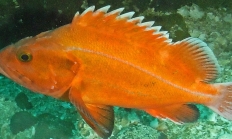
Features: These fish are olive green to dusky-brown with some light mottling towards their top sides. Their fin membranes are yellow. Habitat: Yellowtail rockfish will usually be found in offshore waters and often suspended over deep reefs and rocky habitat to as deep as 900 feet. Technique: Best success will be by first locating suspended schools of yellowtail rockfish in offshore areas during periods open for fishing offshore, and then working rubber tail jigs or shrimp flies through the schools.

Features: Herring are silver with large scales. They are an important food source for larger fishes, sea birds and marine mammals. Habitat: Herring are frequently offshore in large schools but can be caught inshore in harbors and large estuaries during spawning. Technique: Herring are a schooling fish, and anglers can target them from docks, piers or boats in the bays. The most popular rig is a multiple-hook herring jig. Header photo by Steve, Flickr
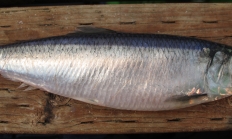

Features: Blue sharks are named for their brilliant blue color. They are slender with a long, pointed nose. They can grow to be 12-feet long, though they rarely get over 10-feet. Habitat: Blue sharks are found in all the world’s temperate and tropical oceans. They have been spotted as far north as Norway and as far south as Chile. They roam both open and coastal waters in search of octopuses, squid, cuttlefish, and fish. Technique: Typically chumming the water will attract blue sharks. You will need a wire leader to protect your line from the blue shark's saber-shaped teeth. Fins…