
Recreation Report
Central Zone
Recreation Report
CENTRAL WILDLIFE VIEWING
Recreating in drought and wildfire season - actions you can take to protect wildlife.
For the most current fire restrictions--KNOW BEFORE YOU GO.
Crook County
All public land fire closures within Crook County have been lifted which broadens wildlife viewing access. Remember to use caution when traveling through and recreating in burned areas.
Waterfowl are visible along the crooked river and on most lakes/reservoirs. Herons, osprey, and kingfishers are frequently seen along the crooked river while searching for prey. Raptors, including bald eagles, redtail hawks, and kestrels can be seen frequently near agricultural fields.
Most large mammals are still on summer range in forested habitat within the Ochoco National Forest. Elk will continue rutting in the coming weeks, and bulls will become more visible during daylight hours. Mule deer are still in summer behavioral patterns and will not begin fall migration until late October.
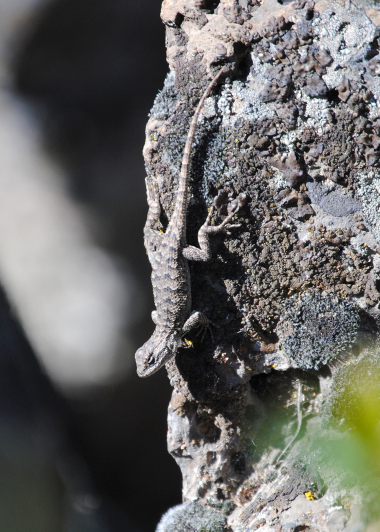
Any place on the sagebrush steppe or juniper scrublands can offer good opportunities to view a variety of reptiles, birds, and small mammals. Mule deer, coyotes, and pronghorn are also frequently seen in these habitats.
Prineville Reservoir Wildlife Area
The Prineville Reservoir Wildlife Area offers access to view a wide variety of wildlife, including deer, coyotes, otter, beaver, raptors, shorebirds and waterfowl. Maps of the wildlife area are available online, at the Prineville ODFW office, or at Prineville Reservoir State Park office. Vehicles must remain on open roads, designated by a green dot, and cross-country motorized travel is prohibited.
Deschutes County, Jefferson County, northern Lake and Klamath Counties
Portions of the Deschutes National Forest, Crooked River National Grasslands and BLM parcels across the region are closed due to wildfires from earlier in the summer, know before you go and check current closures. Those links can be found at:
https://www.fs.usda.gov/r06/deschutes/alerts
https://www.fs.usda.gov/r06/ochoco/alerts
https://www.blm.gov/programs/fire/regional-info/oregon-washington/fire-restrictions (under the Prineville BLM tab)
Wildlife generally remains on their summer ranges, making them largely spread out across the landscape. Remember that many popular trailheads in the Three Sisters, Mt Washington, and Mt Jefferson Wildernesses now require an access permit. That link can be found below:
https://www.fs.usda.gov/r06/willamette/permits/central-cascades-wilderness-permits
Raptors are present across the region, these can include red-tailed hawks, northern harriers, American kestrels, prairie falcons, bald eagles and the occasional golden eagles. Look for a few ferruginous hawks as well. Turkey vultures and Swainson's hawks can also be found. Areas with agricultural fields can be good places to view these raptors as they hunt for small mammals in the fields. For songbirds, wetlands and other areas with diverse habitats remain the hotspots. Hatfield Lake and the Deschutes River corridor can be great spots to see migrating birds that are passing through. The usual suspects including Townsend's solitaires, pinyon jays, dark-eyed juncos, and mountain chickadees are out on the landscape. Warblers, swallows, and sparrows can also be found in these riparian landscapes, as well as the trees around.
In the waterfowl world, most of our lakes should hold birds. Lakes such as Wickiup Reservoir, Hatfield Pond, and Lake Billy Chinook can be good places to see large numbers of waterfowl. Places with mudflats and exposed shorelines such as Wickiup can be good places to find shorebirds such as Spotted Sandpipers.
In terms of larger critters, most of our deer and elk are currently on their summer ranges in the forest. Deer will remain until mid-October or so, when they begin their migration down in elevation to the winter ranges. Elk have begun their breeding season, meaning the bulls are bugling, the cows are mewing, and many other vocalizations can be heard.
Wasco, Sherman, Hood Counties
The Lower Deschutes River provides ample wildlife viewing opportunities. California bighorn sheep are frequently observed in the canyon and can provide fantastic viewing all times of the year. The best spot to view sheep is from the BLM access road just downstream and across the river from Sherars Falls (along Hwy 216). Focus your efforts near large cliff complexes for best viewing. You can also see sheep from The Lower Deschutes Wildlife Area access trail on the east side of the river by hiking up from the mouth of the river. Sheep can be seen as low as river miles 7 or 8.
The John Day River Canyon also is home to bighorn sheep, but access is a bit more limited. The easiest place to access the canyon is at Cottonwood Canyon State Park. Hike up or downstream from the access point to look for sheep.
Also, while in these river canyons keep an eye out for a variety of native songbird species. Bullock's orioles and western kingbirds can be commonly seen in alders and willows near the riverbanks. The iconic song of the canyon wren can be heard throughout the Deschutes and John Day. Also brush up on rockwren calls, which are often heard in similar habitats. On the water keep an eye out for mallards, geese, and common mergansers. Several species of upland game birds including pheasants, chukar, quail, and turkeys are found in these canyons and throughout the district.
Oak woodlands throughout Hood River and Wasco counties provide food and cover for many wildlife species. Acorns from these trees are a particularly important food source for western gray squirrels and deer. Woodpeckers such as Lewis's woodpeckers, may be found scouring live and dead oak trees for insects found in the wood.
You can see a variety of common raptor species throughout the Mid-Columbia district. Common species this time of year include red-tailed hawk, osprey, golden eagle, bald eagle, American kestrel, and northern harrier. Other less commonly seen species include prairie falcon, and peregrine falcon.
Winter sports enthusiasts may find snowshoe hairs and ermine. More information about these animals and more can be found here.
The primary purpose of the White River Wildlife Area is to provide winter range habitat for black-tailed deer and Rocky Mountain elk and to minimize big game damage to adjacent private agricultural lands.
Although the primary objective is to benefit the wildlife resource, excellent opportunities exist for recreational pursuits. The nearly 30,000-acre wildlife area provides excellent hunting opportunities for big game species, turkeys, and Western Gray Squirrels. Limited opportunities exist for upland birds and waterfowl. It is not recommended to travel to the wildlife area for upland or waterfowl hunting, but for those with direct experience at White River, birds can be found in limited numbers.
In addition to hunting opportunities, White River has two stocked ponds, and several streams open for fishing. These areas can be excellent camp sites for combined hunting and fishing opportunities, especially during early season hunts like Turkey season.
Current weather
Be prepared for changing conditions. A parking permit is required to park in designated sites at White River Wildlife Area. Purchase a parking permit before your visit.
Camping in the wildlife area is only allowed in designated camping areas. Please pack out your trash. Only street legal vehicles are allowed in the wildlife area, no ATV's or snowmobiles. WRWA headquarters 541-544-2126.