
Search myodfw.com
Showing 1381 - 1400 of 1647 results
CENTRAL BIG GAME HUNTING April 23, 2026 Currently open Controlled Spring Bear, Cougar ( check current harvest numbers), Coyote Announcements and resources Here's the local scoop for your hunt area in the 2026 Spring Bear Forecast. Submit your applications for 2026 controlled hunts by May 15. Big game harvest statistics - You'll find links to population, harvest and point summary reports that can help you decide what hunts to apply for this season. Please report elk with hoof disease - If you see elk showing signs of elk hoof disease, including lame or limping elk or elk with damaged, injured…
SE BIG GAME HUNTING April 23, 2026 Currently open Cougar ( check current harvest numbers), Coyote Announcements and resources Submit your applications for 2026 controlled hunts by May 15. Here's the scoop for your hunt area in the 2026 Spring Bear Forecast. Big game harvest statistics - You'll find links to population, harvest and point summary reports that can help you decide what hunts to apply for this season. Please report elk with hoof disease - If you see elk showing signs of elk hoof disease, including lame or limping elk or elk with damaged, injured, missing or deformed hooves…
SOUTH CENTRAL BIG GAME HUNTING April 23, 2026 Currently open Controlled Spring Bear, Cougar ( check current harvest numbers), Coyote Announcements and resources Here's the local scoop for your hunt area in the 2026 Spring Bear Forecast. Submit your applications for 2026 controlled hunts by May 15. Big game harvest statistics - You'll find links to population, harvest and point summary reports that can help you decide what hunts to apply for this season. Please report elk with hoof disease - If you see elk showing signs of elk hoof disease, including lame or limping elk or elk with damaged…
NW BIG GAME HUNTING April 23, 2026 Currently open Controlled Spring Bear, Cougar ( check current harvest numbers), Coyote Announcements, resources Here's the local scoop for your hunt area in the 2026 Spring Bear Forecast. Submit your applications for 2026 controlled hunts by May 15. Big game harvest statistics - You'll find links to population, harvest and point summary reports that can help you decide what hunts to apply for this season. Please report elk with hoof disease - If you see elk showing signs of elk hoof disease, including lame or limping elk or elk with damaged, injured, missing…
COLUMBIA BIG GAME HUNTING April 23, 2026 Currently open Controlled Spring Bear, Cougar ( check current harvest numbers), Coyote Announcements and resources Here's the local scoop for your hunt area in the 2026 Spring Bear Forecast. Submit your applications for 2026 controlled hunts by May 15. Big game harvest statistics - You'll find links to population, harvest and point summary reports that can help you decide what hunts to apply for this season. Please report elk with hoof disease - If you see elk showing signs of elk hoof disease, including lame or limping elk or elk with damaged, injured…
Western Oregon April 23, 2026 Upcoming Season Spring turkey now open until May 31. See page 22 of the Game Bird Regulations for more details and rules. Announcements, resources Here's the scoop on your hunt area: 2026 Spring Turkey Hunting Forecast. Plan next season's hunts with prior year game bird harvest summaries. Buy your 2026-27 bird stamp(s) and validations - Available for purchase now: upland and waterfowl validations, federal duck stamp and complete the HIP survey. New season begins July 1. ODFW's Hunt by Reservation Program connects bird hunters with private landowners. By making a reservation online, hunters receive a permit to hunt select private…
EASTERN OREGON April 23, 2026 Upcoming Season Spring turkey now open until May 31. See page 22 of the Game Bird Regulations for more details and rules. Announcements, resources Here's the scoop on your hunt area: 2026 Spring Turkey Hunting Forecast. Plan next season's hunts with prior year game bird harvest summaries. Buy your 2026-27 bird stamp(s) and validations - Available for purchase now: upland and waterfowl validations, federal duck stamp and complete the HIP survey. New season begins July 1. ODFW's Hunt by Reservation Program connects bird hunters with private landowners. By making a reservation online, hunters receive a permit to hunt select private…
NE BIG GAME HUNTING April 23, 2026 Currently open Controlled Spring Bear, Cougar ( check current harvest numbers), Coyote Announcements and resources Here's the local scoop for your hunt area in the 2026 Spring Bear Forecast. Submit your applications for 2026 controlled hunts by May 15. Big game harvest statistics - You'll find links to population, harvest and point summary reports that can help you decide what hunts to apply for this season. Please report elk with hoof disease - If you see elk showing signs of elk hoof disease, including lame or limping elk or elk with damaged, injured…
Eastern Oregon mule deer are managed by Deer Hunt Areas, while all other big game, including Western Oregon deer hunts are managed by wildlife management units. Plan ahead by checking the boundaries of where you want to hunt. Hunters in Oregon can access millions of acres of public land open to hunting ( national forests, BLM land, state forests, wildlife areas) plus many private lands open through Oregon’s Access and Habitat program. See www.oregonhuntingmap.com to find a place to hunt.

Features: The most distinguishing feature of white-tailed deer is the tail. Whitetails have long, wide tails that can easily be seen, especially when they are startled and raise their tails. White-tailed deer antlers differ from mule and black-tailed deer in that there is one main beam with points coming off. Mule and black-tailed deer have antlers that fork on the main beam. Habitat: White-tailed deer share the same habitat as eastern Oregon’s mule deer. Deer both graze and browse. Forbs and browse (stems and leaves of woody plants) are favored forage during the growing season. Grasses are consumed during some…

Features: Columbian black-tailed deer are smaller and darker than mule deer. As the name suggests, black-tailed deer have a wide, triangular tail with a dark brown or black top and a white underside. Habitat: Blacktails are a subspecies of mule deer found in western Oregon from the Coast Range east to the Cascade Mountains. They are edge-adapted species using the region’s dense forest cover to hide during the day and are then more open in early successional forest to feed at dawn and dusk. Places with a mix of forest age classes offer the best habitat for black-tailed deer. Techniques…

Features: Mule deer are larger and lighter in color than black-tails. Mule deer have a thinner “ropelike” tail that is white with a black tip. Their antlers are forked, as opposed to having a main beam. And as their name implies, they have large ears, like a mule, that stand at an angle. Habitat: Mule deer occupy a wide range of habitat types; some live in desert shrub-steppe, some in woodlands, and some in conifer forests. In general, however, mule deer occupy the more open, rugged areas. Although mule deer commonly are considered “browsers," they consume a wide variety of…

Features: Oregon’s rarest deer has a brown tail that is longer than a blacktail’s wide tail. Its antlers will branch off from a single main beam, unlike mule deer and blacktail antlers that branch twice. Habitat: The Columbian whitetail is a subspecies unique to Oregon and southwest Washington and found in just a few locations—along the lower Columbia River in Oregon and Washington, and in the Umpqua Basin near Roseburg (where it is expanding its range). Techniques: Just a few controlled hunts for this subspecies exist in the Umpqua Basin region and tags are limited; see the regulations for details.
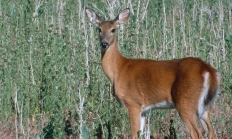
Features: California bighorn sheep are one of two subspecies of wild sheep in Oregon. They are usually smaller, with a less blocky build and smaller horns than Rocky Mountain bighorn sheep. Bighorn sheep were extirpated from the state in the 1800s. Current populations are the result of a reintroduction effort by ODFW and sportsman groups. Habitat: California bighorn sheep are the most abundant subspecies in Oregon with an estimated 3,700 found among 32 herds in central and southeast Oregon. They prefer rugged, open habitats with a good view of their surroundings. Techniques: Bighorn sheep are one of the rarest game…
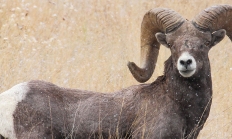
Features: Rocky Mountain bighorn sheep are the largest-bodied bighorn in North America and one of two subspecies of wild sheep in Oregon. Bighorn sheep were extirpated from the state in the 1800s so current populations are the result of a reintroduction effort by ODFW and sportsman groups. Habitat: Oregon’s estimated 800 Rocky Mountain bighorn sheep are found in the northeast corner of the state, in canyons of the Snake River and its tributaries and in alpine areas of the Wallowa Mountains. Techniques: Bighorn sheep are one of the rarest game species hunted in Oregon today, with about 100 tags available…
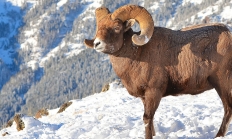
Features: Roosevelt elk are one of two subspecies of elk found in Oregon, with an estimated population of 59,000 in the state. “Rosies” are darker in color than other elk subspecies and the largest in terms of body size, with bulls generally weighing 700-1,100 pounds. Habitat: Roosevelt elk occupy most of western Oregon, with concentrations in the Cascade and Coast ranges. All elk west of Hwy 97 are considered to be Roosevelt elk, though there is some overlap of Oregon’s two subspecies in the Cascades. Techniques: Roosevelt elk make their home in the thick and lush forests of western Oregon…
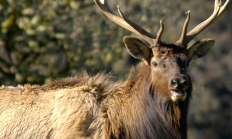
Features: Rocky Mountain elk are one of two subspecies of elk found in Oregon, with a population estimate of more than 74,000 in the state. They are lighter in color and slightly smaller in size than Roosevelt elk, but their antlers are the largest of all elk and can weigh up to 40 pounds. Habitat: Rocky Mountain elk inhabit most of eastern Oregon with concentrations in the Blue Mountains and south-central Oregon. Techniques: Rocky Mountain elk live in much more open country that Roosevelts so try glassing, still hunting, spot and stalk and calling. Rifle, archery and muzzleloader seasons are…


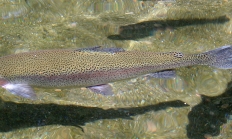
Features: Brook trout are easily identified by the worm-like pale yellow markings on their backs and red dots with blue halos and white borders on their lower fins. In small streams brook trout are often 5- to 7-inches long but can reach 25 inches or more in large rivers or lakes. Habitat: Brook trout are an introduced species, first stocked in the early 1900s. They are widely distributed from high mountain lakes to headwater tributaries, and thrive in cold, mountainous streams and lakes where other species are unable to do well. Many barren lakes have been stocked with brook trout…
