
Search myodfw.com
Showing 1581 - 1600 of 1647 results
Canvasbacks are large; adults in good condition are as heavy as mallards and second in size only to the white-winged scoter among common Oregon ducks. Drakes have a reddish head and neck; black breast, lower back and tail coverts; nearly white back, flank, and belly, and dark gray tail. The hen is grayish brown with a darker brown head, neck, breast and tailcoverts. It is an occasional summer resident in northeast Oregon, nesting locally only at Ladd Marsh in Union County. It is an uncommon spring and fall migrant in northeastern Oregon and regular in winter and spring on the…

Although not as imposing as the Canvasback, the redhead is a large, handsome, fast-flying diver. The drake has a red head, black breast and tail coverts, and steel gray back, flanks and tail. Hens are a medium brown. During courtship, the drake utters a very un-duck-like meow. Known for nest parasitism - laying eggs in the nests of other birds, usually other diving ducks - redhead eggs have also been found in the nests of a variety of species. It is an uncommon summer resident in northeast Oregon, but commonly breeds at Batch and Bogus lakes and locally elsewhere in…

NEWPORT, Ore. – The Oregon Department of Fish and Wildlife is hosting three public meetings along the coast to discuss the state's commercial Dungeness crab fishery. Commercial fishermen, industry representatives and anyone interested in the fishery are encouraged to attend. ODFW staff will give updates related to marine life entanglement…
Sauvie Island Wildlife Area was established in 1947 with primary objectives of protecting and improving waterfowl habitat and providing a public hunting area. The initial purchase of five acres in 1940 and subsequent purchases through 2012 has brought the wildlife area to its present size of 11,643 acres, of which 8,153 acres are under fee title to the department and 3,490 acres are managed through a cooperative agreement with the Oregon Department of State Lands. Currently, the wildlife area supports a biologically diverse association of wildlife which includes at least 275 species of birds, 37 species of mammals, 12 species…
The Minto Fish Facility is part of the Marion Forks/ Minto Fish Facility complex. Minto is located upstream of Packsaddle Park on the North Santiam River. The Minto facility has year round fish collection, acclimation for Chinook salmon and steelhead, a spawning facility, juvenile acclimation, short and long term holding of adult salmonids, water to water transfers for all fish, and out planting and fish recycling capabilities. Minto Dam creates an impassable barrier that encourages migrating fish into the facilities fish ladder. All fish moving upstream are counted, and disposition is determined depending on species and time of the year.
Returning adult salmon and steelhead enter the fish ladder on the south side of the dam and are held in a 12’ x 40’ trap until they can be processed by ODFW’s South Santiam Hatchery staff. Hatchery employees operate the fish trap one to three times per week depending on the time of year and numbers of adults returning to the system. An average of 4,000 spring Chinook, 4,700 summer steelhead, and 670 winter steelhead are collected annually. All unmarked spring Chinook and winter steelhead are returned to their native habitats in the South Fork of the Santiam above Foster…
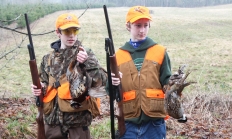
Oregon requires all hunters under the age of 18 to complete a hunter safety education course before hunting in the state. Upon completing the course (and a Field Day for youth), participants will receive a Hunter Safety certification number and card. Adults are also encouraged to take the online course, as it may be required for out of state hunts. Note: Youth under the age of 9 may struggle with the course material and may not have the physical strength needed to safely handle a firearm during a Field Day, particularly during muzzle control, loading, and unloading drills.
Offered Year Round
Statewide
Bowhunter safety education: June 13, 2026
Elmira
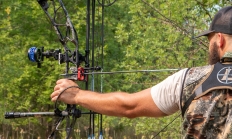
Month of May
Various locations
Study ahead: Oregon Furbearer Trapping and Hunting Regulations
Seasons vary depending on species
Online Learning

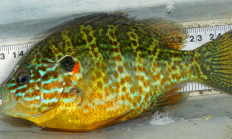
Features: Pumpkinseeds may be identified by the orange or red spot on the ear flap and the orange cheeks with wavy blue or turquoise stripes. Color is exceedingly brilliant and somewhat variable; olive to brassy-green above, the back finely dusted with gold or emerald. Habitat: Pumpkinseeds are found in the same habitats and often in association with bluegills. Adults often congregate beneath old deadheads and trees that have fallen into the water. Food habits are also similar to bluegill. They consume large numbers of snails by browsing on the stalks of aquatic vegetation. Techniques: Pumpkinseed are found in many of…
Features: Oregon is home to an estimated 25,000-30,000 black bears, which is North America’s most common bear species. They are the only type of bear found in Oregon. Despite their name, black bears are often brown in color. Habitat: Black bears are found statewide, with concentrations in the Coast and Cascade ranges and the Blue Mountains. Techniques: Oregon offers a controlled spring season (apply by Feb. 10) and a general fall season. Glassing open areas where bears are feeding on grass and shrubs works early spring season. Later in the season, some hunters turn to predator calls. Most fall bears…

Three Mile Falls Dam is located at river mile three on the Umatilla River. The dam was constructed in the early 1900s and serves as an irrigation dam that is a complete barrier to fish migrating upstream. In order to successfully migrate past the dam, all adult salmon and steelhead must use the fish passage facility located on the east side of the dam. The fish facility consists of a fish ladder, viewing window, fish trap and holding pond. Every adult salmon and steelhead heading upstream is counted at this facility using a combination of trapping and video tape enumeration…
This release was updated April 25 to correct two errors (the first name of the OSP Lieutenant who testified on Sauvie Island parking issues and that the Don Lindly property was sold to Lincoln County not Lincoln City.) LINCOLN CITY, Ore.—The Commission adopted a limited entry parking program for summer…
ODFW's Oregon Conservation and Recreation Advisory Committee meets May 4 and 5 SALEM, Ore. – The Oregon Conservation and Recreation Advisory Committee will meet in Newport on Monday, May 4 at 12 p.m. for a tour of area projects. The Conservation and Recreation Advisory Committee will also meet Tuesday, May…
Features: The pronghorn is deer-sized (up to 150 lbs) with relatively long and thin legs and feet, only two digits on each foot (no "dew claws"), a relatively small tail, and unique horns. Bright white sides, underside and rear end help hunters spot them in the field. Habitat: Pronghorn are found in the High Desert sagebrush of eastern Oregon and the Columbia Plateau. Techniques: Most pronghorn hunts happen in August, before other big game seasons, so be ready for the High Desert’s warm summer temperatures. All pronghorn hunting is limited entry (apply by May 15) and it can take several…

Features: Oregon is home to more than 6,000 cougars, or mountain lions. Cougars are the largest members of the cat family found in the state and tend to be solitary, except for females raising young. Males in particular are very territorial. Habitat: Cougars are throughout Oregon, with concentrations in the Cascade Range and Blue Mountains. Lately, more cougars are being seen in northwest Oregon including the suburbs of Portland. Techniques: Hunting is open statewide under a general season all year, or until zone quotas are met. Most cougars in Oregon are taken while hunters are out pursuing other species like…
