
Search myodfw.com
Showing 21 - 40 of 305 results
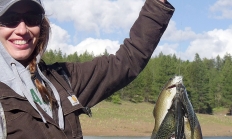
Searching for frogs and salamanders is a great way to introduce kids to the wonders of Oregon's wildlife and the great outdoors. Learn more about their various habitat needs and you'll increase your chances of seeing one of these unique species. Remember to leave no trace to preserve their habitat. Check out our fun facts on Oregon's frogs.
ORDER Replacement Hunter Safety Card
Available
Online
Features: In breeding plumage, green-winged drakes have a cinnamon-colored head with a green eye-stripe, gray back, flanks, and a bright patch of iridescent green on the rear of the wing (speculum). Hens are brown with a green speculum. Habitat: Green-winged teal are primarily winter migrants in Oregon. They are puddle (dabbling) ducks that prefer shallow areas like ponds and marshes, where they feed on or near the surface of the water by tipping up. Techniques: Teal are early migrants that begin arriving in Oregon in August but will continue to arrive into November. There are good early season hunts in…

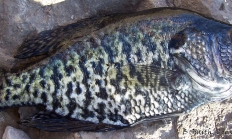

Features: Eulachon smelt ( Thaleichthys pacificus) grow to be 6-9 inches long and live 3-5 years. They have elongated bodies with relatively large mouths. They are blueish on top and silvery on their sides and bellies. Habitat: The Pacific smelt spends most of its life in the ocean, migrating up rivers, including the Columbia and its tributaries, to spawn. The eggs attach to gravelly, woody, or sandy substrate of the river bottoms, but upon hatching the juvenile smelt get swept downstream back to the ocean. Technique: Dip netting for smelt when they run in the Sandy River is a great…


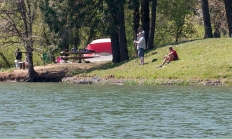
SALEM, Ore.— If you are considering registering for a youth pheasant hunt, it is not too late. More slots have opened for many youth pheasant hunts being held statewide this month after duplicate registrations were removed from the system. "We've heard some parents have been unable to sign up their…
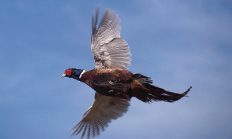
CLACKAMAS, Ore.— Anglers with the two-rod validation will be able to use two rods in areas of the upper Willamette River open to coho retention through the end of the year, under a temporary rule adopted by ODFW. Effective Aug. 1 through Dec. 31 for anglers with the validation, two…
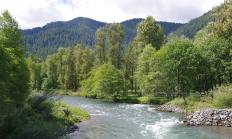
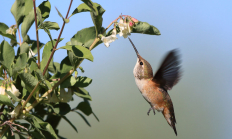
SALEM, Ore. – ODFW and the Oregon Hunters Association (OHA) will give away free wildlife forage seed to landowners at E.E. Wilson Wildlife Area near Corvallis on Saturday, May 9. The giveaway coincides with OHA's Youth Field Day (limited spots available). Seed giveaway More than 500 bags of free seed…

WALDPORT, Ore. — The Oregon Department of Fish and Wildlife and First Baptist Church of Waldport will host the 27th annual family fishing event at Eckman Lake on Saturday, May 16. The event will take place from 9 a.m. to 2 p.m. for youth ages 17 and younger. Each participant…
Fun facts about our bats Oregon's bats eat only insects. An adult bat eats about 1,000 insects every hour! Bats hang upside down because it gives them an ideal position for take-off. Bats can fly 20 to 30 miles an hour and travel more than 100 miles a night. A baby bat is called a pup. Young bats can fly between two and five weeks of age. Bats are the only flying mammal. ODFW's Living with bats page has tips on protecting at-risk populations, and more. Bat Conservation International Batty for Bats: Facts for kids (pdf) Build a bat house…

Bats are important pollinators and the only flying mammals; they use sound to locate their prey, and they live a long time. Oregon has 15 species of bats, and eight of those are Oregon Conservation Strategy Species. Strategy Species are those having small or declining populations, are at-risk, and/or of management concern. Some of Oregon's species migrate south in winter while some remain here and hibernate. Bats have echolocation which allows them to make high-pitched sounds then listen to the echo of those sounds to locate where objects are. Echolocation helps them find even the smallest insect.

CLACKAMAS, Ore.— Anglers can double the odds of catching salmon in the Upper Willamette River this fall as coho again return to areas above Willamette Falls. Effective Aug. 1 through Dec. 31, anglers with the two-rod validation may use two rods in all areas of the Willamette River upstream of…