
Search myodfw.com
Showing 201 - 220 of 346 results

ROSEBURG, Ore. – Learn how to hunt waterfowl or sharpen your skills in one of three waterfowl hunting workshops in Southern Oregon offered by the Oregon Department of Fish and Wildlife. ODFW hunter education specialists are teaching the workshops: Oct. 3: Klamath Falls, 6 p.m. – 9 p.m., Klamath Wildlife…
CLACKAMAS, Ore.— The last day to retain a white sturgeon in the John Day Pool (mainstem Columbia River from John Day Dam upstream to McNary Dam and adjacent tributaries) is Friday, Jan. 9. Fishery managers from Oregon and Washington made the decision today after determining that the harvest guideline in…

Hunter's Guide Hunter's Resources Hunter's Technique Hunter's Bounty
Spring and Fall
Online Learning

KLAMATH FALLS, Ore. – Sept. 30 will be the last day to fish on Spencer Creek this year, as this tributary of the Klamath River will be closed as of Oct. 1 to protect spawning fall Chinook salmon. Spencer Creek has traditionally been closed to fishing from Nov. 1 to…
SW Fishing May 14, 2026 Best bets for weekend fishing: Trolling at Lost Creek and Applegate Reservoirs continues to be very good. Howard Prairie and Hyatt Reservoirs have plenty of legal-size rainbow trout. Holdovers from last year are a good size. Spring Chinook are moving through the Middle Rogue, and a few anglers are reporting success. Try plugs or plunking along current seams on the inside bends of the river to intercept them. Early morning or evening when sunlight is not directly on the water will be the best time to intercept migrating springers. There will be 1,100 rainbow trout…
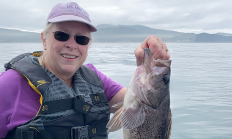
Cara Rupp with her 5 lb. 11 oz. Black rockfish near Beverly Beach State Park. Photo provided by Dennis J Rupp. NEWPORT, Ore. – The General Marine Species daily bag limit is reduced to three fish beginning Sept. 18 to lower the risk of an early season closure. The one-fish…
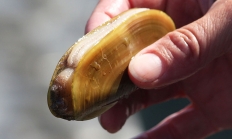
Features: This clam has a long, narrow, thin shell with a smooth brown coating. Habitat: Razor clams are found in stable, sandy, surf-swept beaches of the open coast and some coastal bays. Razor clams have the ability of digging up to a foot per minute and have been found more than four feet deep in the sand. The 18 mile stretch of Clatsop beaches account for 90% of Oregon’s razor clam harvest. The razor clam population in this area is much denser than any other area in the state. Other areas that also have razor clams include Indian Beach (Cannon…
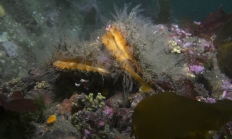
The rock scallop ( Crassadoma gigantea) lives in the swift current shallows of Oregon's nearshore rocky reefs. Due to the coloration at its hinge, it is also known as the purple hinged scallop. These highly specialized scallops cement themselves to rocks, primarily at depths from 10 to 150 feet. They feed on microscopic plankton they filter from the water and reproduce via broadcast spawning. In order for spawning to be successful, they need to be close to one another. For this reason, it is best to harvest solitary rock scallops and minimize harvest pressure on dense aggregations which are more…
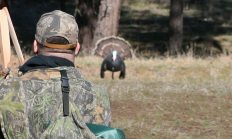
ROSEBURG, Ore. – ODFW is hosting turkey hunting workshops around the state in April for both youth and adults. If you're a new hunter, or new to turkey hunting, consider joining us for a day of learning more about turkey hunting. Youth workshops April 4 workshops at Denman Wildlife Area…
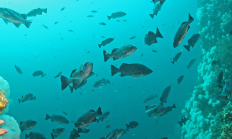
NEWPORT, Ore. – The Oregon Department of Fish and Wildlife is holding two public meetings to discuss the commercial black and blue rockfish and nearshore fisheries. The meetings will be held in person with virtual or phone-in options Sept. 9 in Port Orford and Sept. 11 in Tillamook. ODFW commercial…
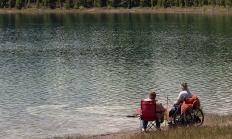


LA GRANDE, Ore. – Effective Aug. 1 through Sep. 30, minimum and maximum size limits as well as the daily and possession bag limits for rainbow trout and bass are suspended for Thief Valley Reservoir (Southeast Zone) located in Union County. Harvest will be allowed by hand, dip net, or…
Oregon's recreational fisheries for Pacific halibut and bottomfish are constrained by bycatch of yelloweye rockfish, an overfished species. Many of the regulations on these fisheries exist to keep bycatch of yelloweye rockfish within sustainable limits, in order to help the stock recover (for example, depth restrictions in the bottomfish fishery, and no lingcod during offshore long-leader trips). ODFW encourages anglers to reduce impacts by using descending devices to release yelloweye rockfish, and better yet, to avoid areas where they might be caught.