Search myodfw.com
This active and often unwary woodpecker, the smallest in North America, is generally the most often seen black and white woodpecker in human-settled areas. A preference is shown for decayed wood for nesting, though sound wood is also utilized. Nest sites are usually 10 to 12 feet off of the ground. It is found mostly at low to moderate elevations in deciduous and mixed deciduous-coniferous forests throughout much of the state, and less often in coniferous forests. Hear the call of the Downy woodpecker Photo by ©Keith Kohl, ODFW
Noted for its familiar call, chick-a-dee-dee-dee, the Black-capped chickadee is widely heralded as one of Oregon's friendliest and cheeriest residents. Even in the midst of winter, this bird "fairly overflows with good spirits." The Black-capped chickadee is resident at low to moderate elevations in western Oregon from the Willamette Valley and coastal counties to Douglas County and in most of eastern Oregon with the exception of the southeastern corner of the state. Hear the song of the Black-capped chickadee Photo by Dave Budeau, ODFW
The Northern shoveler's specialized bill earned it in the nickname "spoonbill" among waterfowl hunters. The drake is strikingly handsome with a dark head, white breast, reddish belly, blue wing coverts and an iridescent green speculum. Brown hens also have blue wing patches similar to that of the cinnamon and blue-wing teal. This duck is locally common in summer in eastern Oregon and uncommon in western Oregon. It is a common spring and fall migrant statewide. Hear the call of the Northern shoveler Photo by Kathy Munsel, ODFW
This large brown sparrow with its handsome black-and-white head pattern is a common breeder in brushy semi-open country throughout much of the state. In winter, it is frequently found in large flocks, often in the company of Golden-crowned sparrows and other seed eaters. White-crowns are easily seen as they feed on the ground, repeatedly dashing back into the cover of dense shrubs before emerging for another foraging bout. Hear the song of the White-crowned sparrow Photo by Kathy Munsel, ODFW
The brush rabbit rarely ventures more than a few meters from the extremely dense brush that constitutes the requisite component of their habitat. Runways are interlaced through brushy clumps into surrounding grassy areas and are kept clear of vegetation for easy and quick access to and from foraging areas. In Oregon, the brush rabbit occurs in the Willamette Valley and other interior valleys, in coastal areas, and in valleys along coastal streams from the Columbia River south, and from the foothills of the Cascade Range west. Photo by ©Keith Kohl, ODFW
The Douglas' squirrel is one of the smaller tree squirrels in Oregon. The color and markings of this squirrel differ individually, geographically and seasonally, appearing a dusky olive to brownish gray with an indistinct band of reddish brown with a blackish band along the flanks. In Oregon, it occurs in coniferous forests from the Pacific coast to as far east as western Baker County. Douglas' squirrels are active during the daylight hours year-round, although they may remain in their nests or tree dens for a day or two during inclement weather. Photo by Kathy Munsel, ODFW
The bushy-tailed woodrat is a large rat-like mammal; its squirrel-like tail unique among members of the genus, is gray above and whitish below. The dorsum is buffy gray to dark brownish-black and the venter is white to buff depending on the geographic race. It occurs, statewide in a wide variety of habitats. It is active nocturnally. Sometimes, upon leaving the protection of its den, the woodrat may lie motionless on a rock or limb, watching for a long period before moving forth. Photo from ODFW
The moose is the largest member of the family Cervidae. The pelage is blackish or dark brownish grading to dark gray or grayish brown on the venter and leg. The muzzle is broad and overhanging, the palmate antlers of adult males are massive, and a "bell" (waddlelike flap of skin on the throat) is present. The first moose to come to Oregon wandered south from Washington or west from Idaho across the Palouse Prairie. They stayed to establish a herd in the Blue Mountains north of Elgin, and today there are an estimated 50 adults and calves in the area
Western pond turtles prefer marshes, streams, rivers, ponds and lakes. They need sparse vegetation nearby for digging nests and like to bask on logs. Population declines are due to habitat loss, degradation of nesting areas by invasive plants, competition from non-native turtles and disease. Predators include raccoons and invasive bullfrogs and fish. Western pond turtles are Oregon Conservation Strategy Species in the Coast Range, East and West Cascades, Klamath Mountains and Willamette Valley ecoregions. Photo by Simon Wray, ODFW
Although they occur in a wide variety of habitat types, from deserts and chaparral to open forests across Oregon, Western rattlesnakes usually occur near rocks, cliffs, or downed logs. They overwinter in dens typically located on south-facing rocky hillsides exposed to sunshine. Western rattlesnakes feed mainly on small mammals, including mice, gophers, squirrels and rabbits, but will also take birds lizards, and amphibians. The Western rattlesnake is an Oregon Conservation Strategy Species in the Willamette Valley. Photo by Simon Wray, ODFW
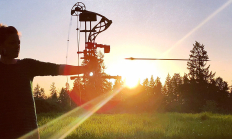
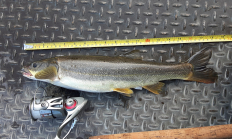
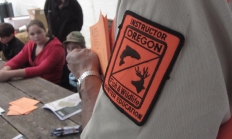
Not sure what to do with a fishing rod even if you had one? Thought about hunting but getting started seems like an impossible task? Then let us help you. During ODFW's hands-on workshops and family fishing events we will provide the instruction and gear you'll need to actually catch a fish or shoot a pheasant. Other classes will help you navigate the controlled hunt process, or show you what equipment you'll need to hunt or fish.
Graceful and tern-like in many of its actions, this striking little gull displays flashing white outer primaries that contrast with a gray back. The Bonaparte's gull is an abundant spring and fall transient along the coast, primarily over the ocean just offshore and is fairly common and widespread elsewhere in Oregon, usually in flocks of less than 100. Larger flocks of up to 1,000 have occurred at Fern Ridge Reservoir in Lane County, during extreme storm conditions, and in the Klamath Basin. Hear the call of the Bonaparte's gull Photo by Martyne Reesman, ODFW
These, the most numerous jaegers off Oregon, are slightly smaller than Herring gulls. Gull-like and graceful, these piratical birds steal food from smaller seabirds. They come in a bewildering array of light and dark individuals, confounded by age and sexual differences. The Pomarine jaeger is an uncommon spring and fairly common fall transient offshore two to 50 miles, following shearwaters. Sightings have been centered near the continental shelf edge. They are occasionally observed from shore in fall. Hear the call of the Pomarine jaeger Photo by Martyne Reesman, ODFW
Gray jays are common visitors at mountainous campsites and parks and are commonly known as "camp robbers" for their habit of taking food from humans. Gray jays in the Blue Mountains have the top of their heads white, while birds in the Cascades and Coast ranges have white restricted to the forehead. Coast Range birds are decidedly browner vs grayish overall. In Oregon, the Gray jay resides in conifer forests of the Coast and Cascade ranges, the eastern slope of the Cascades at Ft. Klamath and in the southwestern part of the state. Hear the call of the Gray jay
This is one of the most audacious of Oregon's resident avifauna both in appearance and behavior. Its black coat and streaming tail dappled in blue-green iridescence contrasts starkly with its flashing white wing feathers during flight. Common and conspicuous east of the Cascades, the magpie prefers open areas stippled with dense thickets or trees. They are highly social, often gathering in large flocks. Historically despised and persecuted by hunters, farmers, and ranchers, this trickster has flourished in the tradition of the coyote. Hear the call of the Black-billed magpie Photo by Kathy Munsel, ODFW
Chestnut-backed chickadees are one of the most common species of bird in conifer forests of western Oregon. They are distinguished from other chickadees by their chestnut-colored back, lack of an eye-line, and their wheezy song. Like other chickadees, they are frequently observed performing acrobatic maneuvers such as hanging from branch tips while foraging high in the canopy. They also frequent bird feeders for suet and sunflower seeds, and will nest in boxes if they are placed near groves of conifers. Hear the call of the Chestnut-backed chickadee Photo by Kathy Munsel, ODFW
Adult Northern leopard frogs have smooth skin that is green or brown and covered with dark brown spots outlined with white rings. Females grow to just over four inches in length; males are slightly smaller at just over three inches. They live in and near various water sources with abundant vegetation such as wet meadows, marshes, riparian areas and moist, open woodlands. These frogs use the vegetation, such as grasses, sedge, weeds or brush, as cover from predators. During the winter, they need ponds or slow-running streams for hibernation. Photo from ODFW
The buzzy, insect-like song of the Savannah sparrow is a characteristic sound of open landscapes dominated by grasslands throughout Oregon. Savannah sparrows are usually heard or seen when perched atop a fence post, small shrub, or tall weed, or running on the ground between openings in vegetation until the bird abruptly drops down into cover. The Savannah sparrow nests on the ground, often in a slight depression and well concealed by a canopy of dead vegetation or partially tucked under a clump of vegetation. Hear the song of the Savannah sparrow Photo by Dave Budeau, ODFW
This is a bird of riparian thickets, farmlands, and towns. Since 1980, it has been observed almost annually in Harney County, usually in numbers less than five. A pair successfully fledged young near the Malheur National Wildlife Refuge headquarters in 1994. Most Harney County records occur from early April to late October. Away from Harney county individuals have also been seen in the various eastern and southeastern counties of Oregon. Hear the song of the Great-tailed grackle Photo by Kathy Munsel, ODFW
The Western gray squirrel is the largest tree squirrel in the state. It occurs from central Wasco, Jefferson, Deschutes, and Klamath counties west, except for unforested portions of the Willamette Valley, to central Washington, Benton, Lane, Douglas, Coos, and Curry counties. It is commonly associated with mixed forest communities. These squirrels are wary and secretive, but curious; they examine new objects placed in their environment but, once captured, they often avoid live traps. Western gray squirrels are an Oregon Conservation Strategy Species in the Willamette Valley ecoregion. Photo from ODFW