
Search myodfw.com
Showing 301 - 320 of 677 results
Whether it's concerns about your local fishery, questions about an upcoming hunt, or comments about an agency policy, we want to hear from you. Please feel free to call or send us an e-mail.
CLACKAMAS, Ore.— Fishery managers from Oregon and Washington extended hatchery steelhead retention for recreational anglers on the mainstem Columbia River downstream of The Dalles Dam using joint state action yesterday. Steelhead retention was initially planned to be closed in this area beginning August 1. With this extension, effective Friday, Aug…

NEWPORT, Ore. – The Oregon Department of Fish and Wildlife is helping investigate the entanglement of a young humpback whale stranded earlier this week near Yachats. The whale was entangled in gear attributed by NOAA Fisheries to the Oregon commercial Dungeness crab fishery. Veterinarians from the West Coast Marine Mammal…



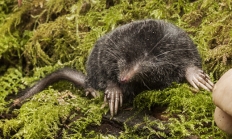
The shrew-mole is the smallest talpid in Oregon. The pelage is black; the eyes are rudimentary. The tail is about 50 percent of the length of the head and body, fat, sparsely haired, blunt ended, covered with transverse annular rows of scales and tufted. In Oregon, the species occurs as far east as Brooks Meadows, Hood River County; Indian Ford Campground, Deschutes County; and Fort Klamath, Klamath County. It is most abundant in moist sod-free ravines with deep, black-silt soils with high humus content and covered with a layer of dead leaves and twigs. Dominant vegetation in these areas is…
Adult Oregon spotted frogs have moist bumpy skin that is reddish-brown on their topsides. On their heads, backs, sides and legs, they have black spots with light centers that darken with age. They also have red bellies and orange-red underlegs. Adult females grow to four inches in length and males to three inches. Oregon spotted frogs live in wet areas that provide abundant aquatic vegetation such as marshes, permanent ponds, lake edges and slow streams. When frightened, they hide in dense vegetation or under debris at the bottom of shallow wetlands. Adult frogs hibernate during the winter in freeze-free seeps…

Features: Pacific cod are brown to gray on the back with brown spots or pale areas on the back and sides. They are lighter on their bellies. They have an elongated body with a square caudal fin, three dorsal fins, a chin barbel, and two anal fins. The anal fins are usually white-edged. Habitat: They are widely distributed in cooler regions of Pacific and adjacent seas- Japan to the Bering Sea and south to Santa Monica, California. They range in water 7- to 300-fathoms deep, but tend to hang out near the bottom of the water column, regardless of water…


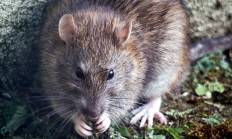
The Norway rat is the largest member of the subfamily in Oregon. This heavy-bodied rat has a scantily haired, scaly tail shorter than the length of the head and body. The ears are membranous and lightly furred. The pelage is course, a grizzled brownish or rusty gray dorsally and dirty white to yellowish gray ventrally. Albino, melanistic, and spotted specimens are known to occur in free-living populations. This rat is distributed throughout the world in association with humans and in Oregon is found in most of the counties west of the Cascade Range and from some counties along the Columbia…
Features: Plankton eaters, the American shad is the biggest of the herring species and averages 3 to 5 pounds. They are silver on the sides, and green to blue on top, with green shading on their fins. Habitat: Like other anadromous fish species, they spend most of their lives at sea and return to fresh water to spawn. Females release free-floating eggs that will be fertilized by later-arriving male, called buck shad, in a spawning frenzy. Eggs hatch in eight days and fry spend four to five years in salt water before returning to spawn. Shad often survive to spawn…

Three Mile Falls Dam is located at river mile three on the Umatilla River. The dam was constructed in the early 1900s and serves as an irrigation dam that is a complete barrier to fish migrating upstream. In order to successfully migrate past the dam, all adult salmon and steelhead must use the fish passage facility located on the east side of the dam. The fish facility consists of a fish ladder, viewing window, fish trap and holding pond. Every adult salmon and steelhead heading upstream is counted at this facility using a combination of trapping and video tape enumeration…

