
Search myodfw.com
Showing 381 - 400 of 897 results
The information provided here is intended to help you get an idea of your odds of drawing a reservation in the Eastside and Oak Island hunt areas. First off, the number of permits available in each hunt unit does change throughout the season. See the NUMBER OF RESERVATIONS AVAILABLE FOR EASTSIDE AND OAK ISLAND UNITS link to view the number of permits that are available for each unit and hunt period.
SALEM, Ore.— White-nose syndrome (WNS) in bats has been detected for the first time in Oregon in Columbia and Benton counties. White-nose syndrome is caused by an infection with the fungus Pseudogymnoascus destructans that disrupts hibernation, causing early winter emergence, dehydration and starvation. This finding follows the 2025 detection of…

Find maps, boundary descriptions and hunts available in the new Elkhorn Hunt Area. Download printable PDF map
Find maps, boundary descriptions and hunts available in the new Painted Hills Hunt Area. Download printable PDF map
Find maps, boundary descriptions and hunts available in the new Sage Hen Hunt Area. Download printable PDF map
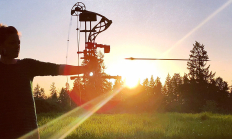
SALEM, Ore. – Bowhunters can warm up for the archery season at a free 3D shoot in La Pine on Saturday, Aug. 2 at Three Rivers Archers Park located at the intersection of Coach Rd. and Memorial Lane. This unique course offers hunting scenarios and learning opportunities to help you…
Find maps, boundary descriptions and hunts available in the new Aldrich Hunt Area. Download printable PDF map
Find maps, boundary descriptions and hunts available in the new Deschutes Hunt Area. Download printable PDF map
Find maps, boundary descriptions and hunts available in the new Elkhorn Hunt Area. Download printable PDF map
Find maps, boundary descriptions and hunts available in the Juntura Hunt Area. Download printable PDF map
Find maps, boundary descriptions and hunts available in the new Sage Hen Hunt Area. Download printable PDF map
Cole Rivers Hatchery is the largest producer of hatchery fish on the coast of Oregon. Almost all of the fish production at Cole Rivers is done to mitigate for the fish production that was lost when miles of high quality fish habitat was blocked by Applegate Dam (Applegate Reservoir) and William Jess Dam (Lost Creek Reservoir). Visit Cole Rivers Hatchery
In Oregon, fork-tailed storm-petrels breed in numbers that are only a tiny fraction of those of Leach's storm petrels. This is the larger of the two storm-petrels breeding in Oregon and is gray in color. These birds leave and return to breeding colonies only at night, when they are best detected by their distinct raspy call. At sea, they are distinguished by quick, buoyant flight with short glides interspersed with wing fluttering to maintain their position at a food source. Fewer than 20 nests have been found in Oregon, all located in the same habitat as colonies of Leach's storm…

Features: Blue grouse are large in comparison to most other grouse species. The females are mottled brown, tan, and gray. The males are similar, but with solid blue-gray on the underside and bright orange-yellow combs over the eyes. Habitat: Blue grouse occupy the coniferous forests of western Oregon, the eastern slopes of the Cascades, the Blue Mountains of northeastern Oregon, and the Klamath Basin and south Warner Mountains. Preferred habitat includes timber edges, open timbered slopes, mountain meadows adjacent to springs or other sources of water, and near berry producing areas such as chokecherry thickets. Technique: Effective hunting techniques involve…

Alsea Hatchery was constructed in 1936 and is operated with state funds. Many improvements have been made to the hatchery since original construction. The hatchery produces both winter steelhead and rainbow trout. The facility is used for adult collection, spawning, egg incubation and rearing of winter steelhead, and egg incubation and rearing of rainbow trout.
Find maps, boundary descriptions and hunts available in the new Crooked River Hunt Area. Download printable PDF map
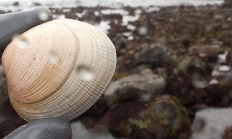
Features: Circular in shape and 1.5-2.5 inches across. Identified by concentric lines and radiating ridges. Longer lived and less abundant than cockles. Habitat: High salinity areas of sand, mud, gravel, or rock. Harvest them in Tillamook, Netarts, Yaquina, and Coos bays. Techniques: These clams can be found in rocky nearshore areas within 6 inches of the surface. Using a rake for these clams is the best harvest method. Learn more here before getting started clamming. See Oregon Sport Fishing Regulations for information on the daily catch limits for bay clams. How to dig for little neck clams (video)
Find maps, boundary descriptions and hunts available in the new Klamath Basin Hunt Area. Download printable PDF map
Features: Plankton eaters, the American shad is the biggest of the herring species and averages 3 to 5 pounds. They are silver on the sides, and green to blue on top, with green shading on their fins. Habitat: Like other anadromous fish species, they spend most of their lives at sea and return to fresh water to spawn. Females release free-floating eggs that will be fertilized by later-arriving male, called buck shad, in a spawning frenzy. Eggs hatch in eight days and fry spend four to five years in salt water before returning to spawn. Shad often survive to spawn…
