
Search myodfw.com
Showing 381 - 400 of 672 results
Updated April 29, 2026 Subscribe for updates Starting Jan. 1, 2026, an Ocean Endorsement is needed for most recreational anglers fishing in the ocean. Check the Ocean Endorsement page for more information. Ocean Endorsement
Wizard Falls Hatchery was constructed in 1947. Many improvements have been made to the facility since original construction. The hatchery has a rainbow trout broodstock which supply rainbow trout to the Deschutes sub-basin and southeast Oregon. The hatchery is used for incubation and rearing of kokanee salmon and rainbow trout to provide for recreational fishing program objectives, and the incubation and rearing of spring Chinook and summer steelhead as part of a reintroduction program in the upper Deschutes Basin. Brook trout and cutthroat trout fingerlings are reared for the air stocking program on odd years. Kokanee salmon are spawned remotely.
Marion Forks Hatchery began operation in 1951. The U.S. Army Corps of Engineers (COE) funds the majority of operational costs as mitigation for the development of Detroit and Big Cliff dams. The hatchery is used for egg incubation and rearing of spring Chinook.
Oregon's 33 hatcheries produce about 40 million fish annually and you can visit them. They offer the chance to see fish – from eggs to brooders – and an opportunity to learn how they are raised. Oregon's hatcheries are important for anglers and the public because they directly provide fish for angling, help rebuild native fish populations, and offer educational programs. They are also vital to supporting the cultural heritage of Tribes. Hatcheries offer great wildlife viewing, interpretive displays and some provide boating and angling access. Did you know that ODFW rears 10 species of fish including steelhead/rainbow trout, brook…
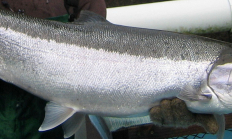
Willamette Trout Hatchery and the adjacent Oakridge Salmon Hatchery were combined in 1983 and operate today as Willamette Hatchery. The trout hatchery was constructed in 1922 and the salmon hatchery in 1911. The U.S. Army Corps of Engineers (USACE) rebuilt the salmon hatchery in 1952 to mitigate for fishery losses caused by Hills Creek, Lookout Point and the Dexter hydroelectric/flood control projects. The trout side was rebuilt between 1950 and ‘56. Today, Willamette Hatchery is used for adult holding/spawning, egg incubation and rearing of spring Chinook and rainbow trout. In addition, both summer and winter steelhead are reared at this…
Round Butte Hatchery was constructed in 1972 to mitigate for the fishery losses caused by Pelton/Round Butte (PRB) Hydroelectric Complex. Round Butte and its satellite, Pelton Ladder, are used for adult collection, egg incubation and rearing of spring Chinook, summer steelhead, and sockeye salmon.
SALEM, Ore.—The Commission approved a revised State Wildlife Action Plan (SWAP) today, a plan that serves as a roadmap for protecting Oregon's at-risk species and their habitats. The Plan incorporates the latest available information on species and presents recommended conservation actions to inform and prioritize conservation work for community members…
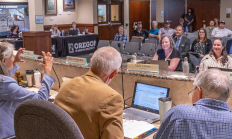
CANYON CITY, Ore.- A poacher investigated for more than 50 crimes committed in Grant County between 2023 and 2024 was sentenced to 95 days behind bars and more than $22,000 in restitution and fines, according to wildlife officials. In what wildlife enforcement officers refer to as a serial poaching case…
SALEM, Ore. – The Oregon Fish and Wildlife Commission meets March 19-20 in Medford for a field tour on Thursday and a regular meeting on Friday. The Friday meeting agenda and livestream are available from the Commission page. To virtually testify on an agenda item, register here at least 48…
The Klamath Fish Hatchery was originally constructed in 1929. Many improvements have been made since original construction. The hatchery produces legal and trophy sized rainbow trout, fingerling rainbow trout, brown trout, and cutthroat trout for release throughout the Klamath Basin, Deschutes Basin, Umpqua Basin and the southeast part of the state. The hatchery assist with remote egg takes for wild rainbow and brown trout at Crane Prairie and Wickiup Reservoirs.
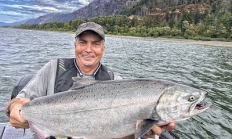
The goal of the Oregon Hatchery Research Center (OHRC) is to answer scientific questions related to fish recovery and hatchery programs. Information gained at the Research Center will help answer questions vital to the success of the Oregon Plan for Salmon and Watersheds and implementation of the Native Fish Conservation Policy. The Oregon Hatchery Research Center is a cooperative research project between the Oregon Department of Fish and Wildlife and the Oregon State University Department of Fisheries and Wildlife.
Oregon's recreational fisheries for Pacific halibut and bottomfish are constrained by bycatch of yelloweye rockfish, an overfished species. Many of the regulations on these fisheries exist to keep bycatch of yelloweye rockfish within sustainable limits, in order to help the stock recover (for example, depth restrictions in the bottomfish fishery, and no lingcod during offshore long-leader trips). ODFW encourages anglers to reduce impacts by using descending devices to release yelloweye rockfish, and better yet, to avoid areas where they might be caught.
This 141-acre property along both sides of the Yachats River was first purchased in the early 1980s to provide forage for elk and help alleviate elk damage to surrounding agricultural land. It also provides public access to the Siuslaw National Forest along the Yachats River Highway, where there are few public access points.
The original Riverside Tract is adjacent to the Malheur River near the former railroad community of Riverside. It was purchased from the Blaylock family in 1976 and has been administered by ODFW as Riverside Wildlife Area since that time. The purpose of this initial acquisition was to provide public fishing and hunting access to a previously privately held portion of the Malheur River canyon. In addition, this purchase provided the opportunity for the department to emphasize fish and wildlife habitat management in the river canyon. Additional acres were added to this tract in 1977. In 1972, the department purchased a…
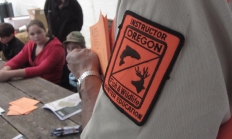
Oregon requires all hunters under the age of 18 to complete a hunter safety education course before hunting in the state. Upon completing the course (and a Field Day for youth), participants will receive a Hunter Safety certification number and card. Adults are also encouraged to take the online course, as it may be required for out of state hunts. Note: Youth under the age of 9 may struggle with the course material and may not have the physical strength needed to safely handle a firearm during a Field Day, particularly during muzzle control, loading, and unloading drills.
Offered Year Round
Statewide
The Dalles, Ore.—The lower Deschutes River will be open for spring Chinook salmon from May 5-20. "This is exciting news for anglers as the last spring Chinook season on the Deschutes was in 2018," said Jason Seals, Deschutes District Fish Biologist. "We're expecting a return of more than 2,000 hatchery…