
Search myodfw.com
Showing 381 - 400 of 1416 results
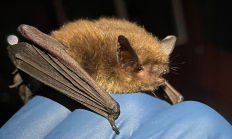
SALEM, Ore.— The fungus that causes white-nose syndrome in bats has been detected in Clatsop County. White-nose syndrome is an infection in bats caused by the fungus Pseudogymnoascus destructans that disrupts hibernation, causing dehydration and starvation. Samples analyzed by U.S. Geological Survey (USGS) confirmed the presence of the fungus in…
The lush northwest corner of Oregon offers world class bird hunting -- from waterfowl hunting on the lower Columbia River to ruffed grouse flushing in the foothills of the Cascades. Opportunities abound close to Oregon's major metropolitan areas.
Features: A medium-size shorebird, it is stocky with brown and buff coloration. The long, thin bill is a distinguishing feature. Habitats: As a shorebird, the Wilson's snipe is found along bog, marsh and wet meadow edges. It uses its long bill to forage for worms and other invertebrates. Techniques: Hunt along wetland edges. Because their coloration is excellent camoflage, they're difficult to see before flushing. Be quick on the draw and use a light load. They are small birds after all. Header photo by Dave Budeau

SALEM, Ore. – The Oregon Conservation and Recreation Advisory Committee will meet online Tuesday March 3, from 1 p.m. to 3:30 p.m. The Conservation and Recreation Advisory Committee will be hearing project presentations and discussing the Round 10 grant cycle review process. Meetings are open to the public. For more…
ODFW's Oregon Conservation and Recreation Advisory Committee meets Dec. 2 SALEM, Ore. – The Oregon Conservation and Recreation Advisory Committee will meet on Tuesday, Dec. 2, from 1 p.m. to 3:30 p.m. The Conservation and Recreation Advisory Committee will be reviewing application questions ahead of their Round 10 grant solicitation…
Features: Brant are a small to medium-size goose. They have smoky black backs and bellies, and dissected white collars and white around the tails provide striking contrast. The brant can live up to 20 years and are resilient enough to ride out storms on the open ocean. Habitats: Brant are primarily found in bays and estuaries, but on occasion can be found inland. They forage on eel grass and other aquatic vegetation. Most of their feeding is in shallow water or in tidal flats. They tend to feed in flocks. Techniques: As with any waterfowl hunting, location is key. Seek…

Features: The small Ross's goose looks very similar to a snow goose, but with some slight distinguishing features. Like the snow goose, this goose has black primary feathers. But it does not have the black grin of a snow goose on its pink bill. Also, their wing beat is faster and call higher pitched than a snow goose's. Habitats: The Ross's goose can be found in shallow lakes and wetlands while in migration. It feeds on grasses, sedges and small grains. Techniques: Often taken while snow goose hunting, the techniques are similar. Create a white decoy spread with silhouettes, white…
CORVALLIS, Ore. — The Oregon Hatchery Research Center Board will meet in Corvallis on Tuesday, December 2 from 11:00 a.m. to 1:00 p.m. at the Oregon Department of Fish and Wildlife South Willamette Watershed District Office (7118 NE Vandenberg Avenue, Corvallis, OR 97330). In addition to the regularly scheduled items…
SALEM, Ore. – ODFW staff will host a webinar on Wednesday, Sept. 17 at 6 p.m., about the Minam River Wildlife Area (MRWA) draft management plan. The public can join the webinar on Microsoft Teams: Microsoft Teams Need help? Join the meeting now Meeting ID: 284 045 516 288 4…

Find the 2025-26 weekly statistics for waterfowl and upland game birds at Klamath Wildlife Area. More information about Klamath Wildlife Area
SALEM, Ore. – The Oregon Conservation and Recreation Fund (OCRF) Advisory Committee is excited to announce that its next grant cycle will begin accepting applications on Monday, Dec. 15, with the application window open through Feb. 9, 2026. Visit the Online Application System and enter access code "OCRF" to begin…
SALEM, Ore. – Organizations and partners interested in funding conservation, outdoor access, and recreation projects in Oregon are encouraged to apply soon, as the Oregon Conservation and Recreation Fund (OCRF) grant application window is open now but closes Monday, Feb. 9, 2026. The OCRF Advisory Committee began accepting applications on…


The FRWA was created by a licensing agreement signed in 1957 and modified in 1982 and 2008, between the US Army Corps of Engineers and the Oregon Game Commission. This agreement authorized the state to develop, conserve, and manage all wildlife resources on 5,261 acres of land and water within the Fern Ridge Project. ODFW also acquired the 309 acre Coyote Creek South and 224 acre Coyote Creek Northeast units in 2013 and 2015, respectively. The wildlife area now totals 5,794 acres.
REDMOND, Ore. — Anglers have a lot to look forward to this fall: many coastal basins will see expanded opportunity for wild fall Chinook harvest compared to last year, and wild coho fisheries will continue across much of the coast, offering a strong season ahead. For fall Chinook, wild Chinook…
Find the weekly statistics for waterfowl and upland game birds for E.E. Wilson Wildlife Area. More information about E.E. Wilson Wildlife Area