
Search myodfw.com
Showing 381 - 400 of 1128 results
This vast area covers the Columbia Basin through the Blue, Wallowa and Elkhorn mountains to the Snake River.
Hunting opportunities abound in the densely forested southwest corner of Oregon. From the beautiful, ragged coastline through the Siskiyou Mountains to Crater Lake National Park, there is something for every game bird hunter.
Features: Hungarian partridge have a gray-brown body with reddish brown barring on their wings, back and tail. Their beak and legs are gray. Habitat: In eastern Oregon, the best partridge populations exist in Columbia and Snake River basin counties. Although some birds may be found many miles from farming areas, the bunchgrass and sagebrush foothills adjacent to wheat and other farmlands provide the best habitat and the most stable populations. Technique: "Huns" are swift and challenging birds to hunt, usually bursting from the cover with a startling squeal and clatter of wings. They are typically hunted incidentally to pheasants or…

Features: Female pheasants are brown on top and paler underneath. They have black spots on their sides and black bars throughout their tails. The males are much more conspicuous with bright red on their head, a white band around their necks, and an iridescent copper color on their sides and backs. Their tails are long and pointed with barring. Habitat: The ringneck is a farmland species, heavily dependent on cereal grains and other seeds. They also like taller vegetation for cover. Technique: Because pheasants are tied so closely to agriculture, the majority of hunting opportunity occurs on private lands. State…

Features: Columbian black-tailed deer are smaller and darker than mule deer. As the name suggests, black-tailed deer have a wide, triangular tail with a dark brown or black top and a white underside. Habitat: Blacktails are a subspecies of mule deer found in western Oregon from the Coast Range east to the Cascade Mountains. They are edge-adapted species using the region’s dense forest cover to hide during the day and are then more open in early successional forest to feed at dawn and dusk. Places with a mix of forest age classes offer the best habitat for black-tailed deer. Techniques…

Features: Mule deer are larger and lighter in color than black-tails. Mule deer have a thinner “ropelike” tail that is white with a black tip. Their antlers are forked, as opposed to having a main beam. And as their name implies, they have large ears, like a mule, that stand at an angle. Habitat: Mule deer occupy a wide range of habitat types; some live in desert shrub-steppe, some in woodlands, and some in conifer forests. In general, however, mule deer occupy the more open, rugged areas. Although mule deer commonly are considered “browsers," they consume a wide variety of…

Features: Valley quail are often detected by their distinctive call which seems to say "Chicago". They are a covey-loving bird and wintering groups may number over 100. They are gray to brown with intricate scaling in the feathers on the belly. Their top knot droops forward toward the beak. Habitat: Valley quail are among Oregon's most widely distributed game birds. They may be found associated with agricultural and urban areas, as well as in riparian habitats located miles from human habitation. Within these areas, however, valley quail habitat needs are rather specific. Valley quail feed on a wide variety of…

Features: The coot can't be mistaken in a wetland. With a black body, white curved bill and red eyes, these birds often move in rafts on the water. Low flyers, they still require furious wing beats before taking flight. Habitats: These birds can be found in wetlands, estuaries and bays where other waterfowl are found. Techniques: Coots are often taken as they enter decoy spreads. Not widely targeted, hunters may pinch a raft into a choke point to take birds on the wing.

Features: Slender birds, mourning doves have long tails and small heads. Their soft cooing and whistling wings make them unmistakable. Habitats: Mourning doves perch on telephone wires or in trees. They forage on the ground for seeds. Techniques: Scouting is always helpful. Look for a tree or telephone line that is near a food crop. Once a location is found, find a spot where a backdrop will breakup your silhouette and take a seat. Wait for a passing shot. Extra shells may be necessary.

Various dates in September and October
Statewide

From the eastern flanks of Crater Lake National Park through ponderosa pine forests to the nationally-renowned Klamath National Wildlife Refuge, there is something for every bird hunter in south central Oregon.
Features: This species is relatively thin compared to other rockfish. It is easily recognized by its three to four horizontal green stripes that extend onto the caudal fin membranes. The body color ranges from white to reddish; red or orange areas can be observed on the body after capture. Habitat: Though found between 40 and 1,632 foot depths, these rockfish tend to stay between 300 and 825 feet with older/larger individuals found deeper. They live on muddy, sandy and rocky bottoms. Technique: Rubber tail jigs or shrimp flies are good choices when targeting greenstriped rockfish. Be wary of sharp dorsal…


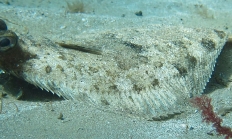
Features: Starry flounder are a flatfish with both eyes on the "top" side of their heads. They are dark on the eyed side with very rough scales, and alternating yellow/orange and black bands in the dorsal, anal, and tail fins. Habitat: Flounder tend to stay near the bottom, looking for food above. Technique: Drift a small jig or bait (such as shrimp, marine worm or mussel) on a #2 hook with 2-ounce sinker rigged on a 10- to 15-pound line over a sandy or muddy bottom. Header photo by Sam Grover, Flickr


Features: The females are freckled all over with small reddish-brown to golden spots on gray to brownish background. Their fins are mostly yellowish-orange. The males are gray to brownish-olive, with irregular blue spots on the front of their bodies; each spot is surrounded by a ring of small reddish-brown spots. The inside of this species' mouths are yellowish. Habitat: Kelp greelings can be found to depths of 150 feet. They prefer rocky inshore areas and are common in kelp beds and on sand bottoms. Technique: It is best to target kelp greenlings by placing a line near the base of…
