Search myodfw.com
Showing 41 - 60 of 305 results



Crabbing and Clamming August 6, 2026 Announcements Always check for closures at the ODA Shellfish Safety page before harvesting shellfish, which includes clams, crabs and mussels. Reminder: Annual conservation closure for razor clams north of Tillamook Head (Clatsop Beaches) began July 15 and runs through September 30. The season will reopen October 1 unless there is a closure for toxin levels. Take part in a scavenger hunt for science! Explore the tidepools and submit your photos for science (and prizes)! Participate in the Oregon Marine Reserve Partnership's BioBlitz across Oregon's five marine reserves, marine protected areas, and nearby intertidal areas…

SALEM, Ore.—Head to a participating Jamba location for a new limited edition Wildlife Conservation tumbler that benefits wildlife. The colorful tumbler features five species: Sierra Nevada red fox, Northern red-legged frog, Western snowy plover, Northwestern pond turtle and Pygmy rabbit. All are native species facing population declines due to challenges…

When you sign up to be an ODFW volunteer, you're helping to protect Oregon's fish and wildlife, manage ODFW properties, and share your hunting and fishing experiences with others while creating a stronger appreciation for the outdoors. Already volunteering with ODFW
Year round opportunities
Various programs statewide
This massive area is a cornucopia of geographic features and prime upland and waterfowl hunting opportunities. It is a gem of Oregon.
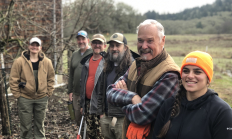
Teach, restore, study, host, build, communicate When you sign up to be an ODFW volunteer, you are helping to protect Oregon's fish and wildlife, manage ODFW properties and spark a passion in others to hunt, fish and appreciate the outdoors building and enhancing fish, wildlife and their habitats for current and future generations. Donating even one day a year is all it takes to be helpful. We can be as flexible as possible to find the right opportunity to fit your schedule. Join thousands of volunteers by sharing your time and talents with ODFW.
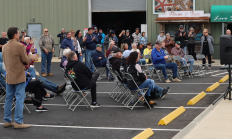
ODFW Director Debbie Colbert (at podium) and Coquille Tribe Chairwoman Brenda Meade (to the right in black jacket) on July 31, 2025 in Bandon, Ore. to announce a major step forward in their combined management effort on salmon recovery in the Coquille River. The first fall Chinook fishery since 2021…
CENTRAL WILDLIFE VIEWING August 6, 2026 Recreating in drought and wildfire season - actions you can take to protect wildlife. For the most current fire closures and restrictions-- KNOW BEFORE YOU GO. Crook County Spring ungulate migration will soon be upon us. You can find mule deer transitioning from low elevation winter feeding areas to the higher elevation sagebrush and agricultural areas. There are red-tailed, rough-legged and ferruginous hawks, northern harriers, American kestrels, prairie falcons and golden eagles throughout Crook County and they're usually associated more closely with open/agricultural areas. Bald eagles and ospreys, on the other hand, are more closely associated with water bodies…
Features: Female pheasants are brown on top and paler underneath. They have black spots on their sides and black bars throughout their tails. The males are much more conspicuous with bright red on their head, a white band around their necks, and an iridescent copper color on their sides and backs. Their tails are long and pointed with barring. Habitat: The ringneck is a farmland species, heavily dependent on cereal grains and other seeds. They also like taller vegetation for cover. Technique: Because pheasants are tied so closely to agriculture, the majority of hunting opportunity occurs on private lands. State…

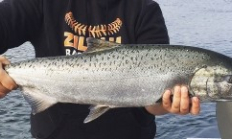
SALEM, Ore. – The Pacific Fishery Management Council (PFMC) met March 4-9 to develop three alternatives for ocean salmon seasons along the coasts of Washington, Oregon, and California. PFMC is hosting a hybrid public meeting March 24 from 7-9 p.m. in Newport to receive input on the proposed salmon management…
Prineville Reservoir Wildlife Area came under the shared management of the Oregon Department of Fish and Wildlife & United States Bureau of Reclamation in 1962. It is managed for the protection and enhancement of wildlife habitat, big game winter range, improving riparian wetlands, and to promote wildlife stewardship. Goals of the PRWA include creating recreational opportunities for viewing and enjoying wildlife, including mule deer, bald eagles, and a variety of waterfowl. Boating, hiking, and camping are a few popular activities permitted in the wildlife management area. Hunting and fishing opportunities are also available within Prineville Reservoir Wildlife Area, as regulated…