Search myodfw.com
Showing 41 - 60 of 1415 results

ONTARIO, Ore.–The Fish and Wildlife Commission voted 5-1 to open a hatchery Chinook salmon season in the Coquille River, the first Chinook season since 2021, during their meeting today in Ontario. The Coquille River will be open for fall salmon fishing from Sept. 13-Oct. 15 from the Hwy 101 bridge…
This two-hour class is for people new to hunting and provides an overview of hunting in Oregon.
Year Round
Statewide
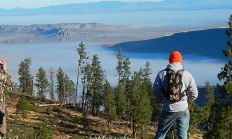
SALEM, Ore.–The Fish and Wildlife Commission meets Sept. 11 and 12 in Ontario for a field tour on Thursday and a regular meeting on Friday. See agenda here. The meeting will also be livestreamed from the Commission page. To testify on an agenda item virtually, register on the agenda page…

The tail is brown dorsally with a white fringe, and white ventrally. In males, antlers with tines typically arise from a single main beam. In winter, the pelage is a dark buffy-gray and consists of relatively long, thick, and somewhat brittle hairs; in summer, the pelage is lighter with more tawny tones and is shorter and thinner. The midline of the dorsum is darker and the fade lighter; in males, the patch between the antlers is darker. Pelage markings include white on the venter, throat, muzzle and lower lip, and around the openings of the metatarsal and interdigital glands; a…


SALEM, Ore. – Oregon's deer and elk give birth from May through July each year. It's natural for mother animals to leave their young alone for extended periods of time while they go off to feed. If you come across a fawn or calf by itself, don't assume it's orphaned…
Hunter's Guide Hunter's Resources Hunter's Technique Hunter's Bounty
Spring and Fall
Online Learning


SALEM, Ore. – Oregon may soon have a new wildlife area in Union County called the Qapqápa Wildlife Area (pronounced cop-COP-a). The property would be owned by the Oregon Department of Fish and Wildlife (ODFW) and co-managed with the Confederated Tribes of the Umatilla Indian Reservation (CTUIR), continuing a decades-long…