Search myodfw.com
Showing 441 - 460 of 1128 results
Features: Blue grouse are large in comparison to most other grouse species. The females are mottled brown, tan, and gray. The males are similar, but with solid blue-gray on the underside and bright orange-yellow combs over the eyes. Habitat: Blue grouse occupy the coniferous forests of western Oregon, the eastern slopes of the Cascades, the Blue Mountains of northeastern Oregon, and the Klamath Basin and south Warner Mountains. Preferred habitat includes timber edges, open timbered slopes, mountain meadows adjacent to springs or other sources of water, and near berry producing areas such as chokecherry thickets. Technique: Effective hunting techniques involve…

Features: Spruce grouse are gray with white spots on the belly. The back feathers often have dark bars. Females tend to be paler in color than the males. The eyes are outlined by red combs over and white arcs underneath. Habitat: The spruce grouse is native to Oregon and found in coniferous forests across northern North America. However, Oregon is on the periphery of this species' range and they likely were never abundant in the state. Currently, spruce grouse can only be found in the Wallowa Mountains and Snake River divide of northeastern Oregon. Technique: Spruce grouse have been protected…

Features: The most distinguishing feature of white-tailed deer is the tail. Whitetails have long, wide tails that can easily be seen, especially when they are startled and raise their tails. White-tailed deer antlers differ from mule and black-tailed deer in that there is one main beam with points coming off. Mule and black-tailed deer have antlers that fork on the main beam. Habitat: White-tailed deer share the same habitat as eastern Oregon’s mule deer. Deer both graze and browse. Forbs and browse (stems and leaves of woody plants) are favored forage during the growing season. Grasses are consumed during some…

Features: Chukars are brown-gray with a black stripe running across the head, through the eye, and down onto the chest. Their bills and feet are red, and their sides have white and black barring. Habitat: Extensive areas in eastern Oregon provide ideal habitat for chukars. Cheatgrass, an introduced plant species, was already well established through much of eastern Oregon prior to the 1950s, and provides one of the most important year-around food resources for the chukar. Their habitat is generally steep, rocky, dry, and largely unsuitable for development, agriculture or other commercial uses except grazing. Important chukar areas in Oregon…


SW WILDLIFE VIEWING August 20, 2026 Recreating in drought and wildfire season - actions you can take to protect wildlife . For the most current fire closures and restrictions-- KNOW BEFORE YOU GO . Coos and Curry counties Coquille Valley Wildlife Area (CVWA) Coquille Valley Wildlife Area (CVWA) in Coos County is open to public access. Permits for access are required and are available, free of charge, at the kiosk located in the parking lot along North Bank Road. You must access CVWA through this point. Please fill out the upper half ("A" half) of the permit and deposit it in the slot located on the post…
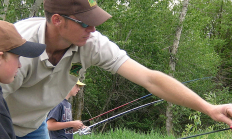
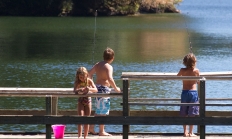
The Angler Education Program introduces sport fishing to beginners with an emphasis on youth and families. Programs are designed to provide a basic understanding of aquatic ecosystems and help people develop the skills, knowledge and responsibilities associated with angling. More information about ODFW Angler Education Program
Year round opportunities
Statewide

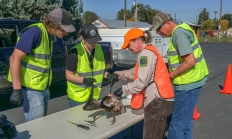
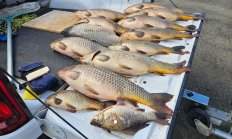
ROSEBURG, Ore. – Illegally introduced common carp were found in Cooper Creek Reservoir near Sutherlin. ODFW verified an angler's report of carp in Cooper Creek last week by electrofishing, removing 14 adult carp, most of which were pregnant females ranging in age from approximately two to eight years old. This…