Search myodfw.com
Showing 501 - 520 of 672 results

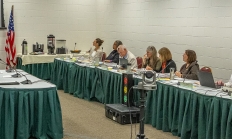
The E.E. Wilson Wildlife Area came into existence in 1950 when the U.S. Government gave quitclaim title to the property to the Oregon Department of Fish and Wildlife. The wildlife area covers approximately 1,788 acres, is located on Highway 99W about 10 miles north of Corvallis and is situated on the Willamette Valley floor. SHOTGUN RANGE BACK OPEN AS OF LATE OCTOBER 2025: The renovation is complete and the shotgun range is back open. Improvements include: four times as many shooting lanes, fully paved ADA-compliant walkway with pullouts that will make it easier for disabled shooters, a new covered pole…
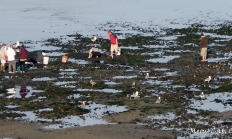
MARINE WILDLIFE VIEWING July 9, 2026 The Oregon coast is a great place to come and view a variety of wildlife. Enjoy the great diversity of life: from giant whales and barking sea lions to majestic bald eagles and diving pelicans, to showy Harlequin ducks and flocking shorebirds, to the tiny anemones and crabs inhabiting tidepools. There is always something new to discover. Visit our wildlife viewing map for locations to visit and view wildlife along the Oregon coast. Maximize your viewing of coastal creatures by bringing binoculars for close-up views. Beach Safety: Check conditions here Whales, orcas and porpoises…
Irrigon Hatchery began operation in 1984 as part of the Lower Snake River Compensation Program (LSRCP)—a program to mitigate for spring Chinook and summer steelhead losses caused by the four federal dams constructed on the lower Snake River. This facility serves as an egg incubation and rearing facility for summer steelhead destined for the Grande Ronde and Imnaha river systems and egg incubation for 575,000 Umatilla coho eggs for transfer to Cascade Hatchery. Irrigon Hatchery also rears 1.4 million fall Chinook for the Grande Ronde and Snake Rivers and is used as a rearing site for legal-sized and trophy rainbow…
Bitterns, herons, and egrets are all long-legged wading birds with long necks and pointed bills for spearing fish or other prey.

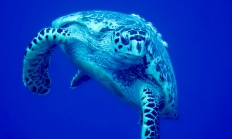
Sea turtles are federally protected under the Endangered Species Act of 1973. NOAA Fisheries is responsible for conservation and recovery of sea turtles in the marine environment, while the U.S. Fish and Wildlife Service is lead on conservation and recovery of sea turtles on nesting beaches.

Oregon has two species of pelicans, American white and the Brown pelican, and three species of cormorants. All are fish-eating water birds with four toes joined by webbing. Depending on the species, pelicans and cormorants inhabit the Oregon coast, rivers or interior waterbodies.

Need to figure out controlled hunts, find a place to clam, learn how to fish or get directions to a wildlife area? We've got information on all that and more, straight from ODFW biologists and other accomplished hunters, anglers and wildlife watchers. Header image by Dave Budeau

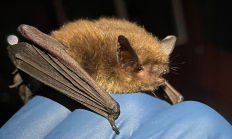
SALEM, Ore.— The fungus that causes white-nose syndrome in bats has been detected in Clatsop County. White-nose syndrome is an infection in bats caused by the fungus Pseudogymnoascus destructans that disrupts hibernation, causing dehydration and starvation. Samples analyzed by U.S. Geological Survey (USGS) confirmed the presence of the fungus in…
The Eastern gray squirrel is the smallest member of the genus in Oregon. This squirrel was introduced into Oregon and can now be found in Salem, Portland, Milwaukie, and Vale. All populations in Oregon have been found in urban areas. This squirrel is active throughout the year, activity restricted to daylight hours. Photo from Washington Fish and Wildlife


The Columbia Basin Wildlife Areas are a composition of four Oregon Department of Fish and Wildlife (department) managed wildlife areas located along the Columbia River, in the Columbia Basin. The four wildlife areas (Power City, Irrigon, Coyote Springs and Willow Creek) are within the Columbia Plateau ecoregion. Management agreements for these areas were initially established between 1971 and 1977 between the department and Federal agencies which own the lands. The Columbia Basin Wildlife Areas, which total approximately 1,885 acres, provide an important landbase for the conservation and recreation of fish and wildlife within a highly privatized and altered landscape and…
The Columbia Basin Wildlife Areas are a composition of four Oregon Dept. of Fish & Wildlife managed wildlife areas located along the Columbia River in the Columbia Basin. The four wildlife areas (Power City, Irrigon, Coyote Springs, and Willow Creek) are within the Columbia Plateau ecoregion. Management agreements for these areas were initially established between 1971 and 1977 between the department and Federal agencies which own the lands. The Columbia Basin Wildlife Areas, which total approximately 1,885 acres, provides an important landbase for the conservation and recreation of fish and wildlife within a highly privatized and altered landscape and play…
Oak Springs Hatchery was constructed in several phases beginning in 1922 with the last major construction in 1996. The facility is currently used for egg production, incubation and rearing of rainbow trout, incubation and rearing of summer and winter steelhead, and maintains one resident rainbow trout and one resident cutthroat broodstock.