
Search myodfw.com
Showing 501 - 520 of 677 results
SALEM, Ore. – The Private Forest Accord Advisory Committee will attend an in-person field trip in Coos Bay on Thursday, Oct. 2. The Advisory Committee will tour several project locations previously funded by the PFA Grants Program. The public is welcome to attend in person and are responsible for arranging…
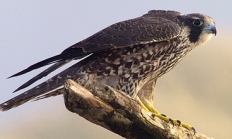
With short pointed wings and long narrow tails, these small falcons are well built for fast pursuit and mid-air attacks. Sexes differ in color and size, with adult males about 25 percent smaller by weight than females. Males range from blackish gray to pale blue-gray on the back with a reddish wash along sides of the breast and a banded tail; females have brownish backs. In winter, it can be found throughout the state in open or semi-open habitats, but it is most regular near major estuaries, lakes, reservoirs, and occasionally in cities where food supplies are reliable. For nesting…

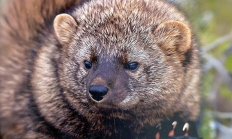
The Fisher is considerably larger than the marten and males are considerably larger than females. It is more stockily built than the weasels, but is similar in that the head is somewhat pointed, the body elongate, and the legs short. The pelage is long except on the face. The fur is dark brown grading to black on the rump and legs; the tail is black. Fishers once occurred throughout the coniferous and mixed forests of Oregon's Coast Range and Cascade Mountains. Currently, there is a native population in the Siskiyou Mountains and an introduced populations in the southern Cascades that…
The Striped skunk is about the size of a house cat with a pointed head; slightly upturned, nearly spherical nose pad; and beady black eyes. The pelage is entirely black except for a narrow white stripe on the forehead and nose, a white pate leading to two diverging white stripes on the back that extend partly or completely to the rump. Entirely white skunks, or skunks with the black replaced by seal brown or the white replaced by yellow are also know to occur. Without doubt, the most widely recognized characteristic of the Striped skunk is the pungent odor of…

This medium-sized, shy grebe has bright white cheeks that contrast sharply against a dark crown and rust red neck during the breeding season. An aquatic bird, it breeds in lakes and ponds, usually in forested areas. In Oregon, it is found in waters with hardstem bulrush intermixed with open water over five feet deep. Five to 20 birds at Rocky Point in the Upper Klamath Lake National Wildlife Reserve form the only consistent breeding population in Oregon. The red-necked grebe reaches its greatest numbers during winter along the coast. The red-necked grebe is an Oregon Conservation Strategy Species in the…

Find maps, boundary descriptions and hunts available in the new Trout Creek Hunt Area. Download printable PDF map
Roaring River Hatchery was constructed in 1924. Many improvements have been made to the hatchery since the original construction. In 1987 and 1996 new raceway ponds were constructed to replace the original raceways. The hatchery is a mixed-stock facility, producing both anadromous fish and resident trout. The hatchery is used for rearing summer and winter steelhead from fingerling to smolt. The rainbow trout program involves broodstock maintenance, spawning, egg incubation and rearing.
The Sherars Falls Adult Salmon and Steelhead Trap is located at river mile 43 on Oregon's Deschutes River. The trap captures an unknown proportion of adult fall Chinook salmon and summer steelhead that are passing over Sherars Falls. Visit Lower Deschutes Wildlife Area
July 2, 2025 THE DALLES, Ore.—With another poor forecast for Columbia Basin summer steelhead runs this year, protective regulations are again in effect on some tributaries (Deschutes, John Day, Eagle Creek). The daily adult salmon and steelhead bag limit may not include more than one hatchery steelhead in the following…
SALEM, Ore. — ODFW's Fish Restoration and Enhancement Board will meet in person on Thursday, March 5 from 8 a.m. - 5 p.m. in the classroom at ODFW Headquarters, 4034 Fairview Industrial Dr. SE. A virtual option is also available. The public can attend in person or virtually on Teams…
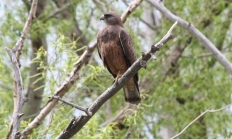
Swainson's hawks are medium-sized buteos, smaller than Red-tailed and Ferruginous hawks. Plumage beneath varies along a continuum from very pale to nearly black below. Lighter-plumaged birds have a distinct chest band. They have relatively long, pointed wings that contribute to superior flying skills. The dark flight feathers contrast with paler wing lining in all but the darkest birds. It breeds in the bunchgrass prairies east of the Cascades with the highest concentration in the foothills of the Blue and Wallowa mountains. It prefers open country and has little need for numerous trees since it forages extensively while in flight and…
Find maps, boundary descriptions and hunts available in the new Jackknife Hunt Area. Download printable PDF map
Find maps, boundary descriptions and hunts available in the new North Blues Hunt Area. Download printable PDF map
The E.E. Wilson Wildlife Area came into existence in 1950 when the U.S. Government gave quitclaim title to the property to the Oregon Department of Fish and Wildlife. The wildlife area covers approximately 1,788 acres, is located on Highway 99W about 10 miles north of Corvallis and is situated on the Willamette Valley floor. SHOTGUN RANGE BACK OPEN AS OF LATE OCTOBER 2025: The renovation is complete and the shotgun range is back open. Improvements include: four times as many shooting lanes, fully paved ADA-compliant walkway with pullouts that will make it easier for disabled shooters, a new covered pole…
CENTRAL WILDLIFE VIEWING April 16, 2026 Crook County Spring ungulate migration will soon be upon us. You can find mule deer transitioning from low elevation winter feeding areas to the higher elevation sagebrush and agricultural areas. There are red-tailed, rough-legged and ferruginous hawks, northern harriers, American kestrels, prairie falcons and golden eagles throughout Crook County and they're usually associated more closely with open/agricultural areas. Bald eagles and ospreys, on the other hand, are more closely associated with water bodies. Look for northern goshawks throughout the Ochoco National Forest, and for ducks and geese in rivers and lakes. Prineville Reservoir Wildlife…
Find maps, boundary descriptions and hunts available in the new North Blues Hunt Area. Download printable PDF map
Find maps, boundary descriptions and hunts available in the new Northeast Hunt Area. Download printable PDF map
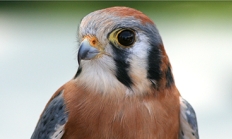
Formerly known in American literature as the Sparrow hawk, this is the smallest (dove-sized) and most familiar and abundant member of the family Falconidae in North America and one of the easiest raptors to observe. It has two considerably different plumages: adult male and female and juvenile males differ somewhat from adult males until post-juvenile mold in fall. Adult males have rufous backs and tails with blue-grey upper wing coverts. The tail has a wide black subterminal band. Juvenile males are similar to adult males but have heavily streaked breasts. Females are slightly larger than males and have reddish-brown backs…
Peregrine falcons are among the most charismatic and noted of the world's birds. They are described as the fastest animal on the planet, and have been recorded reaching speeds in excess of 240 miles an hour in dives after prey. They are one of Oregon's boldest raptors, and have been observed usurping active Golden eagle nest sites, stealing fish from Ospreys and ground squirrels from adult Bald eagles who stray into their territory. It has, for perhaps 4,000 years, been used by falconers because of its skill in capturing game birds in tandem hunts with humans. Peregrines are medium-sized raptors…
Find maps, boundary descriptions and hunts available in the new Steens Hunt Area. Download printable PDF map